





The Vision: Bharatiya Antariksha Station
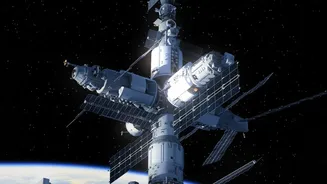
The Indian Space Research Organisation (ISRO) is spearheading the development of what will be known as the Bharatiya Antariksha Station (BAS), which translates to the Indian Space Station. This ambitious project involves constructing a modular laboratory
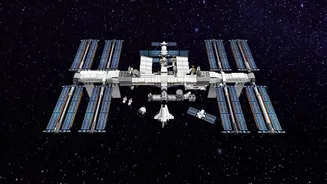
in low-Earth orbit, approximately 400-450 kilometres above our planet. Once complete, it will join an exclusive club currently occupied by the multinational International Space Station (ISS) and China's Tiangong station. The station is being designed to host astronauts for extended periods of three to six months, allowing for long-duration scientific experiments and research. This isn't just about building a structure in space; it's about creating a permanent, sovereign outpost for Indian science and exploration.
Anatomy of a Space Station
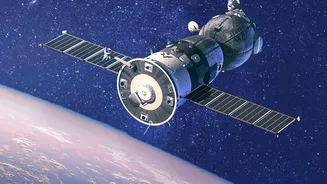
The Bharatiya Antariksha Station will not be launched in one piece. Instead, it will be assembled in orbit, module by module. The final design consists of five distinct components. These include a base module, a core module for docking and station control, a science research module, a laboratory module, and a common working module. The total mass of the completed station is expected to be around 52 tonnes. The initial component, named BAS-01, will serve as the base module and is the first piece of the puzzle. This foundational module will house crew quarters and essential life support systems, paving the way for the others to follow.
The Roadmap to 2035
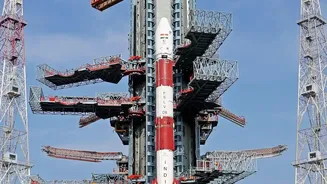
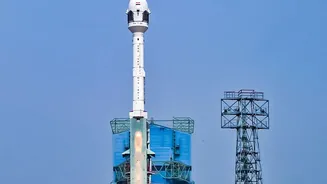
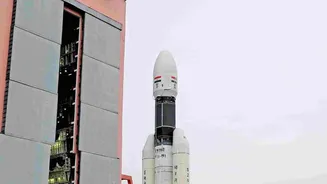
The timeline is ambitious but phased. ISRO plans to launch the first module, BAS-01, by 2028 using its powerful LVM3 rocket. This initial launch is a critical first step. Following this, the remaining four modules will be launched and added to the structure over the subsequent years, with the target for full operational capability set for 2035. This modular approach allows ISRO to test and validate technologies at each stage. Key technologies developed for India's Gaganyaan human spaceflight mission—which aims to send Indian astronauts to space—are foundational to the space station project. The success of Gaganyaan will directly feed into the systems required for long-duration human habitation on the BAS.
Why a Space Station Matters
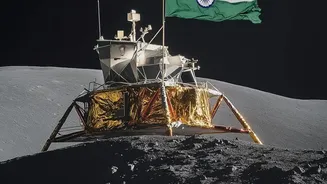
Beyond the immense national pride, the Bharatiya Antariksha Station serves critical strategic and scientific purposes. It will provide a unique platform for microgravity research in fields like medicine, material science, and biotechnology. Experiments conducted in the near-zero gravity of space can lead to breakthroughs that are impossible to achieve on Earth. Furthermore, possessing its own space station elevates India's stature as a global space power, opening new avenues for international collaboration and space diplomacy. It demonstrates a high level of technological self-reliance, from launch vehicles and life support to docking and robotics. The station is also a crucial stepping stone for even more audacious goals, including a planned crewed mission to the Moon by 2040.
Challenges on the Final Frontier
Building a home in space is one of the most complex engineering challenges imaginable. The project requires mastering numerous advanced technologies, including in-space docking to assemble the modules, reliable life support systems for long-duration missions, and robotics for maintenance. A recent government update confirmed that design work for the first module's subsystems has officially begun and a concept for in-space refueling has been tested. The financial commitment is also significant, with the overall project cost estimated at around ₹20,193 crore. The government has approved an initial budget for the first module as part of an expanded Gaganyaan program. Successfully navigating these technological and financial hurdles over the next decade will be key to turning this ambitious vision into a reality.