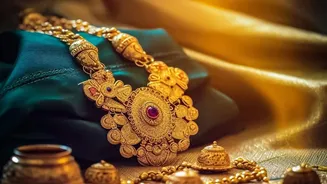






Dhanteras, a time for prosperity and tradition, is synonymous with buying gold. But this year, the festive cheer is met with a complex market. A significant price correction after a peak earlier in the year has created a volatile environment for buyers.
Understanding the 'Price Correction'
After a remarkable rally over the past few years, gold prices reached a record high in January 2026 before retreating significantly. This pullback is what experts call a 'price correction'. It is not a crash, but rather a market adjustment after a period of rapid gains. Prices have fallen more than 20% from their January peak, a move driven by investors booking profits and reacting to global economic shifts. While prices are lower than the start of the year, they remain about 7-8% higher than last Dhanteras, highlighting the market's turbulence. This has left many buyers wondering if the lower prices are a golden opportunity or a sign of further instability.
Global Factors Dominating the Market
The price you pay for gold in India is directly linked to global trends, as the metal is priced internationally in US dollars. A primary driver of the current volatility is the policy of the US Federal Reserve. Expectations of higher interest rates in the US make other assets that earn interest, like bonds, more attractive than non-yielding gold. This 'opportunity cost' has weighed on gold prices. Geopolitical tensions, such as the conflict in West Asia, and rising crude oil prices have had a mixed effect, sometimes boosting gold's 'safe haven' appeal but at other times stoking inflation fears that point towards continued high interest rates.
The Rupee's Role and Domestic Demand
Two key local factors are also shaping the market: the USD/INR exchange rate and domestic demand. Because India imports most of its gold, a weaker rupee makes gold more expensive locally, even if international prices are stable. Conversely, a stronger rupee can cushion the impact of global price hikes. Recently, the government also raised import duties to 15%, which keeps local prices elevated. Despite the price volatility, jewellers anticipate a 10-12% rise in sales this Dhanteras, fueled by strong advance bookings and pent-up demand, especially from Tier-2 and Tier-3 cities. This shows that for many, the cultural significance of buying gold during Dhanteras outweighs short-term market jitters.
How to Approach Your Dhanteras Purchase
In a volatile market, a measured approach is crucial. Experts advise against making impulsive, emotional purchases. Instead of trying to 'time the market' perfectly, consider buying in smaller quantities or through a Systematic Investment Plan (SIP) in a gold fund or ETF to average out your cost over time. For those buying physical gold, verifying its purity is non-negotiable. Look for the Bureau of Indian Standards (BIS) hallmark and the 6ndigit Hallmark Unique Identification (HUID) code. Always get a detailed invoice that breaks down the gold rate, weight, making charges, and GST. This documentation is vital for transparency and future resale or exchange.
Physical Gold vs. Digital Alternatives
The way people buy gold is also evolving. While traditional jewellery remains popular, digital options are gaining significant traction. Gold Exchange Traded Funds (ETFs), Gold Mutual Funds, and Sovereign Gold Bonds (SGBs) offer ways to invest in gold without the concerns of physical storage and making charges. Digital gold purchases via UPI have also surged, allowing people to buy small, affordable quantities with ease. These alternatives are best for those focused purely on investment, as returns on physical jewellery can be eroded by high making charges and deductions on resale. For Dhanteras 2026, matching the form of gold to your purpose—be it tradition or investment—is more important than ever.