




The Science of the Spin
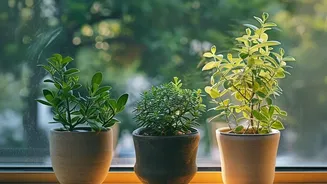
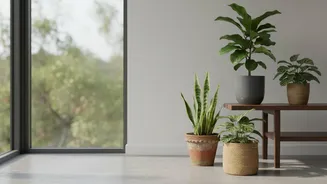
Plants instinctively grow towards their light source, a natural process known as phototropism. This survival mechanism ensures they get enough light for photosynthesis, the process of turning light into energy. In a room, this usually means your plant
will bend and stretch towards the nearest window. While smart for the plant, this can lead to uneven, leggy growth, with a dense, leafy side facing the light and a sparse, thin side facing the room. Rotating the pot counteracts this. By giving each side of the plant its turn in the sun, you encourage the stem to grow straight and the foliage to develop uniformly. This simple action interrupts the hormonal process that causes cells on the shaded side to elongate, resulting in a more balanced, structurally sound plant.
A Simple Trick for a Polished Home
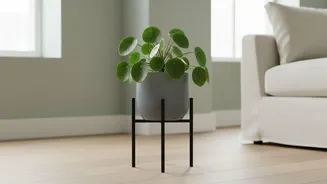
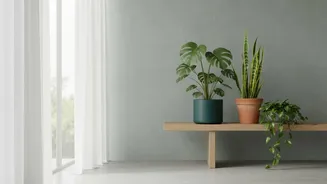
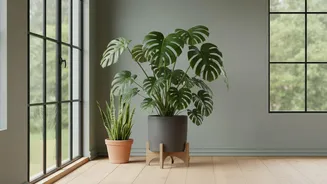
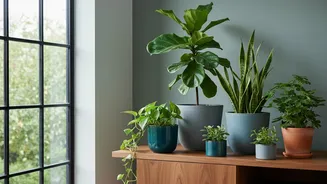
Beyond plant health, regular rotation is a powerful interior design hack. A full, symmetrical plant is more visually appealing from every angle, enhancing the harmony of your space. Instead of having a 'good side' and a 'bad side' that you try to hide, your plant becomes a well-rounded decorative element. This gives you more flexibility in your decor without the hassle of moving furniture to chase the light. A balanced plant can anchor a corner, sit proudly on a stand, or liven up a shelf, looking lush and intentional from anywhere in the room. This small effort elevates your greenery from a simple houseplant to a true design feature, contributing to a more curated and polished aesthetic.
More Than Just Good Looks
The benefits of a quick spin go beyond even growth and aesthetics. Rotating your plant ensures better airflow around the entire foliage, which can help prevent the stagnation that leads to fungal issues or pests. It also promotes more even moisture levels in the soil, as the side facing the light can experience faster evaporation. Furthermore, the act of turning your plant provides a perfect opportunity for a quick health check-up. As you rotate it, you can easily inspect all sides for early signs of trouble, like pests, discoloured leaves, or dust accumulation. Wiping down dusty leaves not only keeps your plant looking fresh but also helps it absorb light more efficiently.
How to Rotate the Right Way
Consistency is more important than frequency, but a good rule of thumb is to give your plant a quarter-turn every time you water it. This integrates the habit seamlessly into your care routine. For plants in lower light, a rotation every few weeks is beneficial, while those in bright light might only need it every month or two. Fast-growing plants will show the benefits more quickly and may need more frequent turns. If you have a plant that has already developed a significant lean, don't worry. You can correct it by turning the less-developed side to face the light source; over a few weeks or months, it should start to straighten itself out. However, be mindful of certain plants. Some, like orchids or Christmas cacti, may drop their buds if rotated after they've started to flower, so it's best to leave them be during their blooming season.