



An Ocean World That Serves Samples
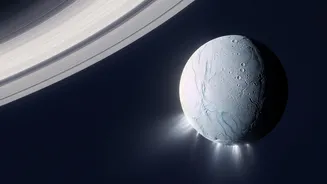
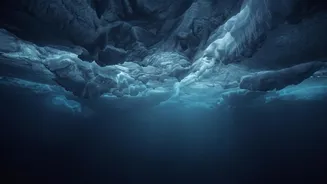
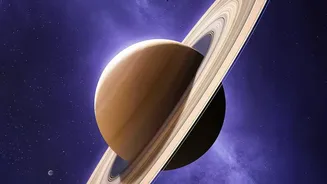
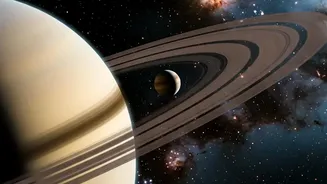
Far from the Sun, past the asteroid belt and Jupiter, orbits a world that has captivated scientists. Enceladus, one of Saturn’s many moons, is a small ball of ice and rock, just 500 kilometres in diameter. Yet beneath its frozen crust lies a global ocean
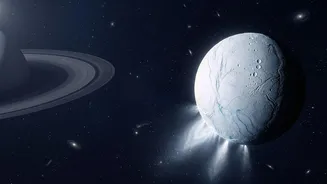
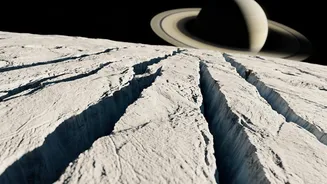
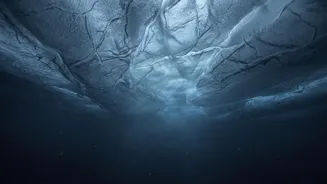
of liquid saltwater. This alone makes it a member of an exclusive club of 'ocean worlds' that could potentially harbour life. But Enceladus has a unique feature that sets it apart: it actively sprays its ocean into space. Huge plumes of water vapour and ice grains erupt from fissures near its south pole, forming a faint ring around Saturn. This phenomenon, discovered by NASA’s Cassini spacecraft, means we don’t need to drill through kilometres of ice to study its ocean. Enceladus sends samples directly to us, offering a rare opportunity to peek into the chemistry of a hidden alien sea.
The Latest Clues in the Plumes
The case for Enceladus’s habitability has grown stronger thanks to new research. Two recent studies published in late 2026 have provided compelling new evidence. One study found that as ocean water freezes and travels up through the moon's ice shell, the chemicals within it become naturally separated and concentrated. This means that any potential biosignatures—traces of life—would be much easier for a visiting spacecraft to detect than previously thought. The other study was a lab experiment that recreated the conditions of Enceladus's alkaline, carbonate-rich ocean. Scientists introduced an Earth-based microbe, a methane-producer that thrives near deep-sea hydrothermal vents, and found that it could survive and grow in the simulated Enceladus environment. While this doesn't prove life exists there, it removes a significant barrier, showing that a known type of life could function in its alien sea.
The Recipe for Life
Astrobiologists look for three key ingredients when searching for life: liquid water, a source of energy, and the right chemical elements (like carbon, hydrogen, nitrogen, oxygen, phosphorus, and sulphur). Enceladus appears to have all three. We know it has a liquid water ocean. Evidence also points to hydrothermal vents on its seafloor, where hot, mineral-rich water could provide a chemical energy source, much like vents on Earth's ocean floor that support entire ecosystems without sunlight. Data from the Cassini mission also confirmed the presence of many essential chemicals. Analysis revealed complex organic compounds, methane, and most excitingly, hydrogen cyanide. While toxic to humans, hydrogen cyanide is considered a crucial precursor for forming amino acids, the building blocks of proteins and life as we know it. Its discovery suggests that the fundamental chemistry needed to start life could be active on Enceladus right now.
Habitability Is Not Proof of Life
This is the critical distinction that scientists are careful to make. Finding all the necessary ingredients for a cake doesn't mean you've found a cake. Similarly, finding a habitable environment doesn't mean it's inhabited. Enceladus appears to have a stable, energy-rich ocean with the right chemical building blocks, making it an incredibly promising candidate for life to emerge. But as of now, there is no direct evidence of life itself. All the discoveries—the ocean, the vents, the organic molecules—point to the potential for life. The latest research strengthens this potential by showing that life could survive there and that its signs might be easier to find. However, the ultimate question of whether anything is actually living in that dark, subsurface ocean remains unanswered. Proving that will require a new generation of missions specifically designed to detect biosignatures.
The Missions to Find Out
The mounting evidence has made Enceladus a top target for future space exploration. Both NASA and the European Space Agency (ESA) are exploring concepts for missions that would return to this intriguing moon. Proposals like the Enceladus Orbilander would involve a spacecraft that would first orbit the moon, flying through its plumes multiple times for in-depth analysis, before attempting to land on the surface to study the material that has fallen back down. Other concepts, like the Enceladus Life Finder (ELF), have been proposed to specifically hunt for complex organic molecules that could be signs of biological processes. There has even been a proposal for a sample-return mission, which would collect plume particles and bring them back to Earth for study in advanced labs. While no mission is officially scheduled to launch just yet, the scientific consensus is clear: of all the places we could look for life beyond Earth, Enceladus offers one of the most accessible and compelling opportunities.