




The Allure of a Natural Solution
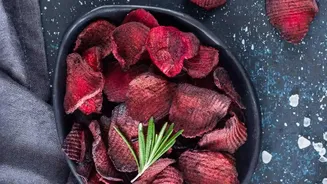
In a world of complex chemical formulas, the appeal of reaching into your kitchen for a beauty solution is stronger than ever. Beetroot, or chukandar, has long been celebrated in India for its health benefits when eaten. Rich in vitamins, minerals, and antioxidants,
it's no surprise that it has found its way into the world of DIY hair care. The promise is tempting: a natural ingredient that can supposedly impart a beautiful reddish tint while nourishing the scalp and encouraging hair to grow. But as with many home remedies, it's important to separate the proven benefits from the popular myths.
The Reality of the Red Tint
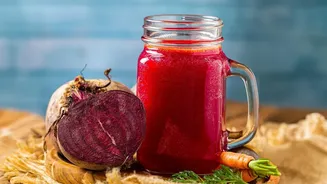
Let's start with the most visible claim: the colour. Yes, a beetroot hair mask can temporarily stain your hair. The vibrant colour comes from a pigment called betanin. When you apply a beetroot paste to your hair, this pigment coats the outside of the hair shaft, imparting a subtle reddish or purplish hue. However, it's crucial to manage expectations. This is a stain, not a chemical dye. The effect will be most noticeable on light-coloured or pre-lightened hair and may only appear as a slight sheen in direct sunlight on darker hair. The colour is also temporary and will typically wash out after a few shampoos, as the betanin pigment is water-soluble.
What About Hair Growth?
This is where the claims become murky. Beetroot is packed with nutrients that are essential for healthy hair, including iron, folate (Vitamin B9), and Vitamin C. Iron is crucial for preventing hair loss linked to deficiency, while folate helps in the regeneration of hair follicles. However, these benefits are most pronounced when beetroot is consumed as part of a balanced diet, allowing your body to deliver these nutrients to the hair follicles via the bloodstream. There is currently no strong scientific evidence to prove that applying beetroot topically through a mask can effectively deliver these nutrients to the scalp in a way that significantly boosts hair growth. While improved scalp circulation from massaging the mask in might offer some benefit, it's a leap to call it a proven hair growth treatment.
How to Try a Beetroot Mask Safely
If you're curious to try a beetroot mask for its conditioning properties and a hint of temporary colour, it's a relatively safe DIY experiment. To create a simple mask, juice one or two fresh beetroots. For added conditioning, you can mix the fresh juice with a carrier oil like coconut oil, which will also help the mixture spread more easily. Before applying it all over, always do a patch test on a small area of your skin to check for any allergic reaction. When you're ready to apply, wear gloves and old clothes, as beetroot stains everything it touches. Apply the mixture evenly to clean, damp hair, cover with a shower cap, and leave it on for at least an hour. Rinse thoroughly with cool water. Don't expect dramatic results, but enjoy the process and the subtle, natural effect.