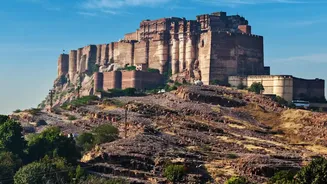



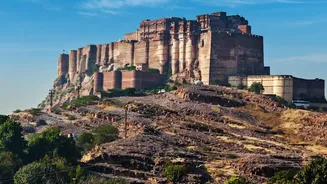


Mehrangarh Fort, Jodhpur
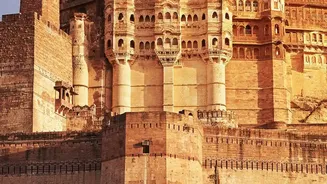
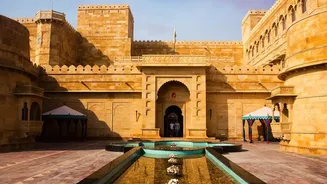
Perched on a 122-metre-high cliff, Mehrangarh Fort dominates the Jodhpur skyline. Founded in 1459 by Rao Jodha, this fort is a testament to Rajput splendour and resilience, having never been captured by force. Its massive walls guard a complex of intricate
palaces, including the dazzling Phool Mahal (Flower Palace) and the Sheesh Mahal (Hall of Mirrors). As you wander its courtyards, the fort offers breathtaking panoramic views of the famous “Blue City” below, making it an unforgettable first stop. The on-site museum, still managed by the Jodhpur royal family, showcases a remarkable collection of royal artefacts.
Red Fort, Delhi
A symbol of both Mughal power and Indian independence, the Red Fort (Lal Qila) is an essential piece of the nation's heritage. Built by Emperor Shah Jahan in the mid-17th century when he moved the capital from Agra, its iconic red sandstone walls stretch for over two kilometres. This UNESCO World Heritage site served as the main residence for Mughal emperors for nearly 200 years. Today, it holds immense national importance, as it is from here that the Prime Minister addresses the nation every Independence Day.
Gwalior Fort, Madhya Pradesh
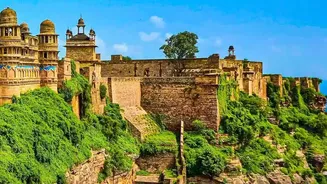
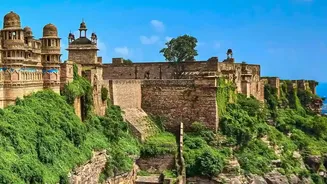
Often called the “Gibraltar of India” for its formidable defences, Gwalior Fort has a history stretching back to at least the 6th century. Mughal emperor Babur himself described it as “the pearl amongst the fortresses of Hind.” This sprawling complex has been ruled by numerous dynasties, including the Tomars, Mughals, and Scindias. Its key attractions include the Man Mandir Palace, adorned with beautiful blue mosaic tiles, and the unique Teli Ka Mandir, a temple that blends North and South Indian architectural styles.
Golconda Fort, Hyderabad
Once the epicentre of the world's diamond trade, Golconda Fort is as famous for its treasures as its engineering. Originally a mud fort, it was expanded into a massive granite fortress by the Qutb Shahi dynasty. The fort is renowned for its incredible acoustics; a clap at the main gate can be heard at the highest point nearly a kilometre away, a feature used to warn of attacks. This fortified city was once the vault for legendary gems, including the Koh-i-Noor and Hope diamonds.
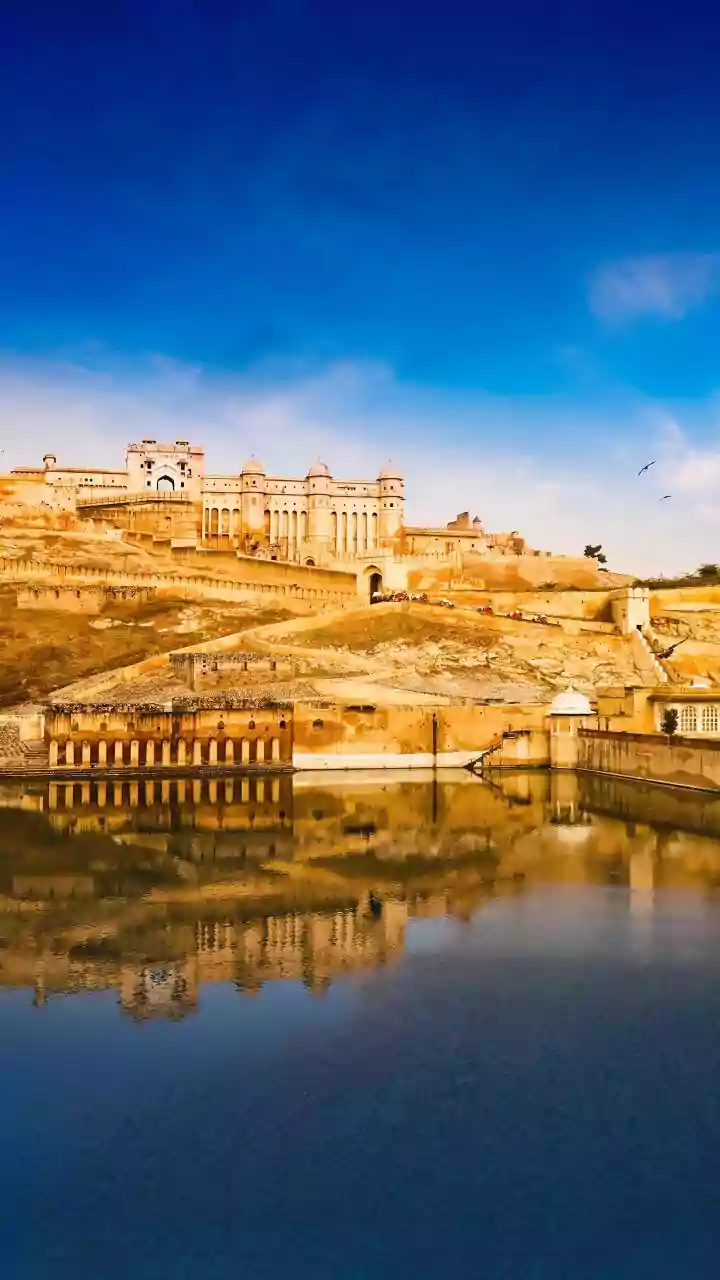
Amer Fort, Jaipur
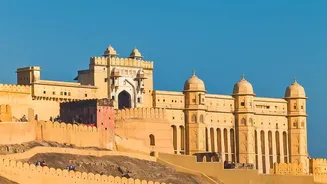
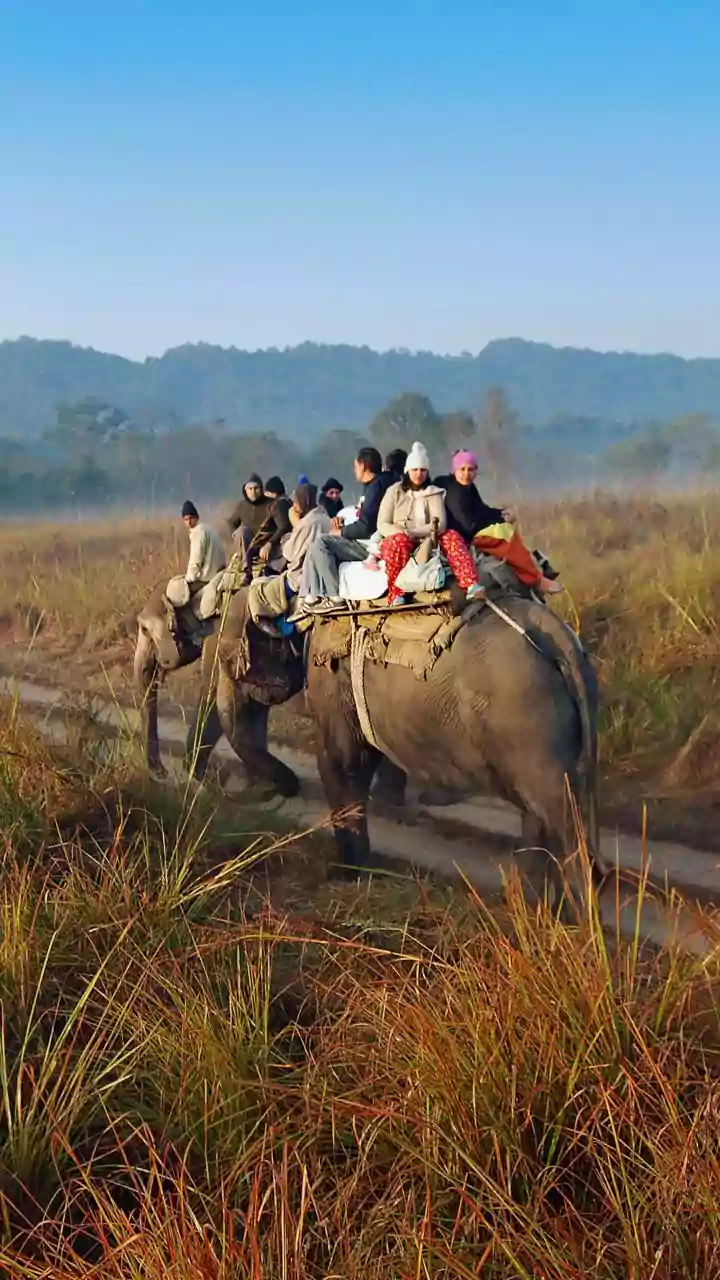
Overlooking Maota Lake, Amer Fort is a stunning example of Rajput-Mughal architectural fusion. Construction began in the 16th century under Raja Man Singh. The fort is built with red sandstone and marble, housing a series of grand palaces, halls, and courtyards. The most famous of these is the Sheesh Mahal, or Mirror Palace, where the walls and ceilings are embedded with countless tiny mirrors that glitter like diamonds with a single flame. An elephant ride up the cobbled path to the entrance adds to its royal charm.
Chittorgarh Fort, Rajasthan
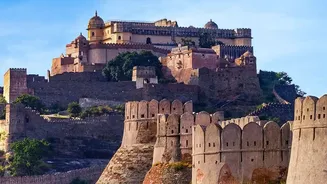
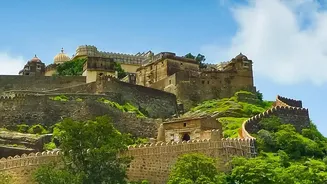
As the largest fort complex in India, Chittorgarh is a symbol of Rajput pride, spirit, and sacrifice. This UNESCO World Heritage site sprawls across 700 acres on a high hill. The fort witnessed several devastating sieges throughout its history, leading to legendary acts of valour and the tragic rite of Jauhar, or mass self-immolation by the women to avoid capture. Key structures within its walls include the Vijay Stambh (Tower of Victory) and the beautiful Padmini's Palace.
Daulatabad Fort, Maharashtra
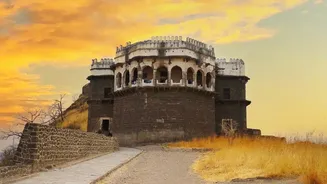
Originally known as Devagiri, this formidable fortress is built on a 200-metre-high conical hill. It gained prominence when Muhammad bin Tughluq famously and briefly shifted his capital here from Delhi in the 14th century, renaming it Daulatabad, or “City of Prosperity.” The fort is a masterpiece of medieval military engineering, with a complex series of defences including multiple walls, deep moats, and a confusing, pitch-black labyrinth-like passage designed to trap invaders.