





Turrón: The Quintessential Christmas Nougat
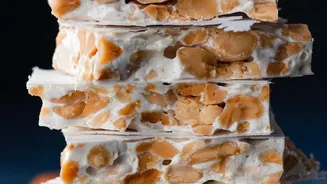
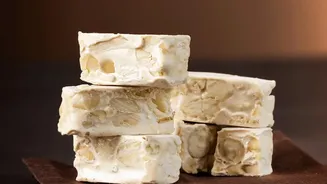
No Spanish Christmas is complete without Turrón, a dense, sweet nougat that beautifully showcases the almond. Its origins are often traced back to the Moors, who introduced the technique of combining honey and nuts into a durable, energy-rich confection.
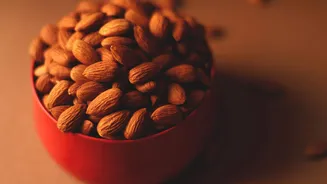
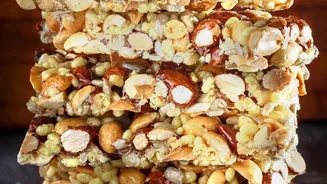
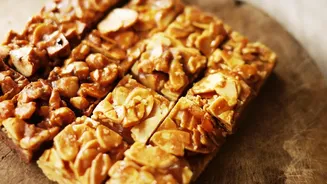
There are two primary, and fiercely loved, varieties. Turrón de Alicante, often called 'duro' (hard), is a brittle tablet where whole, toasted Marcona almonds are suspended in a crunchy mixture of honey, sugar, and egg whites. Its counterpart, Turrón de Jijona or 'blando' (soft), is made by grinding the almonds with the other ingredients into a smooth, oily paste that has a rich, melt-in-your-mouth texture. Both types enjoy protected geographical status, cementing their connection to the Alicante region where they have been perfected over centuries.
Tarta de Santiago: The Pilgrim’s Almond Cake
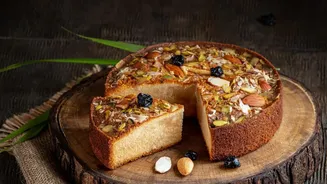
Hailing from Galicia in northern Spain, the Tarta de Santiago is an elegant and deceptively simple cake with a history as rich as its flavour. Its primary ingredients are ground almonds, sugar, and eggs, often brightened with a touch of lemon zest. This naturally gluten-free dessert is moist, dense, and has been rewarding weary pilgrims on the Camino de Santiago for centuries. Its most defining feature is the Cross of Saint James (Cruz de Santiago) stencilled in powdered sugar on top, a decorative tradition started in 1924 that made the cake instantly recognisable. While its exact origins are medieval, the cake’s existence is documented as far back as 1577, a testament to its enduring appeal as a symbol of both faith and fine baking.
Polvorones and Mantecados: Crumbly Holiday Shortbreads
These delightful, crumbly shortbreads are another holiday staple across Spain. Though often grouped together, Polvorones and Mantecados have subtle differences. The name 'polvorón' comes from 'polvo', the Spanish word for dust or powder, which perfectly describes their delicate, powdery texture that dissolves in the mouth. Traditionally, polvorones are made with flour, sugar, pork lard, and, crucially, toasted almonds. They are typically oval-shaped and wrapped in thin paper. Mantecados, while similar, are generally rounder and don't always contain almonds, coming in various flavours like cinnamon or lemon. The key to their unique texture is the lard ('manteca'), which makes them incredibly rich and tender. For polvorones, there's even a fun ritual of gently squeezing the sweet in its wrapper to compact it before eating to avoid a crumbly mess.
Mazapán de Toledo: An Ancient Almond Paste
While marzipan is known throughout Europe, the version from Toledo is legendary and holds a protected geographical indication (PGI) status. Mazapán de Toledo is a simple but exquisite paste made from high-quality ground almonds and sugar. Legend suggests it was invented by nuns in the 13th century to feed the city’s populace during a famine, using the only ingredients they had in abundance: sugar and almonds. Today, it is moulded into intricate figurines, from animals to fruits, before being lightly baked to a delicate golden-brown. Though especially popular at Christmas, you can find these artistic creations in Toledo's bakeries year-round. Their high almond content (at least 50%) gives them a purer, more intense almond flavour compared to many other marzipans.