


An Official Change of Seasons
September marks a significant astronomical milestone: the autumnal equinox. Occurring on September 22 this year, it's the official start of autumn in the Northern Hemisphere. On this day, the Sun crosses the celestial equator, and for a brief moment,
day and night are nearly equal in length across the globe. For stargazers, this is more than just a calendar date. It signals the transition from the familiar constellations of summer to the emerging patterns of autumn. The nights grow longer, providing more time to explore the cosmos. While the Summer Triangle, with its bright stars Vega, Deneb, and Altair, still lingers high in the early evening sky, new celestial characters are rising in the east.
A Parade of Planets
This month is a spectacular one for planet-watchers, with all five naked-eye planets making an appearance. Venus will be a dazzling beacon in the western sky shortly after sunset, reaching its peak brightness around September 22. On September 14, the waxing crescent Moon will pass very close to Venus, creating a beautiful pairing. Saturn is also visible for much of the night, and on September 26, it will appear near the full Harvest Moon. For the early risers, Mars and Jupiter can be spotted in the pre-dawn sky. On September 8, the crescent Moon will have a particularly close encounter with Jupiter, a sight worth waking up for.
The Glow of the Harvest Moon
The full moon on September 26 is known as the Harvest Moon. This name is given to the full moon that occurs closest to the autumnal equinox. It earned its title because, for several evenings in a row, the moon rises at nearly the same time around sunset. This phenomenon provided farmers with extra hours of bright moonlight to bring in their crops before the advent of electricity. While this full moon will wash out fainter stars for a few nights, its golden glow as it rises near the horizon is a spectacle in itself. Look for it in the east as the sun sets for a truly memorable view.
A Meteor Shower Under Dark Skies
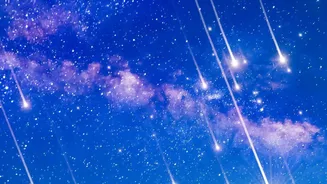
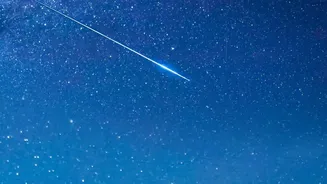
While not as famous as the August Perseids, the September Epsilon Perseid meteor shower offers a special opportunity this year. Peaking on the night of September 9, this shower produces a modest rate of about five to eight meteors per hour. What makes 2026 exceptional is the timing. The peak coincides with a nearly new moon, meaning the sky will be incredibly dark, offering perfect conditions to spot these fast-moving shooting stars. For the best view, find a location away from city lights, lie back, and look toward the constellation Perseus. No special equipment is needed, just a bit of patience.
Constellations to Find
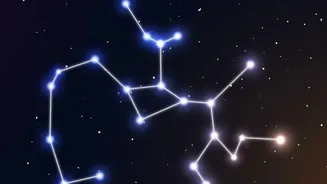
As the season turns, the celestial map above also shifts. While the Summer Triangle is still visible, the great square of Pegasus becomes a prominent marker of the autumn sky. This large asterism serves as a great starting point to find other constellations. Following from Pegasus, you can locate Andromeda, which is home to the Andromeda Galaxy (M31), the most distant object visible to the naked eye. To spot it, you'll need a dark sky, far from urban light pollution. The W-shaped constellation of Cassiopeia is also high in the northeast, making it an easy-to-find guidepost for navigating the September starscape.