





Tokyo’s Overwhelming Dominance
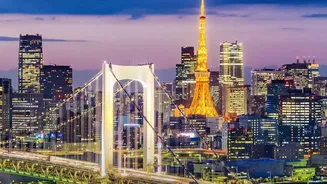
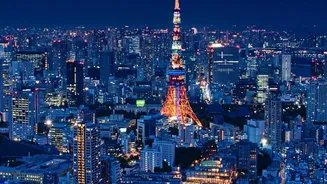
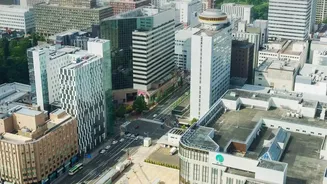
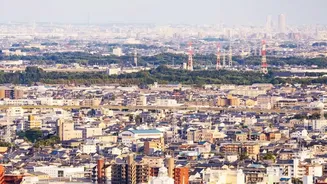
The Greater Tokyo Area is the world's largest megacity, home to roughly 30% of Japan's population and generating about one-fifth of its economic output. This incredible concentration of people, political power, and corporate headquarters has long been
a double-edged sword. While it fuels economic efficiency, it also creates immense vulnerabilities. The primary concern is the constant threat of a major earthquake. Government estimates suggest a 70% probability of a magnitude-7 quake hitting the region within the next 30 years, an event that could paralyze the nation's entire political and administrative functions. Beyond disaster risk, this hyper-centralization has led to soaring living costs in Tokyo while contributing to economic stagnation and population decline in other parts of the country.
The Decades-Long Dream of a New Capital
The idea of relocating the capital is not new; it has been a recurring theme in Japanese politics since the late 1950s. In Japanese history, moving the political center has often marked major national transformations. The discussion gained serious momentum in the 1990s when the Japanese Diet (parliament) passed a resolution to relocate its functions to rectify the over-concentration in Tokyo. A special council identified potential new capital regions, including areas in Gifu-Aichi and Tochigi-Fukushima. The goal was twofold: to build a more resilient government by moving it to a safer location and to spur development outside of Tokyo. However, these ambitious plans for a full-scale relocation never materialized, largely due to the astronomical costs, political inertia, and the sheer logistical nightmare of uprooting the entire government apparatus.
A Shift to a 'Backup Capital' Strategy
Recognizing the impracticality of a full move, the focus has shifted to a more flexible and achievable strategy: decentralization. This involves moving specific government ministries and agencies out of Tokyo, effectively creating a distributed or backup capital function. Instead of building a new city from scratch, this approach aims to bolster existing regional centers. This isn't just a theoretical debate. In 2023, the Agency for Cultural Affairs became the first central government body to move its main office, relocating from Tokyo to Kyoto, Japan's former imperial capital. This move, though partial, as some functions remain in Tokyo, is seen as a major first step and a model for future relocations. Recent legislation has created a framework to designate one or more regions as official backups in case Tokyo is incapacitated.
The Benefits of a Distributed Government
Distributing ministries offers a compromise that balances risk reduction with practicality. The most immediate benefit is enhanced disaster preparedness. If a major earthquake strikes Tokyo, having key government functions already operating elsewhere would ensure continuity of governance. Proponents also argue that this strategy is a powerful tool for regional revitalization. Moving a government agency can bring jobs, stimulate local economies, and attract private investment to areas that have been left behind. By spreading out administrative power, the government hopes to ease the population pressure on Tokyo, reverse the 'brain drain' from rural areas, and create a more balanced national development model.
Lingering Challenges and Criticisms
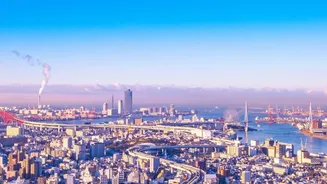
Despite the apparent logic, this plan faces hurdles. One major challenge has been resistance from government officials and their families who are reluctant to move away from the capital. For the plan to be effective, it also requires significant investment in high-speed digital and transport infrastructure to ensure seamless communication between dispersed agencies and the political center in Tokyo. Furthermore, there are concerns that the policy could be driven by political interests, with critics suggesting that certain regions, like Osaka, might be favored due to coalition politics. The lack of a detailed cost-benefit analysis has also raised questions about fiscal discipline. Finally, some argue that instead of truly revitalizing a region, the policy might just create isolated government outposts without genuine integration into the local community.