





India's Address in Orbit
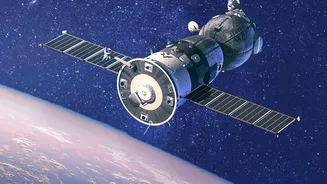
The Bharatiya Antariksha Station (BAS), or Indian Space Station, is a flagship project by the Indian Space Research Organisation (ISRO) to establish a permanent human presence in space. Envisioned as a modular orbital outpost, it will circle the Earth
at an altitude of about 400-450 kilometres. This is not just a scientific laboratory but a national statement, placing India in an elite club of nations with their own space stations, alongside the United States, Russia, and China. The station is designed to support a crew of three to four astronauts for missions lasting three to six months, providing a platform for continuous research in microgravity. The ambitious timeline aims to have the station fully operational by 2035, serving as a critical stepping stone for even greater goals, like sending an Indian astronaut to the Moon by 2040.
BAS-01: The First Piece of the Puzzle
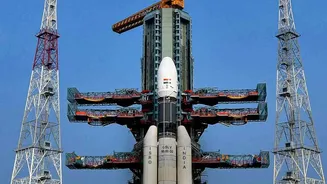
Every great structure begins with a single foundational block. For the Bharatiya Antariksha Station, that block is BAS-01. Targeted for launch by 2028, BAS-01 is the Base Module, the very first of five planned modules that will eventually form the complete station. The government confirmed in Parliament that the baseline design and system engineering for this crucial first piece are complete. Weighing around 10 tonnes, this module will serve as a test bed for essential technologies, including indigenous life support systems, crew quarters, and the docking systems that will allow future modules and spacecraft to connect. Its launch, planned aboard India’s powerful LVM3 rocket, officially kicks off the assembly of India's orbital home.
The Four Modules to Follow
Following the launch of the foundational BAS-01, ISRO plans to add four subsequent modules to expand the station's capabilities. The full station will eventually weigh around 52 tonnes. The planned modules include a Core-Docking Module (BAS-02) for station control and structural integrity, a dedicated Science Research Module (BAS-03), a Laboratory Module (BAS-04), and a Common Berthing Module (BAS-05) to connect various elements. This modular approach allows for a phased construction, where each launch adds new functionality. This plan ensures the station can evolve, be upgraded, and remain flexible throughout its operational life, all leading to the final five-module configuration by 2035.
The Gaganyaan Connection
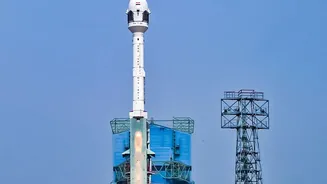
A space station is incomplete without astronauts, and India's path to the BAS runs directly through its human spaceflight program, Gaganyaan. The Gaganyaan mission, which aims to send a crew of Indian astronauts to Low Earth Orbit, is the essential precursor to crewing the station. The same technologies, from the human-rated launch vehicle (HLVM3) to life support and re-entry systems, are critical for both programs. Successfully completing Gaganyaan missions will not only make India the fourth nation to conduct independent human spaceflight but will also validate the transportation system needed to ferry astronauts to and from the Bharatiya Antariksha Station. The development of BAS-01 is now officially part of the expanded Gaganyaan program, intertwining the fates of these two ambitious national projects.
Why It Matters for India
The Bharatiya Antariksha Station is far more than just a technological demonstration. It's a platform for national ambition and scientific progress. The station will provide a unique microgravity laboratory for Indian scientists to conduct long-term experiments in medicine, material science, physics, and biotechnology that are impossible on Earth. Strategically, it secures India's autonomy in space, reducing reliance on other nations and enhancing its global stature. This sustained human presence in space will also provide invaluable experience for future deep-space missions, including the planned journey to the Moon. For the nation, it's a source of immense pride and an inspiration for future generations of scientists and engineers, solidifying India's role as a major power in the final frontier.