





What Exactly Is This Exercise?
In a video shared by her trainer, Kriti Sanon is seen hanging from an overhead bar while rapidly kicking a stability ball held in front of her. Fitness experts describe this as an advanced variation of a hanging flutter kick. The goal is to perform fast,
alternating kicks for a set time, like 20 seconds, while keeping the torso and lower body as stable as possible. It’s a dynamic move that combines several difficult elements: the static hold of a dead hang, the rapid movement of the legs, and the coordination required to strike a moving target. The core has to work overtime not just to move the legs, but to prevent the entire body from swinging wildly.
More Than Just Abs Are at Work
While it's called a 'core challenge', the abdominal muscles are only part of the story. To perform this exercise correctly, you need a symphony of strength across your entire upper body and hips. First, significant grip strength is required just to hang from the bar. Second, your shoulders and lats (the large muscles in your back) must be engaged to create a stable base and prevent shrugging or injury. Finally, your hip flexors are working hard to drive the leg-kicking motion. The stability ball adds a final, complex layer, demanding coordination and body awareness to control the movement. This combination of strength, stability, and coordination is what firmly places the exercise in the advanced category.
The Real Risks for Beginners
Attempting this move without the necessary foundational strength can open the door to several injuries. The most immediate risk is simply losing your grip and falling. Beyond that, a weak core can lead to uncontrolled swinging, which puts significant strain on the lower back and shoulder joints. Without proper scapular engagement—pulling the shoulder blades down and back—you risk shoulder impingement or strain. The core's job here is anti-extension; it stops your lower back from arching dangerously. If your abs aren't strong enough to hold a stable pelvic position, the force generated by kicking can be transferred directly to your spine. That’s why trainers emphasize that this is not a move to be copied unsupervised, especially for those new to fitness.
Start Here: Building Foundational Core Strength
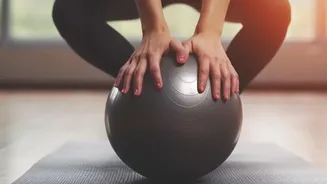
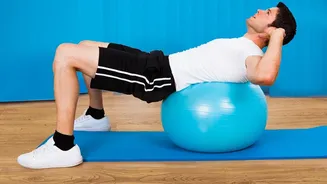
So, what should you do instead? The journey to a strong, functional core starts on the floor. Exercises like planks, dead bugs, and glute bridges are excellent for teaching your core to resist movement and protect your spine. Reverse crunches are another fantastic option that target the lower abs without straining the neck. Once you're comfortable with these, you can introduce a stability ball for floor-based exercises like stability ball crunches or roll-outs. These moves build the essential stabilisation strength you'll need before you even think about hanging from a bar. The key is consistency and perfect form.
The Next Step: Progressing to Hanging Moves
Once you have a solid core foundation, you can start working towards hanging exercises. The first step is simply getting comfortable with hanging itself. Practice 'dead hangs' to build grip strength and decompress your spine. From there, a great entry-level hanging core exercise is the Captain's Chair knee raise, which provides back and arm support. When you're ready for the bar, start with hanging knee tucks, focusing on slowly raising your knees towards your chest using your abs, not momentum. As you get stronger, you can progress to straight-leg raises and then, eventually, more dynamic movements. This gradual progression builds strength safely and effectively.