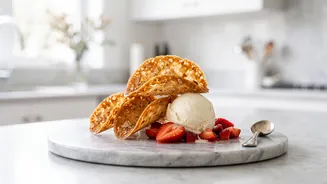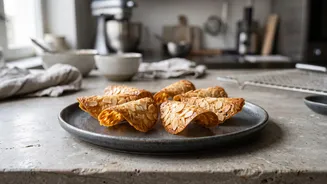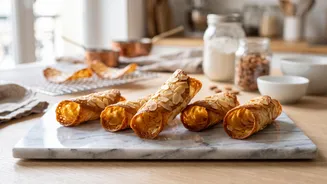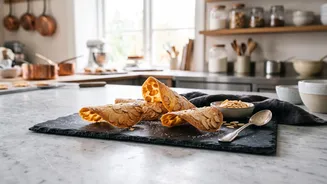



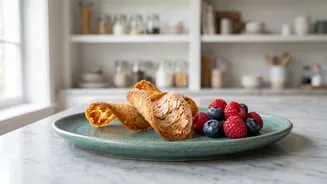


The thought of baking delicate French pastries can be intimidating, but what if you could create those impossibly thin, perfectly curved almond cookies at home? These elegant tuiles are surprisingly simple and require a secret weapon you already own.
What Are French Tuiles?
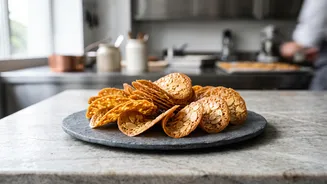
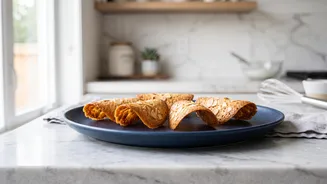
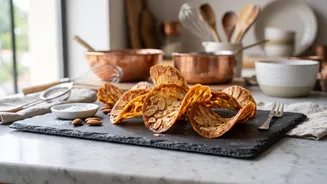
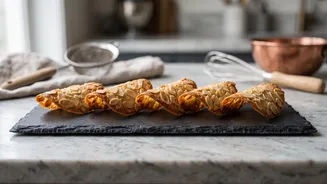
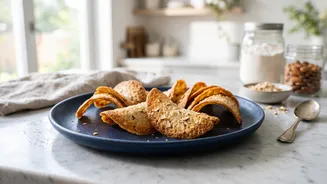
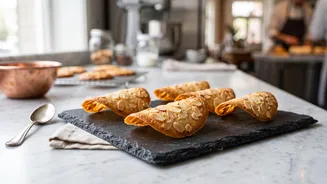
A tuile (pronounced 'tweel') is a whisper-thin, crispy cookie that gets its name from the French word for 'tile'. The classic curved shape is designed to resemble the terracotta roof tiles seen across the French countryside. Often found garnishing elegant desserts in restaurants, they are beloved for their delicate snap and rich, buttery almond flavour. While they look incredibly fancy, the batter is a straightforward mix of just a few pantry staples, making them an accessible entry into the world of French baking.
The Five Essential Ingredients
You don't need a trip to a specialty store for this recipe. The classic tuile batter relies on five simple ingredients: egg whites, sugar, flour, melted butter, and sliced almonds. Some recipes also call for a splash of vanilla or almond extract to enhance the flavour. The magic isn't in rare ingredients, but in the technique. The high ratio of sugar and butter is what gives the cookies their signature delicate, lace-like texture as they bake. For the best results, have your ingredients measured and ready to go before you begin.
Mixing the Effortless Batter
Creating the batter is perhaps the easiest part. Start by lightly whisking the egg whites with sugar until just foamy; you are not trying to create stiff peaks as you would for a meringue. Next, stir in the flour until the mixture is smooth. Finally, whisk in your melted (but not hot) butter and any extracts until just combined. Gently fold in the sliced almonds. Some recipes suggest letting the batter rest in the refrigerator for an hour or two, which helps it firm up and makes it easier to spread.
Achieving That Wafer-Thin Spread
The key to a crispy tuile is spreading the batter as thinly as possible. Working in small batches is crucial because you will need to shape the cookies quickly when they are hot. Spoon about a teaspoon of batter onto a baking sheet lined with parchment paper, leaving plenty of space between each one as they will spread. Use the back of the spoon to spread the batter into a thin circle, about 3 to 4 inches in diameter. You should be able to almost see the parchment paper through the batter. Don't worry about making perfect circles; rustic is part of their charm.
The Rolling_Pin Shaping Secret
This is where the magic happens. Bake your tuiles for just a few minutes, until the edges are golden brown but the centre is still pale. You must work very quickly once they come out of the oven. Let them cool for only a moment—just enough so you can handle them. Using a thin spatula, carefully lift a hot, pliable cookie from the parchment paper and immediately drape it over a rolling pin. You can also use a wine bottle or even the side of a glass. Gently press the ends to help it conform to the curve. The cookie will harden into its signature tile shape as it cools. If your cookies become too brittle to shape, pop them back in the oven for 30 seconds to soften them again.
Storing for Lasting Crispness
Due to their delicate nature, tuiles are susceptible to humidity, which can make them lose their satisfying snap and become soft or sticky. To keep them perfectly crisp, make sure they are completely cool before storing. Place them in an airtight container at room temperature. Stored correctly, they can last for several days, though they are often at their best within the first day or two. If they do become a little soft, you can often re_crisp them in a 350°F oven for a couple of minutes.