





For nearly 500 years, the cryptic verses of Nostradamus have captivated believers and skeptics alike. Now, modern interpreters are applying his ancient prophecies to today’s world, particularly in America. But what did he actually write?
The Man Behind the Myths
Before he was
a household name for prophecy, Michel de Nostredame was a 16th-century French physician and astrologer. Living through a time of plague and religious upheaval, he began publishing almanacs with poetic predictions. His major work, 'Les Prophéties', published in 1555, is a collection of 942 four-line poems, or 'quatrains'. These verses, which he claimed were visions of the future, were popular even in his own time, earning him the attention of French royalty like Catherine de' Medici. However, Nostradamus himself was cautious, fearing persecution for his work and even denying he was a prophet in the religious sense.
The Art of Vague Prophecy
The enduring appeal of Nostradamus lies in his writing style. The quatrains are famously ambiguous, written in a mix of Middle French, Latin, and Greek, and filled with metaphors and allegories. This vagueness is a feature, not a bug. Critics and even some contemporaries pointed out that the verses are so nebulous they can be molded to fit almost any event after it has already happened. This process is known as retrofitting or postdiction. There is no known instance where one of his quatrains was used to predict a specific event in detail before it occurred. Instead, interpreters find connections after the fact, which is a testament to human pattern-seeking rather than Nostradamus's supernatural ability.
Finding America in Ancient Verses
Though the United States didn't exist in the 16th century, many interpreters claim to find references to it in Nostradamus's work. They point to phrases about a 'new world' or a great power 'across the sea' as evidence. Quatrains mentioning civil strife, great fires, or economic turmoil have been retroactively applied to everything from the American Civil War to the 9/11 attacks and the 2008 financial crisis. One of the most famous online hoaxes after the 9/11 attacks was a fabricated Nostradamus quatrain about 'two twin brothers torn apart'—a verse he never actually wrote. This highlights the tendency to project modern anxieties onto his ancient, flexible texts.
Who Is 'America's Nostradamus'?
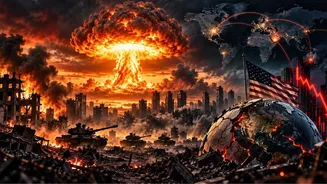
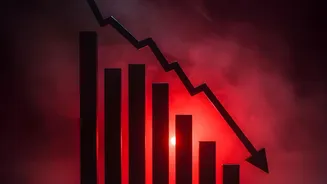
The headline's 'America's Nostradamus' often refers to modern interpreters who gain notoriety for their predictions about the U.S. One such figure is John Hogue, who has spent decades analyzing Nostradamus's writings. Based on his interpretations, Hogue has made dramatic predictions, including the economic collapse of the U.S. by 2028 and a 27-year-long global war triggered by the death of a figure he calls 'Mabus'. These claims, often tied to current political figures and astrological cycles, generate significant media attention. However, like all interpretations of Nostradamus, they rely on decoding vague texts and are not based on clear, unambiguous predictions from the original source.
Skepticism and Scholarly Consensus
For every believer, there is a skeptic. The academic and scientific consensus is that Nostradamus had no genuine prophetic powers. Scholars argue that associations between his quatrains and world events are the result of misinterpretation, poor translation, or confirmation bias. Many popular English translations are not based on the earliest editions of his work and can introduce distortions. Furthermore, the few specific and dated predictions Nostradamus made have consistently failed to come true. Critics maintain that his verses are simply poetry that reflects the anxieties of his own time, which happen to be general enough to seem relevant in any era.