


Saturn: The Lord of the Rings
Saturn is the star of the show for much of the night this September. You can spot its steady, yellowish gleam rising in the eastern sky shortly after sunset. The planet is visible for most of the night, reaching its highest point in the sky around midnight.
While its formal opposition—when it's brightest and closest to Earth—is on October 4, September provides an excellent viewing window. Even a basic telescope will reveal its famous rings, which are now tilted just enough to be visible again after appearing edge-on last year. Look for it in the constellation Pisces; it will be the most prominent point of light in that patch of sky.
Jupiter: The Pre-Dawn Giant
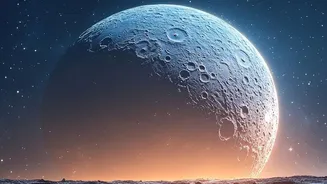
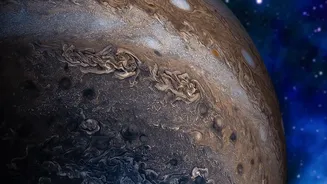
For the early risers, Jupiter offers a brilliant sight in the pre-dawn sky. The gas giant rises in the east-northeast a few hours before the sun. While it's low on the horizon initially, it climbs to a good viewing altitude just before dawn. A particularly special event occurs on the morning of September 8, when a thin waning crescent Moon will be seen very close to Jupiter, creating a beautiful pairing in the eastern sky. This close approach makes it a fantastic photo opportunity for amateur astronomers. Through a telescope, you might even be able to glimpse its four largest moons and tumultuous cloud belts.
Mars: The Rising Red Planet
Mars is also a morning object, steadily growing brighter as the month progresses. Look for the reddish-hued planet in the eastern sky, rising around 1:40 a.m. at the start of the month. On the mornings of September 6 and 7, the waning crescent Moon will pass near Mars, making the Red Planet easier to locate. Mars begins September in the constellation Gemini, near the twin stars Castor and Pollux, before moving into Cancer later in the month. While it's still too small to show much surface detail in most backyard telescopes, its distinct colour makes it easy to identify with the naked eye.
Venus: The Dazzling Evening Star
Venus has been a dominant feature in the western evening sky for months, and September is its final full month of this stunning appearance. It shines with exceptional brightness shortly after sunset. Look for it low in the west-southwest; it will be unmistakable. Venus reaches its peak brilliance for the year this month, making it a truly dazzling sight. However, with each passing day, it will dip lower toward the horizon and set earlier, so catch it while you can. On September 14, a very slender crescent Moon will be visible near Venus, offering another picturesque moment for sky-gazers.
Tips for the Best Viewing Experience
You don't need expensive equipment to enjoy this planetary parade. Most of these planets are bright enough to be seen with the naked eye, even from urban areas. For the best experience, find a location away from direct city lights, like a park or a terrace with an unobstructed view of the horizon. Give your eyes at least 15-20 minutes to adjust to the darkness; this will help you spot fainter objects. Binoculars are a great next step, as they can reveal Jupiter's moons and give you a better look at star clusters near the planets. Planet-finder apps on your smartphone can also be an invaluable tool for locating constellations and confirming which bright dot is which planet.