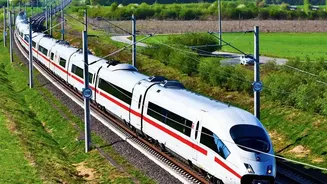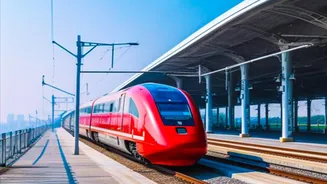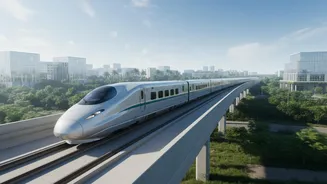






The Challenge of Starting from Scratch
Traditionally, major infrastructure projects are treated as unique, standalone endeavours. For each new high-speed rail corridor, engineers would typically start from a blank slate. This means conducting new topographical and geotechnical surveys, creating
bespoke designs for every viaduct, tunnel, and bridge, and developing separate technical specifications for each component. The under-construction Mumbai-Ahmedabad High-Speed Rail (MAHSR) corridor, being built with Japanese Shinkansen technology, has provided invaluable experience but has also highlighted the complexities of a custom approach. This project-by-project method is time-consuming, expensive, and requires a massive amount of redundant engineering and administrative work.
The Power of a Single Playbook
The Ministry of Railways is now looking to change this paradigm. The National High Speed Rail Corporation Limited (NHSRCL) has begun developing a standardised set of designs and technical specifications that can be used across future corridors. The idea is to create a 'design library' for crucial infrastructure like viaducts, bridges, tunnels, and even stations, based on the learnings from the MAHSR project. This single playbook approach means that instead of reinventing the wheel every time, engineers can adapt a pre-approved, proven design. This strategy promises significant benefits, including faster project execution, reduced construction costs through bulk procurement of materials, and more consistent quality and safety standards across the national network.
Building a National Network, Faster
This standardisation is crucial for India's larger vision. The government has already approved a blueprint for seven new high-speed rail corridors, spanning approximately 4,000 kilometres and connecting major economic hubs like Delhi, Varanasi, Mumbai, Pune, Hyderabad, Bengaluru, and Chennai. Approaching each of these as a separate design challenge would be a monumental task, likely leading to decades of work and escalating costs. By creating a common design framework, India can accelerate the entire process. It simplifies the tendering process, allows for the creation of a specialised workforce trained on a single system, and makes long-term maintenance more straightforward and cost-effective. NHSRCL has already invited global bids for consultancy services to help prepare these standard designs for infrastructure capable of handling speeds up to 350 kmph.
A 'Made in India' Standard
A key aspect of this initiative is the focus on creating a standard that is tailored for Indian conditions, with a strong emphasis on the 'Make in India' programme. NHSRCL is collaborating with leading technical institutes like the IITs to develop these standards. The goal is to create specifications suited to India's unique environmental and social context. This extends beyond civil infrastructure. The country is also developing an indigenous signalling protocol, the Bharat Train Control System (BTCS), to reduce reliance on foreign technology for future high-speed corridors. This push towards self-reliance ensures that the technology can be adapted, maintained, and scaled domestically, providing a long-term strategic advantage.
Adapting to Diverse Terrain
Of course, a 'one-size-fits-all' approach has its limits in a country as geographically diverse as India. The terrain, soil conditions, and seismic activity can vary dramatically from one region to another. A single, rigid design for a viaduct in Gujarat may not be suitable for a corridor passing through the challenging topography of another region. The strategy, therefore, is not about a completely inflexible blueprint but rather a modular one. It involves creating a core set of standard designs that can be intelligently adapted to local conditions. This combination of standardisation and customisation aims to strike the right balance, capturing the efficiencies of a common platform while still respecting the specific engineering challenges posed by the local environment.