








The Current Gold Standard
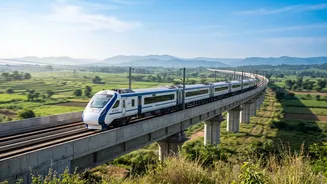
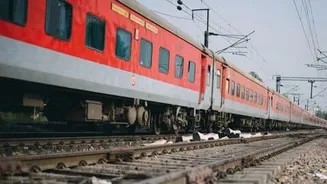
The inaugural Vande Bharat Express, launched in February 2019, revolutionised travel between New Delhi and Varanasi. It slashed the journey time from over 13 hours to a comfortable eight hours, running via Kanpur and Prayagraj. This chair-car service
quickly became a preferred option for daytime travellers, setting a new benchmark for speed and comfort on one of the country's busiest corridors. Its success demonstrated a strong appetite for faster, more efficient rail connectivity, paving the way for further enhancements on this critical route.
A Second Route in the Making
To build on this success and offer more options, Indian Railways is exploring a second Vande Bharat Express for the Delhi-Varanasi corridor. However, this new service is proposed to run on a different alignment: via Lucknow and Sultanpur. This would not only provide an alternative to the existing route but also extend the benefits of semi-high-speed travel to passengers starting from Uttar Pradesh's capital. More recently, discussions have centred on a Vande Bharat sleeper service, which would offer an overnight option, allowing passengers to travel without losing a full day. Proposed schedules suggest an overnight journey of around eight hours.
The Real Game-Changer: Upgrading the Tracks
While a new route offers more choice, the key to a truly significant reduction in travel time lies in track upgrades. Indian Railways is actively working on 'Mission Raftaar', a project to upgrade major trunk routes, including the Delhi-Howrah line that the Varanasi corridor is part of. The goal is to make the tracks capable of handling speeds of 160 km/h. This involves strengthening bridges, installing heavier-duty rails, and deploying the 'Kavach' automatic train protection system, which is crucial for ensuring safety at higher speeds. Work on installing Kavach on the Prayagraj-Kanpur section has already been commissioned, clearing the path for faster operations on this critical stretch.
How Much Faster Could the Journey Get?
The current Vande Bharat trains have a maximum operational speed of 160 km/h, but actual speeds are limited by track conditions. With the ongoing track upgrades, the existing eight-hour journey could see a substantial reduction. The new sleeper service is also expected to operate at speeds between 130 and 160 km/h, which would make the overnight journey highly efficient. Looking further into the future, an even more ambitious plan is on the horizon: a dedicated high-speed rail (bullet train) corridor. This long-term project proposes to slash the Delhi-Varanasi travel time to under four hours, a transformative leap that would connect the two cities like never before.
What Are the Hurdles Ahead?
Transforming railway infrastructure is a complex and capital-intensive process. Upgrading existing lines to 160 km/h requires significant engineering work and investment. The more ambitious high-speed corridor, while approved in principle, faces bigger challenges, including extensive land acquisition and the construction of a completely new, straighter alignment suitable for speeds over 300 km/h. These projects take years to complete. For now, the proposed sleeper Vande Bharat and the steady upgrades to the existing network represent the most immediate steps toward a faster Delhi-Varanasi connection.