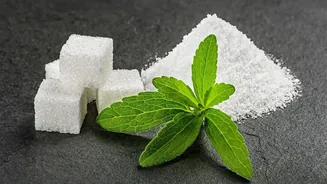







Sugar by Another Name
At a fundamental level, both honey and table sugar are carbohydrates composed of the same two simple sugars: glucose and fructose. Table sugar, or sucrose, is a neat 50/50 blend of glucose and fructose bonded together. Honey’s composition is a bit different,
consisting of roughly 40% fructose and 30% glucose, with the rest being water, other sugars, and small amounts of other compounds. Because it's denser, a tablespoon of honey actually contains more calories than a tablespoon of sugar—about 64 compared to sugar's 49. However, honey is also perceived as being sweeter than sugar, which means you might use less of it to achieve the same level of sweetness, potentially balancing out the calorie difference.
The Glycemic Index Factor
One of the most frequently cited benefits of honey is its lower glycemic index (GI). The GI is a scale that ranks how quickly a carbohydrate-containing food raises blood glucose levels. Table sugar has a GI of around 65, while honey's GI is typically lower, averaging around 58, though it can range from 45 to 64 depending on the floral source. This means honey generally raises blood sugar a bit more slowly than table sugar. This difference is due to honey's higher fructose content, which is metabolized differently than glucose and has a less immediate impact on blood sugar. While this makes honey a marginally better choice for blood sugar management, the effect is modest. For anyone managing a condition like diabetes, both should still be consumed with caution and in moderation.
Unpacking 'Trace Nutrients'
This is where the 'natural' appeal of honey comes into play. Unlike highly processed table sugar, which offers calories and nothing else, honey contains trace amounts of vitamins and minerals. These can include B vitamins, vitamin C, potassium, calcium, iron, and zinc. Honey, particularly raw and darker varieties, also contains bioactive compounds like antioxidants, flavonoids, and phenolic acids. These substances are known to help protect the body's cells from damage. However, it is crucial to put this into perspective. The amounts of these nutrients in a typical serving of honey are very small. To get a meaningful amount of these micronutrients, you would have to consume a very large and unhealthy quantity of honey. While these compounds make honey nutritionally superior to sugar, they don't turn it into a health food.
The Context of Balanced Nutrition
The concept of 'balanced nutrition' is about the big picture of your diet, not the microscopic components of a single ingredient. While honey’s trace nutrients are a point in its favour, they don't contribute significantly to your overall nutritional needs. A balanced diet provides ample vitamins, minerals, and antioxidants from sources like fruits, vegetables, whole grains, and lean proteins. Relying on a sweetener for these nutrients is misguided. The antioxidants you get in a tablespoon of honey, for example, are far less than what you would find in a single serving of berries or a cup of green tea. Therefore, the primary role of both honey and sugar in a diet is as a sweetener, and both are considered 'added sugars' that health experts recommend limiting.
The Verdict: Moderation Over Substitution
So, is honey healthier than sugar? The answer is a qualified 'yes, but only slightly'. Honey offers some small advantages due to its lower glycemic index and the presence of antioxidants and other trace nutrients. Some studies have noted its antibacterial and anti-inflammatory properties, particularly when used for things like soothing a cough. However, your body metabolizes the sugar in honey much like it does table sugar. Both contribute to calorie intake and can lead to weight gain and increase the risk of conditions like type 2 diabetes and heart disease if consumed in excess. The most significant health benefit comes not from swapping sugar for honey, but from reducing your overall intake of all added sweeteners.