

When Will the First Bullet Train Actually Run?
The most anticipated question has a phased answer. According to recent statements from Railway Minister Ashwini Vaishnaw, India’s first bullet train is expected to begin testing by May or June 2027. Following a trial period of two to four months, the
first commercial service is targeted for launch by the end of 2027. However, this will not be for the entire 508-km route. The inaugural run is planned for a shorter, priority section in Gujarat, with the Surat-Bilimora stretch being the most frequently cited starting point. Civil construction on the key Vapi-Surat section is expected to be finished by December 2026, paving the way for track laying and systems installation. The full corridor, including the complex undersea tunnel section near Mumbai, is anticipated to become operational in later stages, potentially closer to 2029 or 2030.
How Much of the Project Is Complete?
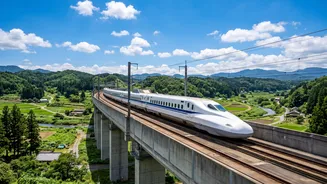
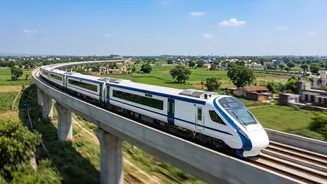
As of September 2026, the project has moved from planning and land acquisition to visible, large-scale construction. After initial delays, progress has accelerated significantly. By late 2026, official updates have highlighted that construction of the viaduct, the elevated structure on which most of the track rests, has crossed the 290 km mark. Land acquisition, once a major hurdle, is now largely complete across the corridor. The project has also seen the completion of major river bridges and the first mountain tunnel, signifying major engineering milestones. The first coach body frame, manufactured indigenously, is ready and has been sent for crucial 'squeeze testing'. While civil works are advancing rapidly, particularly in Gujarat, the focus is now shifting to the complex stages of laying tracks, electrification, and installing the advanced signalling systems required for high-speed operation.
What Will a Ticket Cost?
While an official fare chart has not been released, government and railway officials have provided strong indications. The estimated fare for the full Mumbai to Ahmedabad journey is expected to be around ₹3,000. This pricing strategy aims to position the bullet train as a premium service that is competitive with air travel but more accessible than a flight when considering city-to-city travel time. The proposed fare would be roughly 1.5 times the cost of a First-Class AC ticket on existing premium trains like the Duronto Express on the same route. The goal is to attract business travelers and a segment of the middle class who value the significant time savings—cutting a nearly six-hour train journey down to about two hours. Minimum fares for shorter distances are expected to start from around ₹250.
What Are the Biggest Remaining Hurdles?
Despite the rapid construction pace, significant challenges remain. The final stretch of construction in and around Mumbai, including the 21-km undersea tunnel, remains the most technically complex part of the entire project. Beyond civil engineering, the next critical phase involves the integration of sophisticated Japanese Shinkansen technology for signalling and rolling stock with Indian operational needs. There is also a push for indigenous manufacturing, with BEML tasked with producing trainsets capable of 280 kmph. Ensuring these homegrown trains meet rigorous safety and performance standards for high-speed operation is a crucial next step. Finally, the project's cost has escalated significantly from its initial estimate of around ₹1.1 lakh crore to revised figures approaching ₹2.1 lakh crore, due to delays, inflation, and currency exchange fluctuations. Managing this budget and securing the remaining funds is essential for timely completion.