





A Turnaround Tale of Two Fleets
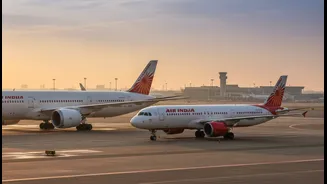
Since being reacquired by the Tata Group, Air India has been on a mission to reclaim its status as a premier global airline. At the heart of this ambition is a colossal fleet transformation. The plan is not just about placing record-breaking orders for new
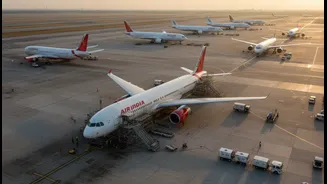
planes, but also acknowledging a crucial reality: you can't build a world-class airline overnight with brand-new aircraft alone. Delivery schedules are long, and passengers demand a better experience now. This has resulted in a pragmatic and powerful dual strategy. On one hand, Air India is preparing for a future dominated by next-generation Airbus and Boeing jets. On the other, it's investing heavily to bring its current workhorse fleet of Boeing 777s, 787s, and Airbus A320s up to a modern, consistent standard, ensuring the passenger experience improves in the short term, not just in the distant future.
The New 'Maharajas' of the Sky
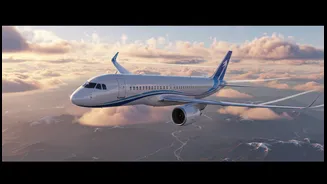
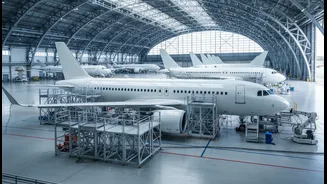
The scale of Air India's shopping spree is staggering. The airline has placed firm orders for hundreds of aircraft from both Airbus and Boeing. The stars of the show are the wide-body jets destined for long-haul international routes. This includes the elegant Airbus A350, which has already begun flying on key routes to cities like London, and will soon serve destinations in the United States. Alongside these are orders for the efficient Boeing 787-9 Dreamliner and the forthcoming Boeing 777-9, which are set to become mainstays of the future international network. For domestic and short-haul international flights, the airline is inducting a huge number of Airbus A320neo family aircraft and Boeing 737 MAX jets. This influx of new planes is not just about growth; it's about a step-change in efficiency, reliability, and passenger comfort. CEO Campbell Wilson has noted that starting in 2026, the airline will induct a new wide-body aircraft every six weeks.
Breathing New Life into Existing Aircraft
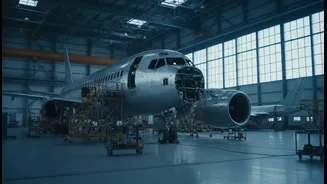
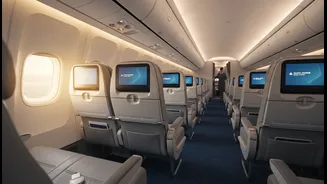
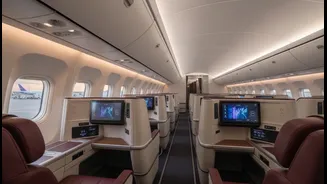
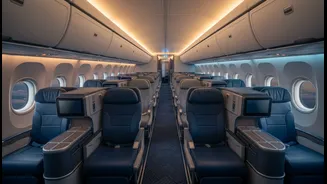
While the new planes grab headlines, the less glamorous but equally critical part of the strategy is a $400 million cabin refurbishment program for the existing fleet. This involves completely gutting the interiors of dozens of wide-body Boeing 777 and 787 aircraft, as well as narrow-body Airbus A320s, and fitting them with brand-new seats, modern inflight entertainment systems, and refreshed interiors. This project is vital for creating a consistent passenger experience. For the first time, Air India is introducing a true Premium Economy cabin across its long-haul fleet, a feature that is now standard on many international carriers. The first retrofitted Boeing 787s are expected to enter service in mid-2026, a significant step in elevating the journey on many international routes. Although supply chain issues have caused some delays, the program is well underway, with the narrow-body A320neo fleet retrofit already completed.
The Strategy Behind the Mix
The decision to pursue both new acquisitions and extensive retrofits is a calculated one. Ordering new aircraft involves a waiting period of several years. Relying solely on new deliveries would mean leaving passengers to fly in dated, inconsistent cabins for the better part of a decade. The refurbishment program bridges this gap. It allows Air India to improve its product offering almost immediately, helping it compete more effectively against the Gulf carriers and other international airlines that have long been the preferred choice for many Indian travellers. This dual approach demonstrates a commitment to both long-term ambition and short-term customer satisfaction. As CEO Campbell Wilson stated, the airline is transforming its current fleet at an accelerated pace while also carefully building its future fleet. This ensures that as the new aircraft arrive, they are joining a fleet that already meets a higher standard of quality and comfort, rather than creating a jarring contrast between old and new.