





A Historic Lift-Off for Private Indian Spaceflight
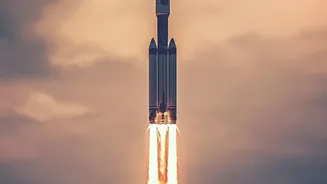
On July 18, 2026, India's space sector witnessed a landmark event as Skyroot Aerospace successfully launched its Vikram-1 rocket into orbit, marking the nation's first-ever privately developed orbital launch. This achievement, accomplished from the Satish
Dhawan Space Centre, placed India in an exclusive club alongside the US and China as countries with private orbital launch capabilities. The mission, dubbed 'Aagaman' (Arrival), was more than just a successful flight; it was a powerful statement about the potential of India's liberalised space economy. Founded by former ISRO scientists, Skyroot has quickly become a symbol of this new era, attracting significant investment and positioning itself as a key player in the global market.
Vikram-1: The Small Satellite Workhorse
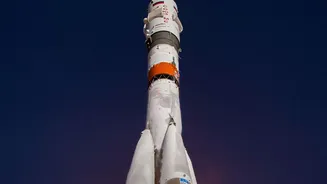
The star of the recent launch, Vikram-1, is a four-stage rocket designed as a workhorse for the small satellite market. It's engineered to carry payloads of up to 350 kg to low-Earth orbit, hitting what Skyroot's founders call the "sweet spot for the dedicated small-satellite market". This market includes everything from Earth observation and communications to scientific missions. With an all-carbon composite structure and 3D-printed engines, the rocket is built for cost-efficiency and a high launch tempo. Skyroot reports its facilities can produce one Vikram-1 per month, a cadence designed to address the long wait times satellite companies have historically faced. After this initial success, the plan involves two more developmental flights before the rocket is declared fully commercial.
Vikram-2: The Heavier Lifter in Development
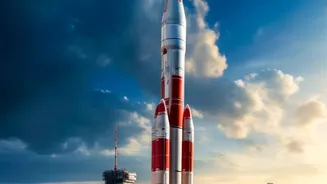
While Vikram-1 is capturing current headlines and market share, Skyroot is simultaneously developing its successor: Vikram-2. This rocket represents the company's ambitions for the future. Designed to be a heavier-lift vehicle, Vikram-2 will be capable of carrying up to 900 kg to low-Earth orbit, more than double the capacity of its predecessor. A key feature will be its cryogenic upper stage, powered by the in-house developed Dhawan-II engine, which provides greater power and multi-orbit agility. This increased capacity will allow Skyroot to service a wider range of clients, including those launching larger satellites or entire constellations. The maiden flight for Vikram-2 is targeted for 2027.
A Calculated Dual-Pronged Strategy
Pursuing both the scaling of Vikram-1 and the development of Vikram-2 is a calculated strategic gamble. This dual focus allows Skyroot to secure immediate revenue and establish market presence in the booming small satellite sector with Vikram-1. By providing frequent and cost-effective launch options, it builds a customer base and proves its reliability. At the same time, developing Vikram-2 is a crucial investment in the future. The space market is constantly evolving, and a heavier-lift, more versatile rocket ensures the company won't be left behind as satellite technology advances. This strategy mirrors that of global leaders who cater to different segments of the launch market, ensuring long-term relevance and growth.
The Road Ahead for India's Space Unicorn
Skyroot's journey from a startup to India's first space-tech unicorn valued at over $1.1 billion has been remarkable. However, the path forward involves navigating significant challenges. The small-satellite launch market is becoming increasingly crowded, and achieving consistent commercial success will require competitive pricing and a reliable launch cadence. While the Indian government projects the national space economy to grow from $8.4 billion to $44 billion by 2033, Skyroot will need to secure a significant share of international customers to sustain its planned monthly launch tempo. The success of its roadmap—balancing the operational demands of Vikram-1 with the resource-intensive development of Vikram-2—will be the ultimate test of its business model and a key factor in shaping India's future in the commercial space race.