

A Rare Spectacle Over Spain
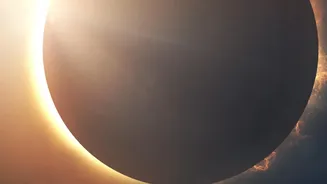
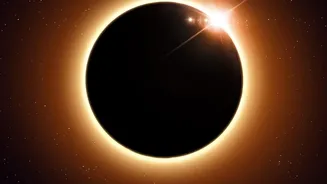
For the first time in over a century, a total solar eclipse will be visible from mainland Spain, creating an unforgettable evening event on August 12, 2026. The path of totality—the narrow track where the moon completely obscures the sun—will cross the northern
half of the country, from Galicia in the west to the Balearic Islands in the east. Cities like A Coruña, Oviedo, Burgos, and Zaragoza will experience the stunning phenomenon of daytime darkness, where the sun's ethereal outer atmosphere, the corona, becomes visible. This event is part of a rare 'Iberian trio' of eclipses, with another total eclipse in 2027 and an annular 'ring of fire' eclipse in 2028. For many, it will be a once-in-a-lifetime opportunity to witness one of nature's most awe-inspiring displays.
The Silent Danger of a Partial View
An eclipse's allure is also its greatest danger. While it's common sense not to stare at the full sun, the dimming light during a partial eclipse can trick our instincts. Looking at the sun, even when it is partially covered, is incredibly dangerous and can cause a condition called solar retinopathy. Intense solar radiation focuses on the retina, the light-sensitive tissue at the back of the eye, effectively cooking the cells. Because the retina has no pain receptors, this damage can occur without any immediate sensation of pain. The harm might only become apparent hours or even days later, presenting as blurred vision, blind spots, or permanent vision loss. Just a few seconds of unprotected viewing can cause irreversible damage.
The Gold Standard: ISO Certified Glasses
Regular sunglasses, no matter how dark, are completely inadequate for viewing an eclipse. To watch the partial phases safely, you need special-purpose solar filters found in certified eclipse glasses or handheld viewers. These products must comply with the ISO 12312-2 international safety standard. This certification ensures the filters reduce visible sunlight to a safe level and block 100% of harmful ultraviolet (UV) and infrared (IR) radiation. When purchasing, always look for the ISO 12312-2 label and buy from reputable vendors like science museums or trusted online retailers. Before use, inspect your glasses carefully; if they are scratched, punctured, or damaged in any way, discard them.
Totality: The Exception and the Rule
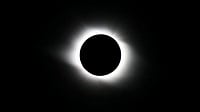
There is only one moment when it is safe to look at a total solar eclipse without protection: during totality. This is the brief, magical period when the moon entirely blocks the sun's bright face. You'll know it's happening when the world darkens dramatically and you can no longer see any part of the sun through your eclipse glasses. However, this rule comes with a critical warning. The phases immediately before and after totality are still partial phases and are dangerous. You must keep your glasses on until the very last sliver of the sun disappears. As soon as the first bright bead of light reappears as totality ends, you must immediately look away and put your eclipse glasses back on.
Other Ways to Watch Safely
If you can't get your hands on certified glasses, you can still experience the eclipse safely through indirect viewing. A simple and effective method is to create a pinhole projector. Poke a small, clean hole in a piece of card and, with your back to the sun, let the sunlight pass through the hole onto another surface, like a second piece of card or the ground. This will project a small, safe-to-view image of the crescent sun. You can also use a colander or even the spaces between your fingers to cast multiple crescent-shaped shadows. Never look at the sun through an unfiltered camera, binoculars, or a telescope, even while wearing eclipse glasses; the concentrated rays will overwhelm the filter and cause severe eye injury.