




A Mission of Two Halves
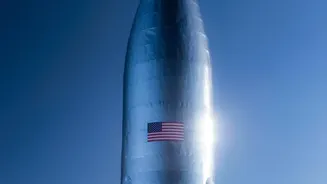
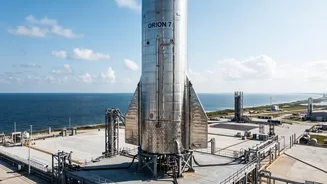
Starship Flight 15, which lifted off from Starbase, Texas, on November 13, was SpaceX's most ambitious test flight to date. For the first time, the company aimed to recover both stages of the world's largest rocket. The plan involved launching the Ship
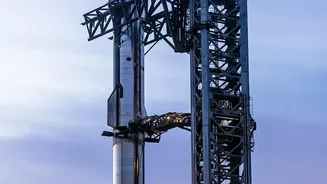
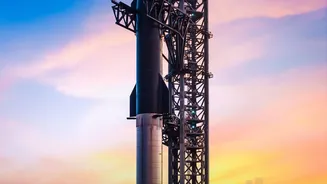
42 upper stage into orbit, deploying 26 Starlink satellites, and then returning both the Super Heavy booster and the Ship to be caught by the launch tower's giant mechanical arms, nicknamed 'Mechazilla'. The two catches were scheduled to happen nearly 23 hours apart, showcasing an unprecedented approach to reusability. While one part of this ambitious goal was a spectacular success, the other demonstrated that perfecting this new system remains a work in progress.
Starlinks Deployed, Orbit Achieved
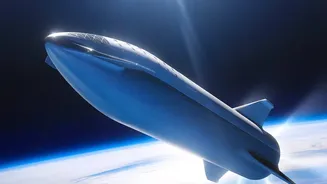
The primary mission objective was a clear success. After a nominal ascent and separation from the booster, the Starship upper stage reached a stable low Earth orbit. From there, it successfully deployed its payload: 26 third-generation (V3) Starlink satellites. SpaceX confirmed that contact was made with all satellites, which are now maneuvering to their operational orbits to join the sprawling internet constellation. This achievement marks a critical step for Starship as a payload delivery platform. Its massive capacity is key to SpaceX's business plan, allowing for faster and heavier deployment of its own Starlink satellites and, eventually, those of external customers. This flight proves the vehicle's capability to serve its primary commercial function.
The Booster's Fiery End
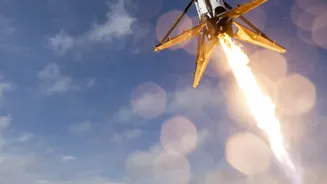
The first major test of the day came about six and a half minutes after liftoff, with the planned return and catch of the Super Heavy booster. Unfortunately, this part of the mission did not go as planned. The booster performed its boostback burn to return toward Starbase, but an automated abort was triggered. SpaceX later explained that the booster's guidance system detected it was not in the correct position for a safe catch and diverted it to a designated splashdown zone in the Gulf of Mexico. The booster's boostback burn ended early due to low fuel, and after a brief hover over the water, its flight termination system was activated. This resulted in the loss of the booster and its 33 powerful Raptor engines, a significant cost but a scenario the automated safety systems are designed to handle.
A Historic Catch for the Ship
Despite the loss of the booster, the mission's biggest prize was still in play. After spending over 22 hours in orbit and circling the Earth 14 times, Ship 42 began its journey home. Following a deorbit burn, it plunged through the atmosphere, survived the intense heat of reentry, and navigated itself back to Texas. In a nail-biting finale, the Starship executed its landing flip maneuver and descended slowly toward the launch tower. The 'Mechazilla' arms closed in and, for the first time in history, successfully caught an orbital-class upper stage, bringing it back to the launch site intact. This groundbreaking achievement is a cornerstone of SpaceX's vision for a fully and rapidly reusable launch system, a feat never before accomplished.
Why This Flight Matters
Flight 15 was a story of spectacular success tempered by a significant, though not entirely unexpected, failure. The loss of the booster highlights the remaining challenges in perfecting the complex return-and-catch maneuver, which is essential for achieving the high flight cadence and low costs SpaceX desires. However, the successful orbital insertion, satellite deployment, and, most importantly, the historic catch of the Ship are enormous victories. It proves that the most difficult part of the recovery process—returning an upper stage from orbital velocities—is possible. This single achievement dramatically advances the program's credibility and moves SpaceX closer to its long-term goals of colonizing Mars and revolutionizing access to space.