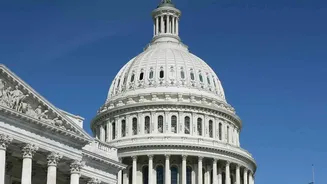








The votes are in, and Washington D.C. has a new power dynamic. The U.S. midterm elections have resulted in a divided Congress, sparking questions worldwide. For India, a key strategic and economic partner, what does this shift truly mean?
A New Political Map in Washington
Following the
November 2026 midterm elections, the United States now faces a period of divided government. Hypothetically, if the Republican Party secures a majority in the House of Representatives while the Democratic Party retains control of the Senate, it creates a complex legislative environment for the incumbent Democratic administration. This split means that any new policy, from domestic spending to international trade agreements, will require bipartisan negotiation and compromise. Historically, such divisions can lead to legislative gridlock, but they can also force moderation. For foreign partners like India, this new reality means that the predictability of U.S. policy may change, with Congressional committees, now under split control, exerting greater influence and oversight on the administration's foreign and economic agenda.
The Strategic Bedrock Remains Firm
Despite the political shifts, the core of the India-U.S. strategic partnership is expected to remain solid. For over two decades, support for a strong relationship with India has been a rare point of bipartisan consensus in Washington. Both Democrats and Republicans view India as a crucial counterweight to China's influence in the Indo-Pacific and a vital partner in global security and technology. Key areas like defense cooperation, intelligence sharing, and joint military exercises are unlikely to be affected by the change in Congressional control. Initiatives focused on building resilient supply chains for critical technologies like semiconductors and rare earth minerals also enjoy broad support, as they are seen as essential for national security by both parties. This underlying strategic alignment provides a stable foundation for the overall relationship, even if economic policies face new scrutiny.
Potential Headwinds on Trade and Tariffs
The area most likely to feel the impact of a divided Congress is trade. While a major trade agreement framework was announced in early 2026, setting a reciprocal tariff rate at 18% and outlining significant Indian purchases of U.S. goods, its path forward could become complicated. A Republican-controlled House might push for different priorities in trade deals, potentially focusing on greater market access for specific American industries like agriculture. Meanwhile, some Democrats have also shown a preference for protectionist measures to safeguard American jobs. This convergence towards economic nationalism in both parties could create a complex negotiating environment. The president retains significant power to conduct trade policy through executive actions, but a divided Congress can increase oversight and use its funding powers to influence outcomes, potentially delaying or altering the final details of any comprehensive trade pact.
The All-Important H-1B Visa Question
For India's massive IT sector and its skilled professionals, U.S. immigration policy, particularly concerning the H_1B visa, is a critical issue. This is another area where a split Congress introduces uncertainty. The Democratic administration has generally aimed to streamline the process for high_skilled workers. However, there are factions within the Republican party with differing views. Some are business_friendly and recognize the need for foreign talent to drive innovation, while others advocate for stricter rules to protect American workers. Bipartisan efforts to reform the H_1B program have been attempted for years, often proposing higher wage requirements and stricter compliance. A change in Congressional leadership doesn't automatically reverse existing rules set by the administration, but it does mean that any new comprehensive immigration reform will require a difficult compromise between the two parties, leaving the future of the H_1B program in a state of flux.