

A Sweet Finale to Freedom's Feast
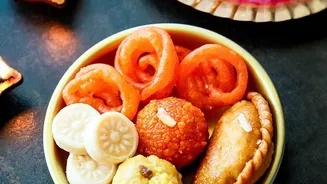
In India, no celebration is truly complete without the sharing of sweets. Mithai is not just a food item; it's a language of joy, a token of goodwill, and a thread that binds communities. For a day as significant as Independence Day, which celebrates
the culmination of a long struggle and the birth of a diverse, unified nation, the dessert course takes on a special meaning. It’s a moment to savour the sweetness of freedom. While many opt for tricolour-themed treats, looking deeper into India’s culinary map offers a more profound story. This year, let’s end the celebratory meal with two classics from two different corners of the country: the rustic, baked Chhena Poda from the east, and the creamy, refined Phirni from the north.
The Pride of Odisha: Chhena Poda
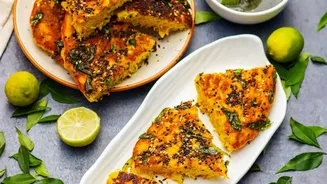
Literally translating to 'burnt cheese' in Odia, Chhena Poda is a testament to the magic of simple ingredients and slow cooking. Hailing from Odisha, this unique dessert has a texture and flavour profile unlike any other Indian sweet. It is made from fresh, well-kneaded cottage cheese (chhena), mixed with sugar and semolina, and then baked for several hours until the top layer achieves a beautiful, dark caramelisation. The result is a dessert that's moist and soft on the inside with a slightly chewy, caramel-flavoured crust. The origin story of Chhena Poda is a charming tale of happy accidents. It's said that in the early 20th century, a confectioner named Sudarsan Sahu in the town of Dasapalla had some leftover sweetened chhena. He left it in the residual heat of his oven overnight and woke up to a culinary masterpiece. Today, it’s not just a beloved sweet; it is offered to Lord Jagannath in Puri, elevating it to a divine status.
A Royal Legacy: The Creamy Phirni
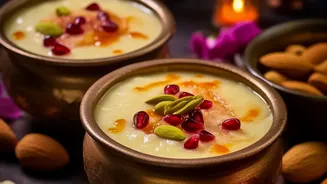
Travel north, and you'll find the elegant and aromatic Phirni. This delicate rice pudding's origins are traced back to the opulent kitchens of the Mughal era, drawing inspiration from ancient Persian desserts. Unlike its cousin, kheer, which uses whole rice grains, Phirni is made with ground rice, giving it a smoother, more refined consistency. The ground rice is slowly cooked in milk until it thickens into a creamy pudding, delicately flavoured with cardamom, saffron, and rose water. Garnished with slivered almonds and pistachios, Phirni is traditionally served chilled in small, unglazed earthenware bowls called 'shikoras'. These clay bowls are not just for presentation; they absorb excess moisture, making the Phirni thicker and imparting a subtle, earthy aroma that enhances the overall experience.
A Delicious Dialogue of Diversity
Placing Chhena Poda and Phirni on the same table is a beautiful culinary representation of India's 'unity in diversity' ethos. One is a baked, rustic cake from the east, born from a humble village innovation. It has a robust, smoky sweetness from caramelised sugar. The other is a creamy, smooth pudding from the north with royal, Persian roots. It is subtle, fragrant, and sophisticated. One is served warm or at room temperature, while the other is best enjoyed chilled. They are opposites in texture, temperature, and technique, yet they both hold a cherished place in India’s gastronomic landscape. Their coexistence on a festive menu mirrors the way countless distinct cultures, traditions, and histories come together to form the rich, complex, and vibrant tapestry of India.