





An Ocean of Molten Rock
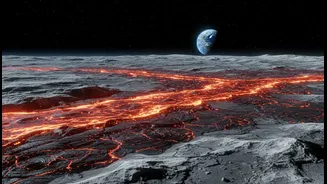
To understand the significance of India's discovery, we have to go back to the Moon's fiery birth. The leading theory, known as the Lunar Magma Ocean (LMO) hypothesis, suggests that shortly after its formation about 4.5 billion years ago, the Moon was
a hellish world covered in a deep, global ocean of molten rock. As this magma ocean slowly cooled over millions of years, lighter minerals began to crystallise and float to the surface, much like cream rising to the top of milk. This buoyant, aluminium-rich rock, called ferroan anorthosite, is believed to have formed the Moon's very first, or primary, crust. Meanwhile, heavier, denser minerals like olivine and pyroxene sank to form the lunar mantle beneath. This elegant theory has been the cornerstone of lunar science since the days of the Apollo missions, but it relied on samples from a limited number of sites around the Moon's equator.
India's Rover Finds Crucial Evidence
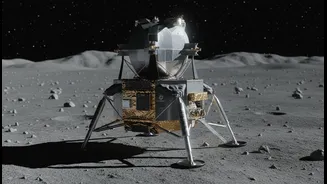
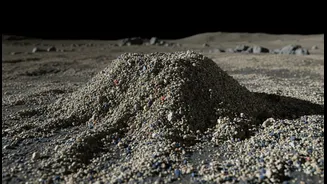
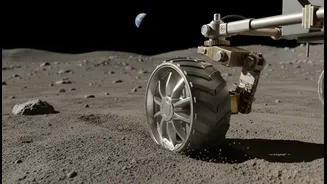
This is where Chandrayaan-3 comes in. When the Pragyan rover began exploring the untouched south polar region in 2023, its Alpha Particle X-ray Spectrometer (APXS) instrument got to work analysing the chemical makeup of the lunar soil at the 'Shiv Shakti Point' landing site. The results, detailed in recent studies, provided a resounding confirmation of the LMO hypothesis. The soil was found to be predominantly composed of ferroan anorthosite, the exact type of rock predicted by the theory. Finding this material so far from the Apollo landing sites strongly suggests that the magma ocean was indeed a global phenomenon, and that the process of crust formation was similar across the entire Moon. It was a huge piece of the puzzle, delivered from a region no mission had ever explored on the ground before.
A Mysterious Mix of Materials
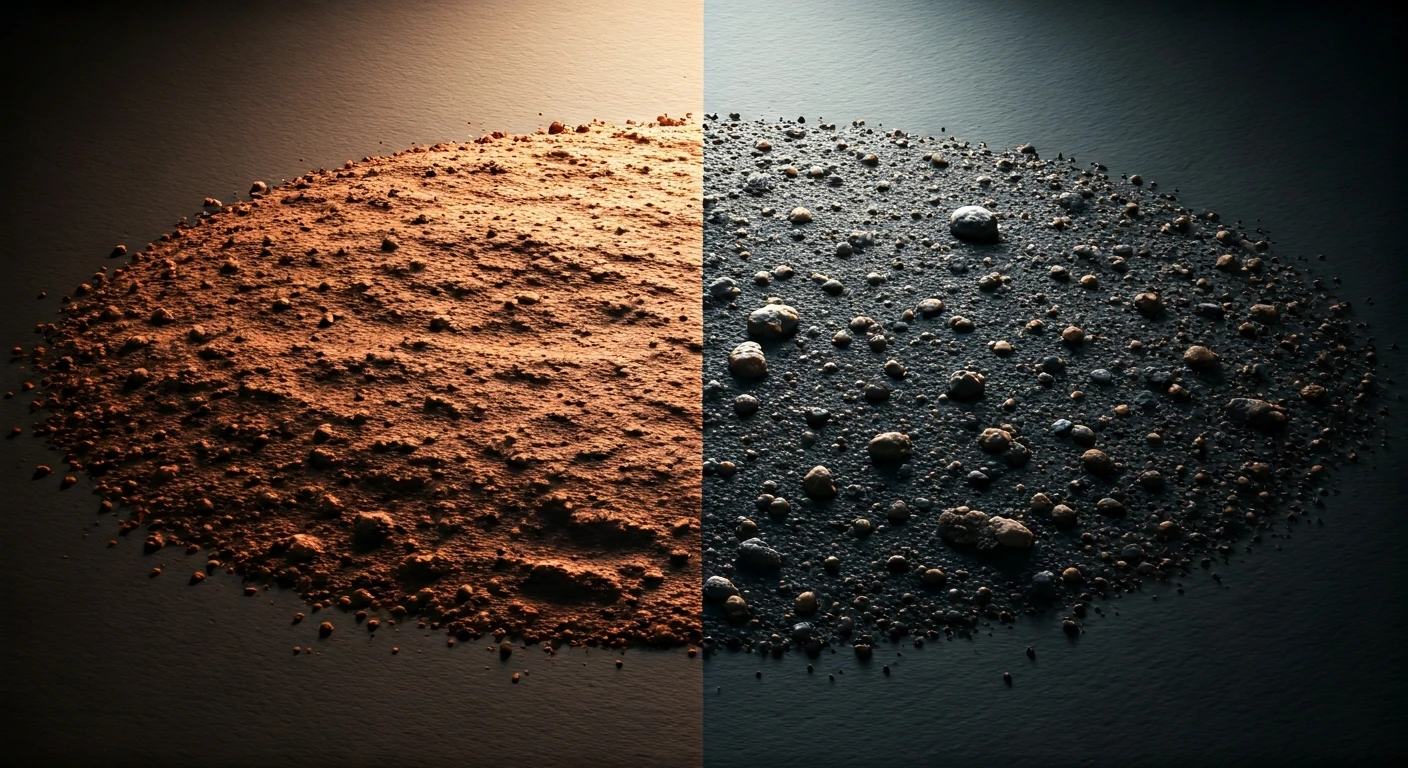
However, the APXS data also revealed a fascinating anomaly. The soil was not pure ferroan anorthosite. It contained a surprisingly high amount of magnesium-rich minerals, the denser kind that should have sunk into the mantle. This discovery presented a challenge to the simplest version of the magma ocean model. If the crust was formed by light minerals floating to the top, where did this heavier material come from? The answer, it turns out, lies in the Moon's violent past. The soil at Shiv Shakti Point is not just a sample of the primary crust, but a mixture—a geological record of billions of years of history.
Scars of an Ancient Impact
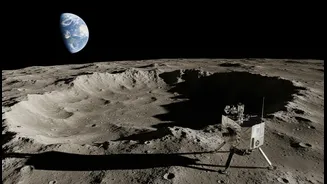
Scientists believe the magnesium-rich material was dredged up from deeper layers of the crust or even the upper mantle by cataclysmic impacts. The prime suspect is the colossal impact that formed the South Pole-Aitken (SPA) basin, one of the largest and oldest impact craters in the solar system, located about 350 kilometres from the Chandrayaan-3 landing site. This ancient collision, billions of years ago, would have acted like a giant shovel, excavating rock from deep within the Moon and scattering it for hundreds of kilometres across the surface. Over eons, smaller, subsequent impacts continued to churn and mix this material, creating the blended soil composition that the Pragyan rover analysed.
Connecting the Dots to Earth
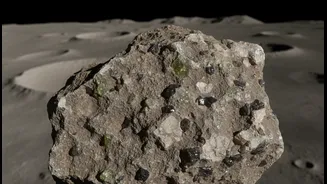
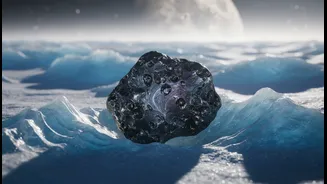
In a stunning display of scientific detective work announced in July 2026, researchers from the Physical Research Laboratory (PRL) made another breakthrough. They found that the unique chemical fingerprint of the soil at Shiv Shakti Point is a near-perfect match for a lunar meteorite known as ALHA 81005. This rock was discovered in Antarctica in 1981 but its exact origin on the Moon was unknown. This link provides a powerful piece of 'ground truth', confirming that rocks with this mixed, magnesium-rich composition exist in specific regions and have been blasted off the Moon to eventually land on Earth. It validates both the rover's in-situ analysis and decades of meteorite studies.
The View from Orbit
The detailed, ground-level analysis from Chandrayaan-3 is complemented by its predecessor, the Chandrayaan-2 orbiter. Since 2019, the orbiter's CLASS instrument has been creating comprehensive maps of the elemental composition of the entire lunar surface. This wide-angle view from orbit provides the large-scale context for the rover's specific findings. By combining the orbiter's global maps with the rover's precise ground measurements, scientists can build a far more complete and nuanced picture of lunar geology, distinguishing different terrains and understanding the processes that shaped them. This synergy between the two missions has been instrumental in reconstructing the story of the Moon's crust.