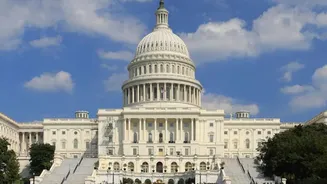





The US midterm elections have delivered a decisive victory for the Democratic Party, which has gained control of both the House and Senate. This political earthquake in Washington signals a significant shift in the policy landscape, with major implications
for the India-US economic corridor.
A New Power Dynamic in Washington
The Democratic sweep of Congress marks a sharp rebuke of the sitting administration's policies, driven by voter frustration over economic anxieties and the war in Iran. With majorities in both chambers, Democrats now wield significant power, including the ability to set the legislative agenda, control federal spending, and block presidential appointments. This new dynamic creates a different negotiating environment for India, which has navigated a relationship dominated by executive actions and tariff threats. While the President retains substantial executive authority on foreign and trade policy, increased congressional oversight is now a certainty.
Trade Talks and Tariff Scrutiny
A key area of change will be trade policy. While both parties have shown a growing preference for economic nationalism, a Democratic-led Congress is expected to bring greater scrutiny to the administration's use of tariffs. Analysts believe this could ease some pressure on India to finalize a bilateral trade agreement on unfavorable terms. However, the push for a deal is not over. Some experts suggest the administration may now increase pressure to secure a quick agreement as a foreign policy 'win'. Any new deal will likely face intense review from Democratic committees, which traditionally emphasize strong, enforceable labor and environmental standards—a factor that could complicate negotiations for New Delhi.
The Tech Corridor: Visas and Regulation
For India's vital information technology sector, the election results bring both opportunities and new risks. A Democratic Congress will likely increase its oversight of immigration policies, including the H-1B visa program, which has been a point of friction. This could lead to a more stable and predictable process for Indian professionals. However, the tech relationship extends beyond talent. Expect renewed focus on issues like data privacy, digital trade, and supply chain resilience for critical technologies like semiconductors. Democratic leaders may also push for tighter restrictions on technology exports and investment, which could have downstream effects on India-US collaboration.
A Greener Agenda for Partnership
Climate and clean energy are expected to become a more central pillar of the bilateral relationship. The Democratic party platform has long prioritized environmental issues, and their control of Congress could unlock significant funding and policy support for green technology initiatives. This aligns well with India's own ambitious renewable energy goals. The shift could accelerate partnerships in areas like solar and wind energy, battery storage, and the development of green hydrogen. While disagreements over issues like India's coal usage persist, the overall emphasis on climate cooperation is likely to strengthen under the new leadership in Washington.