






More Than Just Wood
When we think of wildfire fuel, we often picture piles of dry wood. But in reality, fuel is anything in a forest or grassland that can burn. Fire scientists categorise these fuels to predict fire behaviour. The two most important categories are 'fine'
and 'heavy' fuels. Fine fuels include things like dry grass, leaf and needle litter, and small twigs. These are the materials that ignite easily and allow a fire to spread rapidly. Heavy fuels, on the other hand, consist of larger materials like tree trunks, thick branches, stumps, and even the deep organic layers of the soil itself. They are harder to ignite but can burn for a very long time.
Nature's Built-In Fireproofing
The single most important factor determining whether a landscape is ready to burn is moisture. Live, healthy vegetation can contain a large amount of water, making it resistant to ignition. Think of trying to light a freshly cut green branch versus a dry, dead one. This is because the fire's heat energy is first spent boiling off the water before it can actually burn the plant tissue. High moisture content in both live and dead fuels acts as natural fireproofing. When fuels are wet, fires struggle to start and spread slowly. When fuels are dry, the opposite is true.
The Dehydration Effect
This is where heat waves come in. Prolonged periods of extreme heat, often combined with low humidity, act like a giant oven, systematically stripping moisture from the landscape. The hot, dry air essentially sucks water out of vegetation, from the finest blades of grass to the thickest logs. Fine fuels are the first to be affected. They can dry out in a matter of hours, becoming exceptionally flammable and ready to be ignited by a spark from lightning or human activity. This explains why fire danger can spike so quickly during a heat wave.
A Two-Stage Threat
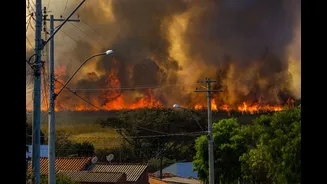
The truly dangerous situation arises when heat waves are prolonged or repeated. While fine fuels respond quickly to changes in humidity, heavy fuels take much longer to dry out. They are the landscape's deep moisture reserve. Repeated heat waves chip away at this reserve until even large logs, stumps, and deep soil become critically dry. This creates a two-stage threat. The dry fine fuels allow a fire to start and spread with frightening speed. Once established, the fire is hot enough to ignite the now-dry heavy fuels. These heavy fuels then burn with incredible intensity for long periods, releasing enormous amounts of energy. Fires that burn into heavy fuels are much harder to control, can smoulder for days or weeks, and are capable of reigniting long after the main fire front has passed.
India's Growing Vulnerability
This dangerous feedback loop is becoming increasingly relevant for India. With climate change making heat waves more frequent and intense, the country's forests are facing new levels of risk. Studies show that rising temperatures are a key driver of increased forest fire frequency in regions like the Himalayas. According to the Forest Survey of India, over a third of the country's forest cover is now prone to fire. The early months of 2026 have already shown a sharp increase in fire incidents compared to previous years, a trend linked directly to hotter, drier conditions. As heat waves continue to bake landscapes, they are effectively pre-heating and preparing both fine and heavy fuels for more catastrophic fires.