

Karnataka's Khara Bath
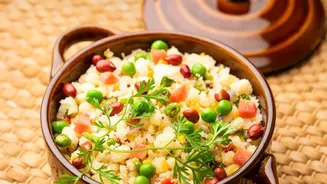
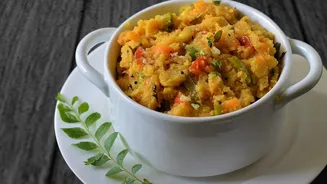
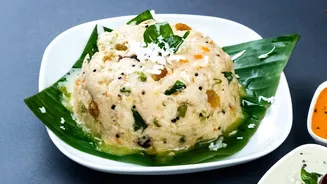
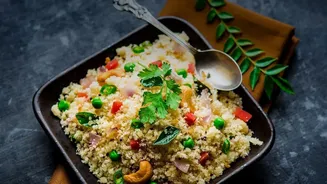
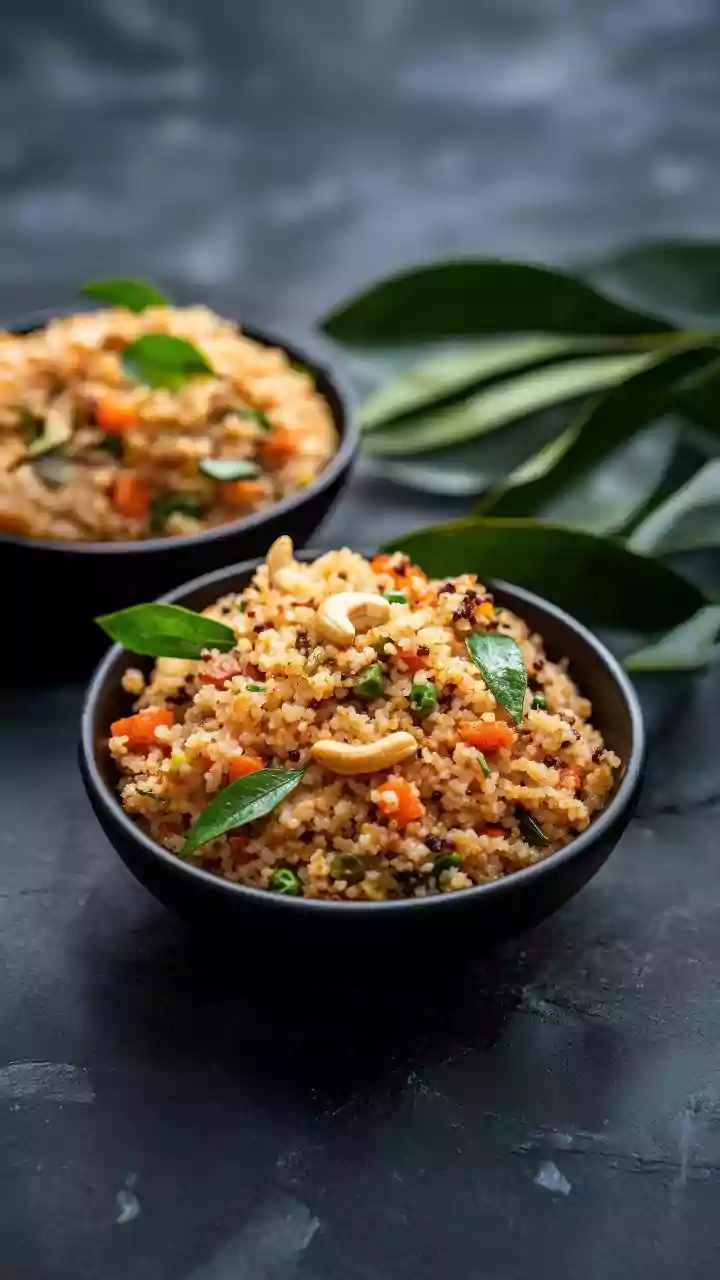
In Karnataka, upma often goes by the name Khara Bath, and it’s a flavour-packed experience. This version is not for the faint of heart; it is unapologetically spicy and aromatic. The secret lies in a special masala powder, often a home-ground vangi bath
or bisi bele bath powder, which lends it a complex, savoury depth and a distinctive reddish-brown hue. Made with coarse rava (semolina), it’s loaded with finely chopped vegetables like carrots, beans, and peas, and a generous amount of tomatoes and onions. The texture is typically softer and more porridge-like than standard upma. It's often served in restaurants as part of a 'Chow Chow Bath'—a combination of the spicy Khara Bath and its sweet counterpart, Kesari Bath, on the same plate.
Tamil Nadu's Arisi Upma
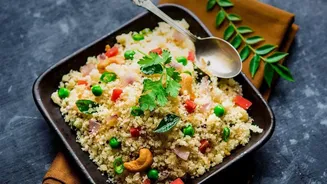
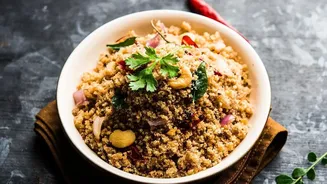
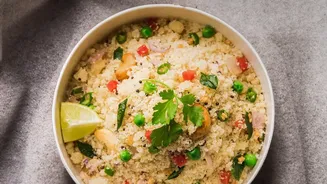
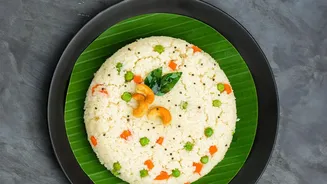
Travel to Tamil Nadu, and you'll discover a version of upma that changes the core ingredient entirely. Arisi Upma, a traditional favourite especially in Tamil Brahmin households, is made not from semolina but from coarse, raw rice rava. To create this special rava, raw rice and toor dal are typically ground together into a grainy texture. This gives the dish a completely different mouthfeel—less soft and pasty, more distinct and granular. The flavour profile is often simpler and more subtle, with the aroma of coconut oil, mustard seeds, urad dal, spicy black pepper, and cumin taking centre stage. It’s a comforting, hearty dish often served as an evening tiffin and tastes divine with a side of coconut chutney or a tangy vathal kuzhambu.
Maharashtra's Tikhat Sanja
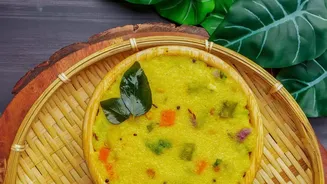
In Maharashtra, the cousin of upma is called Sanja or Tikhat Sanja ('tikhat' meaning spicy). While it also uses semolina like the southern versions, a few key differences make it distinctly Maharashtrian. Firstly, the inclusion of onions is standard, and turmeric powder gives Sanja its signature bright yellow colour. The tempering is also slightly different, focusing on mustard and cumin seeds, sometimes with peanuts added for crunch. The resulting texture is often described as fluffier and less creamy than a typical South Indian upma. Some variations even incorporate buttermilk or curd, adding a slight tang to the final dish. Garnished with fresh coriander and grated coconut, it's a wholesome breakfast that offers a familiar yet unique flavour profile.
Kerala's Aval Upma
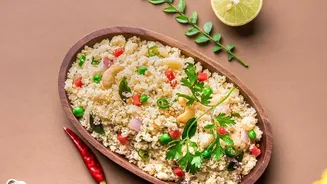
Quick, easy, and light, Aval Upma is a popular breakfast in Kerala and across the country, where it is often known as Poha Upma. 'Aval' is the Malayalam word for flattened rice flakes, which require minimal cooking. Unlike semolina-based upmas that need careful roasting and cooking in water, aval simply needs to be rinsed and soaked for a few minutes to soften. In Kerala, the preparation is often infused with the region's signature ingredient: coconut. Whether it's the use of coconut oil for tempering or a generous garnish of freshly grated coconut, the flavour is unmistakable. The basic tempering includes mustard seeds, curry leaves, onions, and green chillies, creating a light, fluffy, and incredibly fast meal.
The Pan-Indian Bread Upma
A more modern and ingenious take on the classic, Bread Upma is a testament to the dish's versatility. It's a popular way to use up leftover bread slices and has become a breakfast staple in households across India. The concept is simple: bread is cut into small cubes and tossed in a flavourful mix of sautéed onions, tomatoes, ginger, and green chillies. Spices like turmeric and chilli powder are added, along with a tempering of mustard seeds and curry leaves. The final dish is a wonderful mix of soft, savoury bread chunks that have absorbed all the flavours of the masala. Some variations toast the bread first for a crispier texture, while others might add a splash of yoghurt or lemon juice for a tangy finish. It’s quick, resourceful, and utterly delicious.