






Meet SOLVE, Gaganyaan's New Test Platform
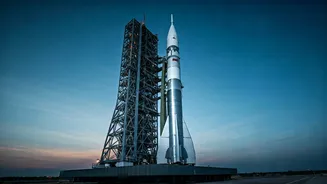
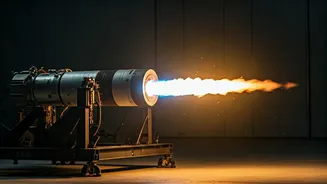
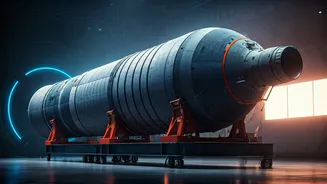
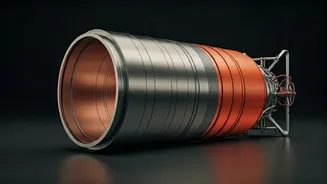
The motor tested is for a new vehicle named SOLVE, which stands for Sub-Orbital Launch Vehicle for Experiments. This isn't the rocket that will fly to orbit, but a dedicated test vehicle designed for a very specific and vital purpose: to repeatedly test the Gaganyaan
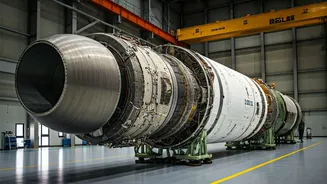
crew module's recovery systems. The successful ground test of its solid motor was conducted at the Satish Dhawan Space Centre in Sriharikota on July 3, where it performed exactly as engineers had planned. This motor is a modified version of the reliable strap-on boosters used in ISRO's workhorse rocket, the PSLV. Engineers have adapted it with features like a slower-burning propellant and a new steering system to meet the unique needs of this testing platform.
The Critical Role of Parachute Testing
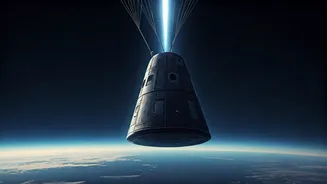
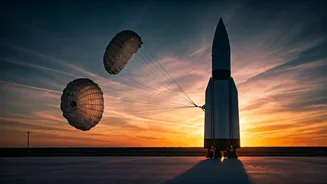
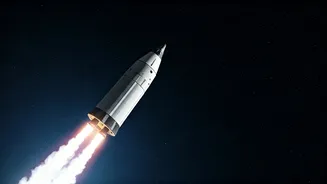
The primary job of the SOLVE rocket will be to test Gaganyaan’s complex parachute system. During these test flights, the SOLVE vehicle will carry a prototype of the crew module to an altitude of 10 to 17 kilometres. Once it reaches the target altitude, the crew module will separate and begin its descent. This is where the real test begins. A carefully choreographed sequence of 10 different parachutes will deploy to slow the module down from high speed to a gentle splashdown in the sea. Developing the SOLVE vehicle gives ISRO the flexibility to conduct these crucial tests multiple times and under various simulated conditions, ensuring the parachute system is robust and reliable before any astronaut flies.
Safety First: The Mantra of Human Spaceflight
While the SOLVE platform focuses on landing, the broader Gaganyaan program has a comprehensive safety strategy. The main launch vehicle, the Human-Rated LVM3, is equipped with a Crew Escape System (CES). This system is powered by its own set of quick-acting solid rocket motors designed to pull the crew module and its astronauts to safety in a fraction of a second if an emergency occurs on the launchpad or during ascent. The development and testing of various escape motors, like the Low Altitude Escape Motor (LEM) and High Altitude Escape Motor (HEM), has been a parallel focus for ISRO. Every component, from the main boosters like the HS200 to the tiny thrusters on the escape system, is scrutinised to ensure the highest levels of safety, which is the paramount concern in any human spaceflight mission.
What This Milestone Means for Gaganyaan
This successful test of the SOLVE motor is more than just a technical achievement; it's a significant marker on the Gaganyaan timeline. It demonstrates ISRO's methodical, step-by-step approach to mastering the complexities of human spaceflight. By building a dedicated test vehicle like SOLVE, ISRO can rigorously validate the landing and recovery systems—one of the most challenging phases of any space mission. This allows engineers to gather invaluable data and build confidence in the systems that will bring Indian astronauts, or Vyomanauts, safely back to Earth. The test is part of a series of preparatory activities, including integrated air-drop tests and astronaut training exercises, all designed to pave the way for the first uncrewed, and eventually crewed, Gaganyaan flights.