



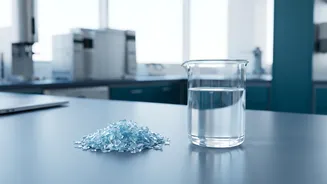
A Sweet Solution to a Global Problem
The world has a massive plastic problem. Of the billions of metric tons of plastic waste produced, only a small fraction—around 9%—is ever recycled. Most of it ends up in landfills and oceans, where it can persist for centuries. This environmental crisis
has a steep economic cost, as plastics lose about 95% of their material value after a single use. In response, scientists are exploring a radical new approach called 'upcycling'. Instead of just recycling plastic into lower-value materials, they are transforming it into something more valuable. Recent breakthroughs have shown it's possible to convert the building blocks of common plastics into proteins, fats, and even popular flavorings like vanillin. This offers a dual benefit: tackling plastic pollution while creating high-demand products from a near-worthless starting material.
From Bottle to Vanillin
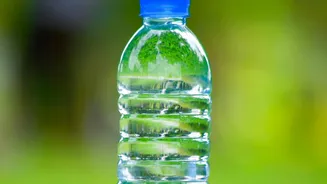
One of the most promising developments comes from scientists who have successfully turned PET plastic—the kind used in drink bottles—into vanillin, the compound responsible for vanilla's distinct flavor and aroma. The process starts by breaking down the PET plastic into its fundamental chemical components, primarily a molecule called terephthalic acid (TA). Researchers at the University of Edinburgh then introduced genetically engineered E. coli bacteria to a broth containing this acid. The microbes are programmed to perform a series of chemical reactions that convert the TA into vanillin. After incubating at a warm temperature for about a day, the process achieved an impressive 79% conversion rate, successfully transforming a component of plastic waste into a valuable chemical.
µBites: The Plastic-Derived Cookie
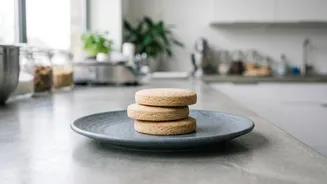
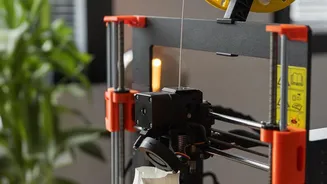
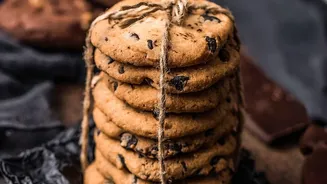
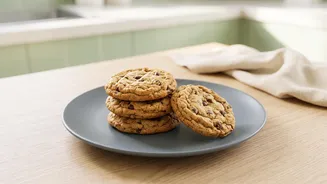
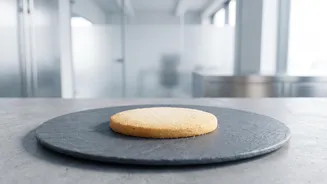
Taking the concept even further, a team at Southern Illinois University (SIU) has created actual cookies, dubbed µBites (microbites), using ingredients derived from plastic and agricultural waste. The project, part of NASA's Deep Space Food Challenge, aims to create food in resource-limited environments. Their method uses a process called oxidative hydrothermal dissolution to break down PET plastic and other biomass into a carbon-rich liquid. This liquid then serves as food for specialized strains of yeast. These yeasts are engineered to produce essential nutrients like proteins and lipids, as well as flavorings and vitamins such as beta-carotene. The resulting nutrient slurry is mixed with conventional ingredients like starch and sweetener and then extruded through a 3D printer to form a cookie.
But Is It Safe to Eat?
The first question on everyone's mind is whether these ingredients are safe for human consumption. The key is that the plastic is not merely ground up; it is completely broken down at a molecular level. The final product, such as vanillin, is chemically identical to the synthetic vanillin already widely used in the food industry, which itself is often derived from fossil fuels. The FDA already classifies synthetic vanillin as "Generally Recognized As Safe" (GRAS). The SIU team has extensively analyzed their µBites in-house and with third-party labs to ensure they are free from heavy metals, allergens, and other toxins. While the results are promising, researchers acknowledge that further testing and regulatory approval are necessary before these products can reach any consumer market.
From the Lab to the Real World
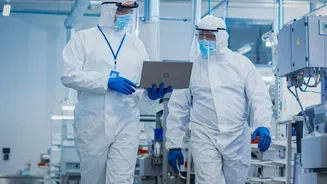
While these breakthroughs are exciting proofs of concept, scaling them from a lab bench to an industrial process presents significant challenges. Scientists are working to improve the efficiency and yield of these conversion processes, aiming for nearly 100% conversion of waste into food products. The cost of the complex, multi-step procedures also needs to be commercially viable. The potential applications are vast, from providing on-demand food in disaster zones or for long-duration space missions to creating a more circular economy here on Earth. This technology could make plastic recycling far more economically attractive, incentivizing better waste collection and turning a global liability into a valuable resource.