



The Allure of the Kitchen Counter
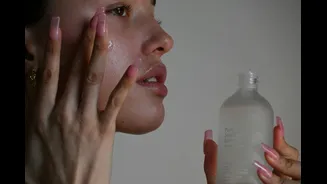
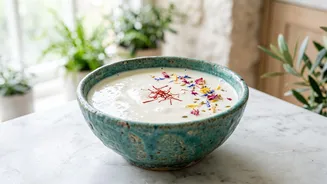
At 56, Kushboo Sundar attributes her skin's appearance to a straightforward morning ritual. She revealed that after waking up between 4:30 and 5 a.m., she often applies raw milk to her face while making tea. On other days, she might use saffron-infused
water or massage her skin with coconut or almond oil. This routine, rooted in kitchen-shelf ingredients, has resonated widely because it feels accessible and harks back to generations of traditional home remedies. Unlike complex, multi-step commercial regimens, Sundar's practice is refreshingly simple. But does simple translate to effective when it comes to the complex science of skin aging?
Decoding the Ingredients: Raw Milk
The use of milk in skincare is ancient, famously associated with Cleopatra's legendary baths. Milk contains lactic acid, an alpha-hydroxy acid (AHA) known for its gentle exfoliating properties. Lactic acid helps remove dead skin cells, which can lead to a smoother and brighter complexion. However, the concentration of lactic acid in fresh raw milk is quite low and not at the right pH to act as a significant exfoliant. While it can function as a mild cleanser and temporarily soften the skin due to its fat and protein content, there's no clinical evidence that raw milk can lighten skin, remove a tan, or reverse aging. Dermatologists also raise a caution flag: because raw milk is unpasteurised, it can harbor bacteria, which may pose a risk for those with sensitive, acne-prone, or broken skin.
The Golden Touch of Saffron
Saffron, the 'golden spice', holds a more promising position in skincare. It is rich in antioxidants like crocin, which help protect the skin from free radical damage caused by UV radiation and pollution—key drivers of premature aging. Studies and traditional use suggest saffron has anti-inflammatory properties, can help brighten the skin, and may even stimulate collagen production, which improves skin elasticity and reduces the appearance of fine lines. While there's limited scientific proof that simply applying saffron-infused water will transform the skin, its antioxidant and anti-inflammatory components are well-regarded in formulated skincare. Unlike raw milk, the benefits of saffron are more consistently supported by both traditional knowledge and modern science.
The Myth of 'Age Reversal'
The term 'age reversal' is a powerful marketing phrase, but it's not a scientific reality. No single ingredient or homemade mixture can truly turn back the clock. Effective anti-aging is a holistic strategy that involves multiple factors. Dermatologists agree that the most crucial element is consistent sun protection to prevent UV damage, which is a primary cause of wrinkles and pigmentation. Beyond that, a proven anti-aging routine often includes ingredients like retinoids to boost collagen production, vitamin C to fight free radicals, and proper hydration. While homemade remedies can be a pleasant part of a self-care routine, they cannot replace scientifically validated treatments or foundational habits like wearing sunscreen.
The Verdict: Personal Ritual vs. Proven Science
So, where does that leave Kushboo Sundar's go-to hack? It should be seen as exactly what she presents it as: a personal daily routine that she enjoys. The temporary softening effect of milk and the antioxidant potential of saffron might contribute to a feeling of wellness and a temporary glow. However, it is not a clinically proven method for age reversal. Experts advise caution with DIY remedies, especially with ingredients like raw milk that can be problematic for certain skin types. It's always recommended to perform a patch test before trying any new ingredient on your face. While the ritual may be a lovely and gentle practice for some, it's important not to confuse it with a targeted, evidence-based dermatological solution.