


The Art of Adding Vegetables
The secret to a great vegetable khichdi lies in understanding when and how to add your chosen produce. The technique varies based on the vegetable's texture and cooking time. Hard vegetables like potatoes, carrots, and cauliflower florets should be added
early in the cooking process, often sautéed with the onions and spices before the rice and dal go in. This allows them to soften completely. Softer, quicker-cooking vegetables such as green peas, spinach, or bell peppers should be added towards the end of the cooking time to retain their texture, colour, and nutrients. For leafy greens like spinach or fenugreek (methi), you can stir them in after the khichdi is cooked and let the residual heat wilt them perfectly.
Winter: Hearty and Grounding
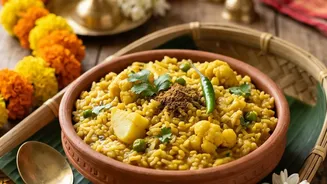
Winter brings a bounty of robust vegetables that are perfect for a warming bowl of khichdi. Sweet winter carrots, fresh green peas (matar), cauliflower (gobhi), and French beans are classic additions. These vegetables are staples in the popular Masala Khichdi found across North India, where they are often cooked with onions, tomatoes, and a blend of spices like garam masala. The vegetables are typically sautéed with ginger and garlic before the rice and dal are added, infusing the entire dish with their earthy sweetness. In Gujarat, a winter 'Vaghareli Khichdi' (tempered khichdi) might feature these vegetables along with peanuts for an added crunch.
Monsoon: Comforting and Earthy
The rainy season calls for comforting meals, and no dish is more synonymous with a downpour than Bengali Khichuri. This regional variation often uses fragrant Gobindobhog rice and roasted moong dal, creating a distinct aroma and texture. Monsoon vegetables like pumpkin, potatoes, and cauliflower are frequently added, first fried in mustard oil before being mixed into the porridge-like dish. Other monsoon-friendly vegetables include a variety of gourds like bottle gourd (lauki) and ridge gourd (turai), which break down beautifully and add a subtle sweetness. In some preparations, even earthy mushrooms and colocasia leaves find their way into monsoon khichdis.
A Canvas for Regional Flavours
Beyond the seasons, regional practices dictate the choice of vegetables. In Karnataka, Bisi Bele Bhath is a complex and spicy version of khichdi loaded with a variety of vegetables like carrots, beans, peas, and a special spice blend. Gujarati khichdi is famously versatile, with some versions including a medley of vegetables like potatoes, peas, carrots, and even eggplant. The Hyderabadi Keema Khichdi, a non-vegetarian variant, keeps the vegetable additions minimal to let the minced meat shine. Meanwhile, the simple Pongal from Tamil Nadu is typically made without vegetables, focusing on the creamy texture of rice and lentils, seasoned with black pepper and ginger. This highlights how each region has adapted the basic formula to its own palate and local produce, making khichdi a truly pan-Indian dish.