



India’s Beloved Offering: The Modak
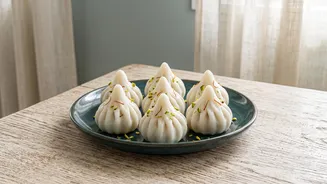
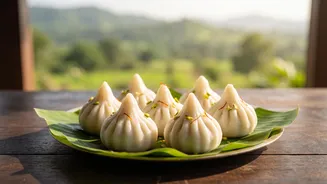
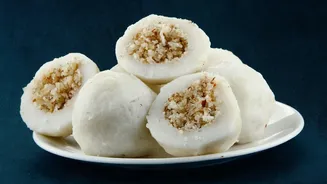
The modak is more than just a dessert in India; it's a symbol of joy, wisdom, and devotion. These sweet dumplings, with their distinctive pleated shape resembling a lotus bud, are central to the worship of Lord Ganesha. Traditionally, the most cherished
variety is the 'ukadiche modak', a steamed version with an outer shell made of soft rice flour. Inside, a heavenly mixture of freshly grated coconut and jaggery, often spiced with cardamom, awaits. While its origins are strongly associated with Maharashtra, the modak is beloved across India, known as 'kozhukattai' in Tamil Nadu and 'kadubu' in Karnataka. Ancient texts dating back to 200 BCE mention these sweet-stuffed dumplings, cementing their place in India's culinary history. It is a sweet steeped in legend, believed to bring bliss and knowledge.
Meet Kangidan: The Japanese Doppelgänger
Across the sea in Japan, a strikingly similar sweet has been offered in temples for over a thousand years. It is called 'Kangidan' or 'Seijō-kankidan'. Shaped like a fried modak or a traditional money bag, this confection has a story that intertwines deeply with Japanese spiritual life. Unlike the steamed Indian modak, Kangidan is typically deep-fried in sesame oil, giving it a crisp, golden-brown shell. The outer dough is made from a mix of flours, and the filling is distinctly Japanese, featuring red bean paste (anko), honey, and curds. What truly sets it apart is the use of seven aromatic incenses, including sandalwood and cinnamon, in its filling, a nod to its ancient, sacred roots.
The Ancient Connection: A Journey with Buddhism
So, how did a sweet so similar to an Indian classic find its way to Japan? The answer lies in the historic spread of religion and culture. The thread connecting modak and Kangidan was woven by Buddhist monks. Around the 8th and 9th centuries CE, a form of Tantric Buddhism journeyed from India to China and then to Japan. A Japanese scholar named Kukai was instrumental in this transmission, studying in China and bringing back various teachings and deities into the Japanese pantheon. Along with these beliefs came cultural practices, including food. The modak, a favoured offering to Ganesha, travelled along these spiritual pathways and was adapted into what is now known as Kangidan.
A Tale of Two Deities
The connection becomes even clearer when you look at the deities themselves. In Japan, Kangidan is the chosen offering for a god named Kangiten, who is widely seen as the Japanese equivalent of Lord Ganesha. Worshipped in over 250 temples across Japan, Kangiten, also known as Shōten or Binayakaten, is a god of bliss, joy, and prosperity. Initially, much like the early perception of Ganesha as a remover of obstacles who must be appeased, Kangiten was seen as a powerful, even formidable, deity. Over time, his image softened into that of a benevolent god who brings good fortune. The offering of Kangidan is a central part of his worship, just as the modak is for Ganesha in India.
A Sweet Preserved by Time
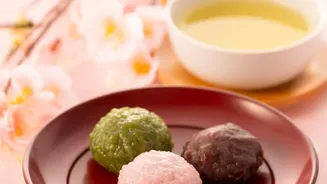
While the modak continues to be a household staple in India, especially during festivals, the Kangidan is a much rarer treat in Japan today. Its creation is a specialised craft, with only a handful of confectioners still making it. One of the most famous is Kameya Kiyonaga, a Kyoto-based sweet shop founded in 1617 that continues to prepare this ancient recipe. While the Indian modak can be steamed or fried, with fillings ranging from coconut-jaggery to chocolate, the Japanese Kangidan has remained closer to its thousand-year-old form—a fried delicacy filled with red bean paste and aromatic spices. This makes finding and tasting a Kangidan a unique experience, a delicious bite of history that connects two vibrant cultures.