



1. Lemon and Lime Juice
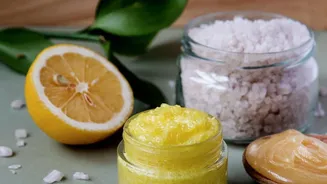
Often hailed as a natural brightener for dark spots, lemon juice is a common sight in homemade mask recipes. The appeal comes from its vitamin C and citric acid content. However, citrus juices are extremely acidic, with a pH of around 2. Your skin's natural pH is much
milder, sitting at about 4.5 to 5.5. Applying something so acidic can disrupt your skin’s protective barrier, known as the acid mantle, leading to severe irritation, dryness, and inflammation. Worse, it can cause phytophotodermatitis—a painful chemical reaction that occurs when the treated skin is exposed to sunlight, resulting in burns and blisters. It's far safer to use a professionally formulated vitamin C serum.
2. Baking Soda
Promoted as a gentle exfoliant and acne-fighter, baking soda is another kitchen staple to handle with care. Unlike lemon juice, baking soda is highly alkaline, with a pH of about 9. This high alkalinity is just as disruptive to your skin's acid mantle as high acidity. It can strip your skin of its natural oils, leaving it dry, tight, and vulnerable to irritation. For some people, especially those with sensitive skin, this can manifest as redness, burning, and even rashes. While it might feel like it's drying out a pimple, regular use can compromise your skin's barrier, potentially leading to more breakouts in the long run.
3. Apple Cider Vinegar
Apple cider vinegar (ACV) is frequently recommended as a natural toner to balance skin and fight acne, thanks to its antibacterial properties. However, applying it undiluted can be a recipe for disaster. ACV is a strong acid that can cause significant irritation and even chemical burns, especially on sensitive skin. Even when diluted, frequent use can strip the skin of its natural oils, leading to excessive dryness, peeling, and a compromised moisture barrier. Experts stress the importance of extreme dilution (at least one part ACV to three or four parts water) and always doing a patch test, but many dermatologists advise against using it on the face altogether.
4. Spices Like Cinnamon
Cinnamon often appears in DIY masks that promise a warming sensation and a healthy glow. While it has antioxidant and antimicrobial properties, it's also a potent allergen and irritant for many people. The compound that gives cinnamon its characteristic warmth, cinnamaldehyde, can easily cause redness, a burning sensation, and even blisters, particularly on sensitive skin. Using ground cinnamon as a physical scrub can also be abrasive, potentially scratching the skin's surface. Experts warn that cinnamon is rarely used in commercial skincare for a reason—it’s a common irritant. If you must use it, it should be heavily diluted and patch-tested first.
5. Physical Scrubs with Sugar or Salt
A homemade sugar or salt scrub seems like a harmless way to exfoliate. While these are great for tougher skin on the body like elbows and knees, the skin on your face is far more delicate. The sharp, irregular edges of sugar and salt crystals can create microscopic tears in the skin. This damage can weaken the skin’s barrier, leading to redness, irritation, and increased sensitivity. While some finer, rounder particles might be less harmful, most homemade scrubs use standard sugar granules that are simply too harsh for the face. Gentler exfoliation can be achieved with mild chemical exfoliants like lactic acid or enzyme-based masks.
6. Raw Egg Whites
Egg white masks are an old-school trick for tightening pores and firming the skin. The temporary tightening effect you feel is simply the protein drying on your face. While it might seem harmless, raw eggs carry the risk of salmonella. If the raw egg comes into contact with a small cut, a popped pimple, or even your lips, it could lead to a bacterial infection. Beyond the contamination risk, there's little scientific evidence to support any lasting benefits for the skin from a topical application of egg whites. The potential health risks far outweigh the minimal, temporary aesthetic perks.
7. Undiluted Essential Oils
Essential oils like tea tree, peppermint, or lavender are powerful plant extracts. Many people add a few drops to their DIY masks for their antibacterial or aromatic properties. However, these oils are highly concentrated and can be extremely irritating if not properly diluted in a carrier oil (like jojoba or almond oil). Applying them “neat” or undiluted to the skin can cause redness, stinging, inflammation, or allergic contact dermatitis. Just because they are natural doesn't mean they are universally gentle. Each oil has a different profile and potential for irritation, so caution and proper dilution are essential.