


Anak Krakatau's Fiery Outburst
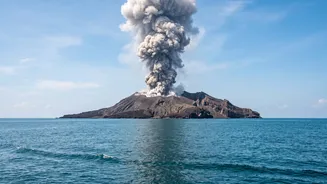
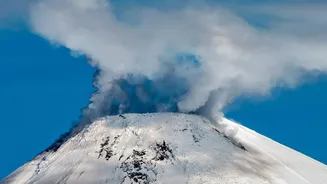
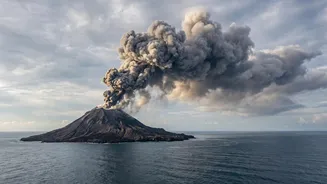
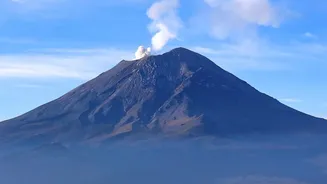
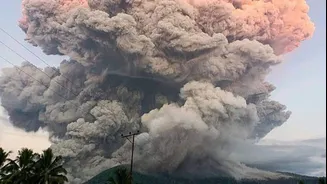
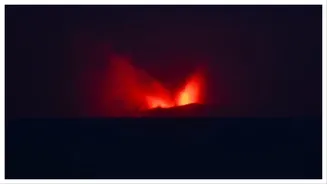
Beginning late on Friday, September 4, 2026, the volcanic island of Anak Krakatau began a series of intense eruptions. The activity sent vast plumes of ash soaring into the atmosphere, with some clouds reaching altitudes as high as 50,000 feet (about
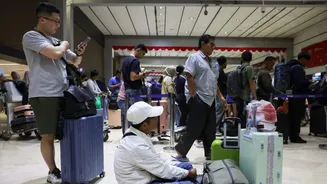
15,000 meters). Prevailing winds carried the hazardous material over western Indonesia, blanketing areas including the capital, Jakarta. In response, aviation authorities took drastic but necessary action, ordering the closure of eight airports, most notably Jakarta's bustling Soekarno-Hatta International Airport. The closures affected nearly 3,000 flights and left hundreds of thousands of passengers stranded, highlighting the volcano's far-reaching impact. While the main eruptive episode subsided after about 25 hours, authorities have warned that the probability of further eruptions remains high.
Why Ash and Airplanes Don't Mix
Volcanic ash is not like the soft soot from a fire; it is composed of tiny, jagged particles of rock, minerals, and volcanic glass. For an aircraft traveling at hundreds of kilometers per hour, flying through an ash cloud is like being sandblasted. The abrasive particles can strip paint and erode cockpit windows, severely impairing a pilot's vision. More catastrophically, these particles pose a mortal threat to jet engines. The operating temperature inside a modern jet engine is hotter than the melting point of volcanic ash. When ingested, ash particles melt and then fuse onto the cooler turbine blades and fuel nozzles as a glassy ceramic coating. This buildup disrupts airflow, causing engines to lose power and potentially fail completely—a phenomenon known as a 'flame-out'.
The Invisible, Drifting Danger
The danger from volcanic ash is magnified by its ability to travel vast distances. Fine ash particles can remain suspended at commercial flight altitudes for days or even weeks, drifting thousands of kilometers from the eruption site. These clouds are often difficult to distinguish from ordinary weather clouds, both visually and on standard aircraft radar, making them a stealthy threat. The recent Anak Krakatau eruption produced two distinct ash clouds, one drifting northeast over Jakarta and another spreading over the Indian Ocean, demonstrating how a single eruption can affect multiple flight paths simultaneously. This stealthy, widespread nature is why a volcanic event in one country can trigger flight cancellations across a continent.
A Global Network of Volcano Watchers
To mitigate this risk, a sophisticated global system is constantly at work. The International Civil Aviation Organization (ICAO) oversees a network of nine Volcanic Ash Advisory Centers (VAACs) around the world. The region including Anak Krakatau is monitored by the Darwin VAAC in Australia. These centers operate 24/7, using satellite data, pilot reports, and ground-based observations to detect, track, and forecast the movement of ash clouds. When a hazardous cloud is identified, the VAAC issues Volcanic Ash Advisories (VAAs) to air traffic controllers, airlines, and meteorological offices. These advisories provide critical data on the ash cloud's location, altitude, and predicted path, allowing airlines to reroute or ground flights to ensure passenger safety.
The High Cost of Caution
Grounding thousands of flights and closing major airports comes at a significant cost, disrupting supply chains, travel plans, and commerce. The Anak Krakatau eruption's impact was immediate, affecting an estimated 341,000 travelers and nearly 3,000 flights by Monday, September 7. However, the alternative is unthinkable. The aviation industry learned this lesson through several near-disasters, including a 1982 British Airways flight that lost all four engines after flying through an ash cloud over Indonesia. Such incidents spurred the creation of the modern warning system. The decision to close airspace, though deeply inconvenient for passengers and costly for airlines, is a direct application of these hard-won safety lessons. As of Tuesday, September 8, several of the major airports, including Soekarno-Hatta, had begun to reopen as conditions improved.