





A Torrent of Destruction
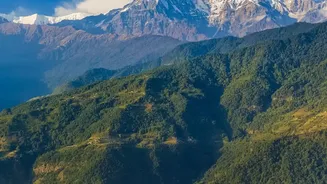
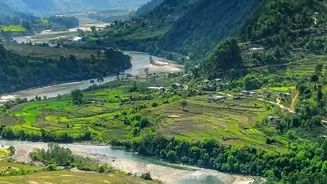
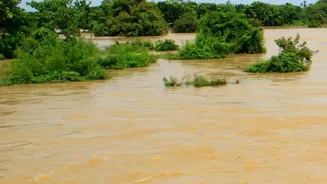
Recent events in Nepal have been catastrophic. In late August 2026, a massive section of rock and glacier ice collapsed from a Himalayan peak, unleashing a torrent of water, mud, and debris through river valleys. This flash flood, traveling at immense
speeds, wiped out homes, critical infrastructure like bridges and hydropower plants, and tragically claimed over a thousand lives, with thousands more remaining missing. While the immediate trigger was a colossal landslide, scientific analysis points toward long-term changes in the environment that made such a disaster more likely. This wasn't just a random act of nature; it was a disaster preconditioned by a warming world.
The Unstable Peaks
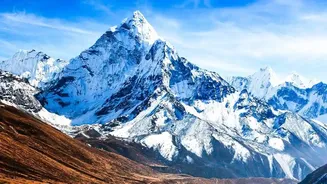
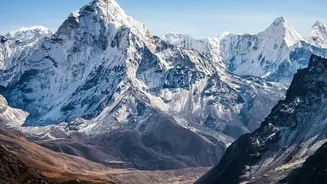
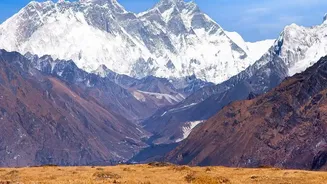
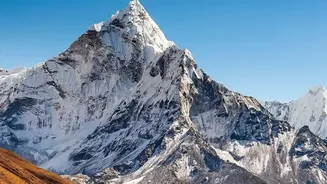
The Himalayas are warming at a rate nearly twice the global average, a fact that has profound consequences for their stability. One of the most significant impacts is on permafrost, the permanently frozen ground that acts like cement, binding rock and ice together on steep mountain slopes. As global temperatures rise, this natural glue is thawing. The freezing line—the altitude at which the ground stays frozen year-round—is moving higher up the mountains by roughly 100 meters per decade. This process weakens the rock face, making massive and previously rare rock avalanches a more plausible threat.
When Glacial Lakes Burst
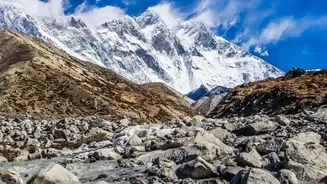
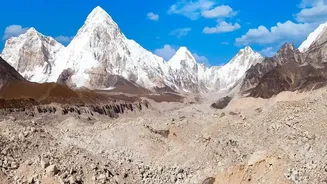
Another major threat amplified by climate change is the Glacial Lake Outburst Flood, or GLOF. As glaciers melt at an accelerated pace, the water often pools behind natural dams made of rock and debris called moraines. These lakes can become dangerously unstable. A landslide crashing into one of these lakes, or even the sheer pressure of the growing body of water, can breach the fragile moraine dam. The result is a sudden, violent release of enormous volumes of water downstream, as seen in a devastating GLOF in Sikkim, India, in 2023. Nepal has dozens of such potentially dangerous glacial lakes, turning the country's water towers into ticking time bombs.
More Than Just Monsoon Rains
It’s not only about melting ice. Climate change is also altering the very nature of the South Asian monsoon. A warmer atmosphere can hold more moisture, which leads to a dangerous shift in rainfall patterns. Instead of steady, prolonged showers that replenish the land, the region is seeing a rise in short, extremely intense downpours. These extreme events overwhelm rivers and drainage systems, triggering flash floods and landslides. The monsoon season itself is becoming more erratic, making it harder for communities and farmers to predict and prepare. The floods in late August 2026 were made even worse because they occurred during a monsoon season that had already saturated the ground.
A Cascade of Crises
The link between climate change and Nepal's floods is not a simple, single cause-and-effect relationship. It is a cascading crisis where multiple factors, each exacerbated by warming, compound to create a disaster. Thawing permafrost weakens a mountain slope that may have already been destabilized by a past earthquake. Rapidly melting glaciers create new, unstable lakes. More intense monsoon rains saturate the ground, making landslides more likely and swelling rivers to their breaking point. For a country like Nepal, which contributes a negligible fraction of global greenhouse gas emissions, the consequences are disproportionately severe, affecting livelihoods, forcing migration, and creating cycles of debt and vulnerability.