





The Hidden Danger on Your Balcony
In the dense urban landscapes of India, a balcony is a cherished private oasis. However, the items that bring it to life, like plant pots, can become significant hazards. The danger is a matter of simple physics: wind doesn't just push objects; it creates
lift, especially under items with a flat base. A seemingly stable pot can be tipped, rolled, or even lifted by a sudden, powerful gust. When this happens on a high-rise balcony, the consequences can be severe. An object falling from a significant height gathers enough momentum to cause serious injury or even death to anyone below. This isn't just a theoretical risk; it's a real and often underestimated aspect of urban living that requires proactive safety measures.
Choose the Right Foundation: Pots and Materials
The first line of defence against wind is weight and stability. While convenient, lightweight plastic pots are the most likely to become airborne. When choosing containers, consider heavier, more robust materials like terracotta, ceramic, concrete, or steel. These materials provide a natural anchor. The shape of the pot is just as crucial. Opt for planters with a wide, heavy base and a lower profile, similar to a pyramid. These are far more stable than tall, narrow pots, which can act like sails and tip over easily. For larger planters, you can increase stability by adding a layer of gravel, sand, or broken pottery at the bottom before adding soil. This lowers the centre of gravity, making the pot much harder for the wind to topple.
Secure Your Setup: Anchoring and Placement
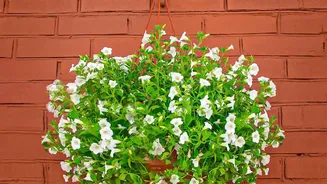
Strategic placement and anchoring can make a huge difference. Position your heaviest pots in the most exposed areas of your balcony or garden, effectively using them as a windbreak for lighter items. Whenever possible, tuck smaller pots into corners or against walls where they are naturally sheltered from the strongest gusts. Grouping pots together not only creates a lush look but also allows them to support each other. For extra security, especially for taller or top-heavy plants, consider using anchors. This can be as simple as using ropes or bungee cords to tie pots to a railing. You can also buy specialised planter brackets or discreet weights designed for outdoor furniture. For hanging baskets, a dual-anchor system using an S-hook combined with a security cord tied to the railing can prevent them from swinging wildly or breaking free.
Beyond the Pots: Other Common Hazards
While planters are a primary concern, they are not the only potential projectiles on a balcony. Lightweight patio furniture, umbrellas, decorative items, and even gardening tools can be dislodged by high winds. Fold away or bring umbrellas indoors when not in use, as their canopy can catch the wind like a kite. Cushions and other fabric items should also be stored securely to prevent them from blowing away. Apply the same logic to furniture: invest in heavier pieces made from materials like wrought iron or solid wood, or use furniture weights and straps to anchor lighter items to the deck or railings. The key is to assess every item on your balcony not for its current stability, but for its potential to move during a storm.
A Pre-Storm Safety Checklist
When strong winds are in the forecast, a quick safety sweep is essential. Don't wait for the storm to hit. Walk through your outdoor space and perform these simple checks. Move smaller, lighter pots to the floor and cluster them in a sheltered corner. Bring any particularly vulnerable or lightweight items indoors, including empty pots, watering cans, and decorative hangings. Secure your outdoor furniture using straps or weights, and remove all cushions. Close and secure patio umbrellas. Finally, take a look over the railing to ensure nothing is precariously balanced or has shifted close to the edge. This small amount of preparation can prevent significant damage and ensure the safety of your neighbours and passersby below.