







The Power of Grounded Movement
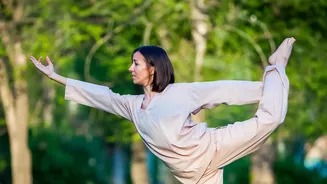
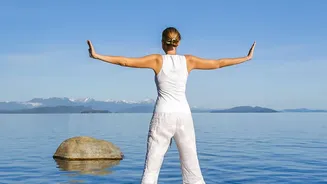
Tai Chi is often called 'meditation in motion', and for good reason. Its power lies in slow, deliberate, and continuous movements that originate from a strong center. Practitioners learn to shift their weight with immense control, maintaining a connection
to the ground while flowing from one posture to the next. This isn't about passivity; it's about building a stable foundation. The core principles emphasize relaxation, correct posture, and a mind that leads the body. This teaches a specific kind of mobility: the ability to move with intention and stability, without tension. It’s a process of developing internal strength, where balance is not static but a dynamic state of constant, minute adjustments. This mindful practice has been shown to improve joint mobility, enhance cognitive function, and reduce stress. Progress here isn't measured in speed, but in the quality of control and the depth of awareness.
Navigating the Flow of Change
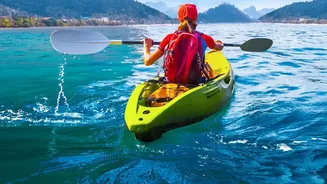
Kayaking, in contrast, is about external adaptation. A kayaker’s progress depends entirely on their ability to read and respond to an ever-changing environment—the water. Success isn't about overpowering the river but working with it. This requires a different type of mobility: the flexibility to react to currents, waves, and obstacles. A paddler must learn when to paddle hard to cross an eddy line, when to lean into a turn to maintain balance, and how to angle their boat to use the current to their advantage. This is a constant dialogue between the person and their surroundings. The philosophy of kayaking often ties into achieving a 'flow state', where the paddler becomes so absorbed in the activity that their actions feel automatic and harmonious with the river. This teaches a reactive, adaptive mobility, where progress means navigating external forces with skill and composure rather than rigid force.
The Two Sides of Mobility
Comparing these two disciplines reveals that 'mobility' is not a single concept. Tai Chi cultivates internal mobility: a deep awareness and control over one’s own body and center of gravity. It is proactive and builds stability from within, allowing for smooth transitions regardless of the outside world. Kayaking demands external mobility: the ability to adapt to unpredictable forces and find a path forward by yielding to and working with them. One discipline teaches you to find your anchor in a moving world; the other teaches you how to move with a world that is itself in motion. Both, however, are exercises in mindful movement. Whether focusing on the body's internal energy (qi) or the river's external energy, both require a heightened sense of awareness and presence. Tai Chi develops a strong internal base for navigating life, while kayaking develops the resilience to handle what life throws at you.
Mobility as a Blueprint for Progress
So, why does this matter for progress? Because personal growth, much like these activities, requires both internal stability and external adaptability. The ability to move—physically, mentally, and emotionally—is crucial for navigating life's challenges. Stagnation, whether from stiff joints or a rigid mindset, is the enemy of progress. The lessons from Tai Chi teach us that progress needs a solid foundation. It requires us to be centered and intentional, moving with purpose rather than being pulled in every direction. The lessons from kayaking teach us that progress is rarely a straight line. It requires us to be resilient, to adapt our plans, and to find opportunity in the currents of change. Without the groundedness of Tai Chi, we risk being thrown off course by every challenge. Without the adaptability of kayaking, we risk getting stuck, unable to move forward when our planned path is blocked. True mobility is the synthesis of both: knowing your core and knowing how to navigate the current.