






PRIMA: A New Window on the Universe
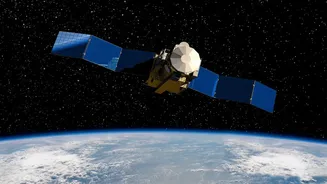
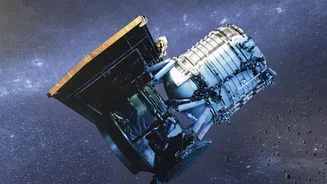
NASA has officially selected the PRobe far-Infrared Mission for Astrophysics, or PRIMA, to be the first in a new class of missions called Probe Explorers. The agency is targeting a 2033 launch for this new space telescope. PRIMA is designed to fill a critical
knowledge gap in astronomy by studying the cosmos in far-infrared light, a spectrum that is largely invisible to other telescopes like the James Webb Space Telescope. This will allow scientists to investigate some of the coldest and most dust-obscured processes in the universe, which are key to understanding how galaxies and stars are born. Nicky Fox, associate administrator for NASA's Science Mission Directorate, described PRIMA as "humanity's next window into the deep universe," helping to explain everything from the formation of planets to how water on Earth came to be.
The First 'Probe Explorer'
PRIMA's selection is a major step not just for its specific scientific goals, but for NASA's broader strategy. The Probe Explorer program was created to bridge the gap between massive, multi-billion-dollar "flagship" missions like James Webb and smaller, more focused missions. Recommended by the National Academies' 2020 Decadal Survey, this new class of missions has a cost cap of around $1.2 billion, enabling ambitious science on a faster and more repeatable schedule. PRIMA was chosen over a competing X-ray telescope concept, marking it as the template for this new mid-tier mission category. This new approach will allow NASA to tackle major scientific priorities more consistently, with a cadence of high-caliber missions launching throughout the next decade.
Mars Life Explorer: Digging for Answers
While PRIMA looks outward, another potential 2030s mission is focused on our planetary neighbor. The Mars Life Explorer (MLE) is a proposed lander designed to do something no mission has done before: dig for signs of current life on Mars. While rovers like Curiosity and Perseverance have searched for signs of past habitable environments and ancient life, MLE would drill up to two meters beneath the surface into mid-latitude ice deposits. The idea is based on Earth's own permafrost, where microbial communities can survive in a dormant state. By analyzing these icy samples on the spot, MLE could detect the chemical signatures of existing organisms, a primary goal for astrobiology.
The Long Road to a Green Light
Both PRIMA and the Mars Life Explorer concept face a critical hurdle known as a confirmation review. This is a standard part of NASA's process where a mission's technical plans, schedule, and budget are rigorously evaluated by an independent board before the project is given the final green light to move into full-scale construction (Phase C). PRIMA has officially entered the preliminary design phase (Phase B), and its confirmation review will determine if its $1.2 billion plan is feasible for a 2033 launch. The Mars Life Explorer is still a concept that was highly recommended by the planetary science decadal survey, but it must still be formally selected and funded by NASA before it can proceed down the same path.
A Decade of Ambitious Science
The parallel development tracks for these two missions highlight NASA's multi-pronged approach to planetary science and astrophysics. On one hand, the agency is committed to the ongoing search for life on Mars, a goal that extends from the current Perseverance rover and the complex Mars Sample Return campaign to future concepts like MLE. On the other, it is expanding its fleet of space-based observatories to answer fundamental questions about the universe itself. If both missions proceed, the 2030s could see humanity receive samples of Martian rock brought back to Earth, get the first results from a deep drill into Martian ice, and see the earliest moments of cosmic history in a new light.