



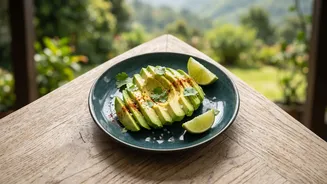

The Original Trees
While there isn't one single 'oldest' tree, the avocado's story in India begins in the early 20th century. American missionaries introduced the fruit, 'Persea americana', from Sri Lanka into southern India. These early plantings were not for commercial
purposes but to enrich botanical collections and bring a taste of home to the missionaries. Trees were planted in scattered, climatically suitable pockets like the hill stations of Tamil Nadu, Coorg in Karnataka, and parts of Kerala. One of the most celebrated of these early survivors is a tree at the Ambalavayal Regional Agricultural Research Station in Wayanad, Kerala, planted by British officials in 1947 as part of a post-WWII resettlement project. This tree is a living link to a time when the avocado was an unknown botanical curiosity.
A Slow Start
For decades, the avocado, locally known as 'vennappazham' or 'butter fruit', remained in obscurity. Its mild, savoury flavour and creamy texture didn't immediately fit into traditional Indian cuisine, which often favoured sweet fruits or bold, spicy flavours. Cultivation remained limited to homesteads and a few scattered groves, primarily in South India and the eastern Himalayan state of Sikkim. Unlike mangoes or bananas, there was no organised market, and for the average Indian, the fruit was largely unknown. An interesting historical footnote reveals that in 1935, Paramahansa Yogananda discussed growing avocados with Mahatma Gandhi as a nutritious alternative to meat, even shipping saplings from California, but they withered before reaching their destination.
The Modern Avocado Boom
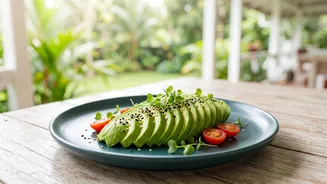
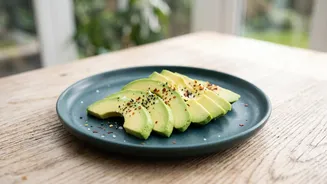
The 21st century brought a dramatic shift. Driven by a global wellness wave, increasing urbanisation, and social media trends, the avocado surged in popularity. Health-conscious millennials and Gen Z in metro cities like Mumbai, Delhi, and Bangalore began seeking out the fruit for its nutrient density and 'superfood' status. The demand for avocado toast, smoothies, and salads in cafes and restaurants created a new, vibrant market. This consumer pull has been so strong that demand has grown by 25-30% annually in recent years, turning the avocado from a niche item into a high-demand product in gourmet stores and online delivery platforms.
India's Farmers Rise to the Challenge
With demand far outstripping the scattered domestic supply, India has been heavily reliant on imports, primarily from countries like Tanzania, Kenya, and Peru. However, local farmers are now seeing the lucrative potential. Agricultural entrepreneurs are establishing commercial orchards in suitable regions, including parts of Maharashtra, Karnataka, Tamil Nadu, and Sikkim. But it's not a simple crop to grow. Avocados are highly sensitive to poor drainage and water-logging, cannot tolerate the hot, dry winds of North India, and require specific soil conditions. Furthermore, a grafted plant takes 3-4 years to bear fruit, making it a long-term investment for farmers.
The Future is Green (and Black)
The future of Indian avocados lies in moving from random seedling cultivation to organised farming of commercial varieties like Hass and Fuerte. While green-skinned varieties are more tolerant of Indian heat, the black-skinned Hass is preferred in premium markets. Farmers are now adopting modern techniques, including using high-quality rootstocks and better irrigation, to improve yields and quality. As domestic production scales up, analysts expect prices to stabilize, making avocados more accessible beyond the urban elite. From those first few trees planted a century ago, a full-fledged industry is blooming, promising to make the creamy fruit a more common sight on Indian tables.