






What Exactly Is Floating Yoga?
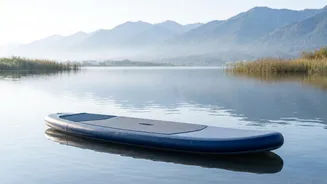
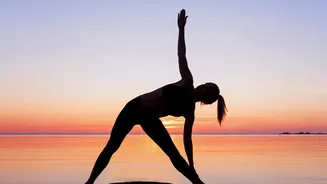
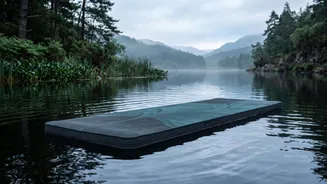
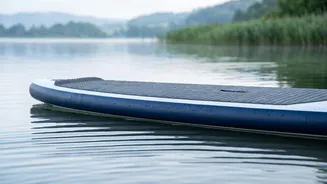
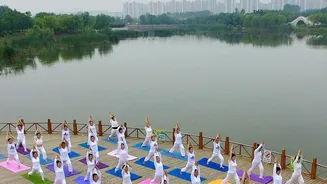
Floating yoga is most commonly known as Stand-Up Paddleboard (SUP) yoga. It involves performing yoga sequences on a paddleboard anchored in a calm body of water, like a lake, a quiet sea bay, or a large swimming pool. While some variations, often called
'aqua yoga', happen in chest-deep water without a board, the headline trend involves balancing on a floating surface. This transforms the practice from a static exercise into a dynamic one, where the water itself becomes an active participant in your workout. The goal isn't just to hold a pose, but to hold it while constantly adjusting to the gentle motion beneath you.
A New Level of Core Engagement
The most significant physical benefit of floating yoga is the intense core workout. On a stable floor, it’s possible to hold poses without fully engaging your stabilising muscles. On an unstable paddleboard, that’s impossible. Every movement, from a simple Downward-Facing Dog to a more challenging Warrior pose, forces your core to fire up to maintain balance. This constant engagement helps build a stronger, more resilient midsection. Practitioners often find that their balance and proprioception—your body's awareness of its position in space—improve dramatically after just a few sessions.
Finding Mental Clarity on the Water
Beyond the physical challenge, floating yoga offers profound mental benefits. The level of concentration required to stay balanced on the board demands complete presence. It’s difficult for your mind to wander to your to-do list when your entire focus is on not tipping over. This intense focus acts as a powerful form of meditation, quieting mental chatter and promoting a state of mindfulness. Furthermore, being surrounded by nature—the sound of lapping water, the feel of a gentle breeze, and the open sky above—has an inherently calming and stress-reducing effect that a studio environment cannot replicate.
Familiar Poses, Unfamiliar Sensations
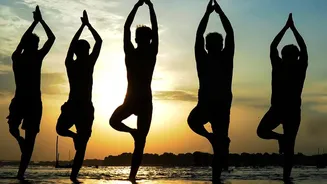
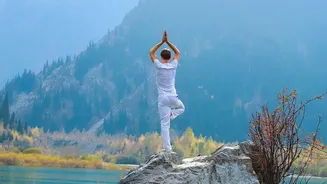
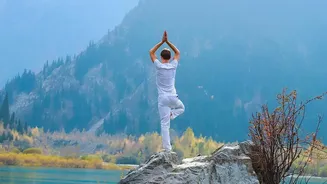
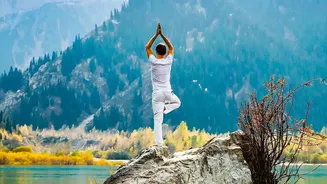
While the poses may be the same ones you practice on land, they feel entirely new on the water. A simple posture like Child's Pose becomes a moment to connect with the gentle rocking of the water. A classic like Downward-Facing Dog requires a wider, more stable base. More advanced balancing poses like Tree Pose become the ultimate test of stability and focus. The unstable surface challenges you to move with more intention and control. Even Savasana, or Corpse Pose, is transformed into a blissful experience as you lie on your back, fingers trailing in the water, and let the board gently rock you into a state of deep relaxation.
Don't Fear the Splash
For any beginner, the first question is often: 'Will I fall in?' The answer is, quite possibly, yes. And that’s part of the experience. Instructors encourage students to embrace the possibility of taking a dip. Falling is not a sign of failure but a fun, refreshing part of the learning process. It teaches you to let go of perfectionism and simply enjoy the moment. In India, floating fitness and yoga are emerging as a unique wellness experience, with events taking place in cities from Srinagar to Mumbai. Organisers stress that you don't even need to be a strong swimmer for classes held in controlled environments like pools, where safety is paramount.