








An Insatiable Thirst for AI Hardware
The generative AI revolution is running on an engine of highly specialised hardware. Companies are engaged in an arms race to build and expand data centres, facilities packed with thousands of powerful processors known as GPUs. This has created an unprecedented
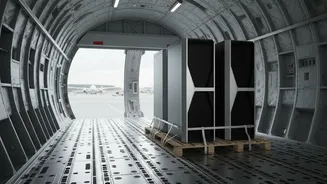
demand for these components, as well as entire, fully assembled server racks and related infrastructure like cooling systems and networking equipment. The scale of this demand is transforming supply chains, with AI-related goods becoming a primary growth engine for air freight. This isn't just a marginal increase; it represents a fundamental shift. One report noted that while data centre-related commodities made up just 6% of the Asia-US airfreight market before 2025, that share has now surged to around 20%
Why Air Travel Is Non-Negotiable
For this kind of cargo, slow and steady does not win the race. While ocean freight is cheaper, the high value and time-sensitive nature of AI hardware make air transport the only viable option. A single shipment of AI processors can be worth millions of dollars, and in the competitive sprint to deploy AI capacity, delays can cost even more by missing critical market windows. Speed, security, and reliability are paramount. This hardware is not only valuable but also delicate; sensitive to vibrations and temperature changes, requiring careful, specialized handling from origin to destination. As a result, companies are willing to pay a premium for the speed and security that air cargo provides.
A New Kind of Heavy Lifting
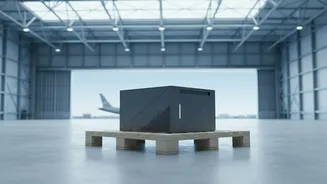
AI hardware presents a unique challenge for air cargo carriers. Unlike typical freight, which is often bulky but relatively light, shipments of servers and GPUs are incredibly dense and heavy. This forces airlines to rethink how they plan their loads, as the weight, not the volume, becomes the limiting factor. The cargo is also often oddly shaped, requiring special handling and planning. The shift has been significant enough to redraw air cargo routes, with new, high-value trade lanes emerging almost overnight. Routes now actively connect semiconductor manufacturing hubs in places like Taiwan and Korea with data centre construction sites in the United States and Europe. This is a pivot away from the recent focus on lightweight e-commerce packages and toward a more specialised, high-yield cargo class.
The Industry Adapts and Pivots
In response to this booming demand, the air cargo industry is actively adapting. Logistics giants like DHL have launched new services and expanded capacity specifically to cater to the technology sector and data centre logistics. Airlines are also creating specialised services designed for the unique requirements of shipping high-tech components, focusing on security, priority loading, and shipment integrity. Some carriers report that AI-related shipments now account for up to half of their cargo revenue. This strategic pivot is a direct response to a market need that is not only growing but has become one of the most significant drivers of air freight traffic, particularly on transpacific routes.
Opportunities and Future Outlook
This AI-driven boom offers a lucrative opportunity for the air cargo sector, providing higher yields than the declining e-commerce segment it has partially replaced. However, some experts caution that this could be a temporary bubble tied to the initial, frantic build-out of AI infrastructure. If the pace of investment slows, the industry could face overcapacity. For now, though, the demand remains robust and is expected to be a major growth engine beyond 2026. The digital transformation powered by AI is, for the foreseeable future, intrinsically linked to the physical world of logistics, with cargo planes serving as a critical bridge between silicon innovation and real-world deployment.