




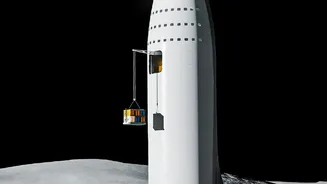
A Landmark Moment at Starbase
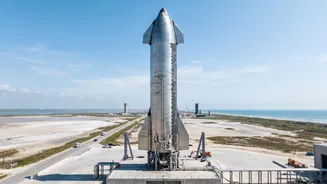
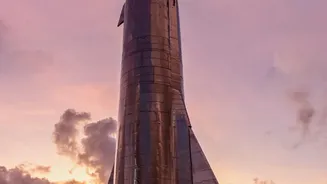
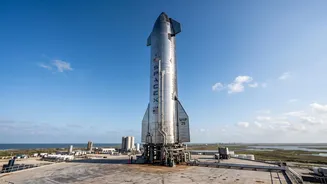
On November 14, 2026, after spending nearly 23 hours in space, the Starship upper stage, known as Ship 42, descended through the Texas sky. It performed a controlled belly-flop maneuver before firing its Raptor engines to flip upright and slow its final
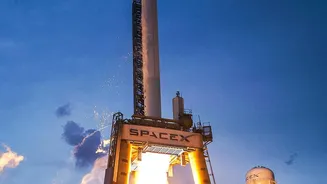
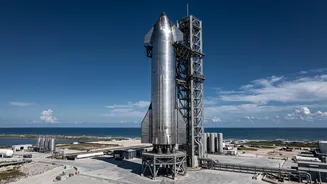
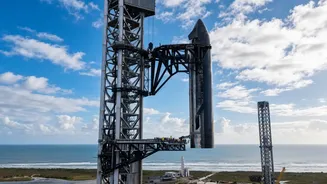
descent. On the ground, the massive launch tower, nicknamed 'Mechazilla', waited. Its two giant mechanical arms, often called the 'chopsticks', tracked the descending vehicle, adjusted their position, and closed around the spacecraft, securing it in mid-air. The successful catch marked the first time any company has recovered an orbital-class upper stage this way, a feat broadcast on SpaceX's webcast and described as a major milestone for the company's Mars ambitions. While the mission was a resounding success for the upper stage, it wasn't a complete victory; the Super Heavy booster that launched it aborted its own tower-catch attempt and was diverted for a splashdown in the Gulf of Mexico.
How the 'Chopsticks' Catch Works
For years, SpaceX has been landing its Falcon 9 boosters, but the Starship system required a different, more radical approach. Instead of equipping the massive rocket with heavy landing legs, the plan was always to have the launch tower itself catch the returning vehicles. This eliminates the weight of landing gear, allowing for more payload, and streamlines the process for rapid reuse. The system works through incredible precision. As the returning stage approaches, it uses its own engines for a landing burn to slow down dramatically. It then guides itself into position next to the tower, where the robust arms are positioned under reinforced 'catch points' on the rocket's body. The vehicle essentially lowers itself onto the arms, which then secure it. The entire process requires flawless coordination between the vehicle's guidance systems and the tower's mechanics.
The Journey of Flight 15
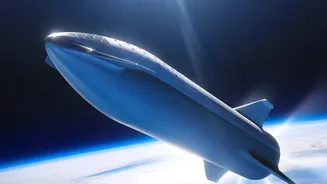
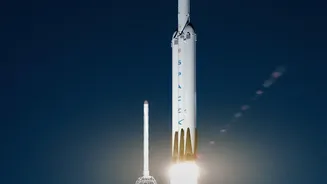
The mission began on Friday, November 13, with a launch from Starbase in South Texas. After a successful liftoff and stage separation, the Super Heavy booster began its return sequence while the Starship upper stage continued into low-Earth orbit. The primary mission for the upper stage was to deploy 26 of SpaceX's next-generation Starlink satellites, which it completed successfully. The spacecraft then remained in orbit for over 22 hours, completing about 14 trips around the Earth—the longest Starship mission to date. During this time, controllers on the ground monitored the vehicle's health, paying close attention to its heat shield to ensure it was ready for the fiery plunge back through the atmosphere. Having passed all its checks, Ship 42 performed a deorbit burn and began its historic return journey to the launch site.
Why This Catch Changes Everything
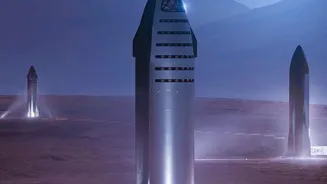
Catching the upper stage is far more difficult than catching the booster because it travels higher, farther, and much faster, returning all the way from orbital velocity. This achievement is the final major piece of the puzzle for making the entire Starship system fully and rapidly reusable. While SpaceX's Falcon 9 reuses its first stage, the second stage is expended on every mission. Full reusability is the key to drastically lowering the cost of access to space, which is central to Elon Musk's long-term vision of establishing a human settlement on Mars and enabling high-frequency global travel. By recovering and quickly reusing both stages, SpaceX aims to operate Starship more like an airliner than a traditional rocket, where the main cost per flight is fuel, not building entirely new hardware. This catch proves the fundamental concept is viable.
What Happens Next?
While a monumental achievement, this was just one successful test. SpaceX will need to repeat the catch consistently to prove its reliability, especially before the system can be certified for human spaceflight for NASA's Artemis program. The company will also focus on perfecting the booster catch, which was aborted on this flight due to a low fuel reading. The next steps will involve inspecting the recovered Ship 42 to assess wear and tear from its journey to orbit and back, refining the 'chopstick' mechanics, and improving the consistency of the Raptor engines. Future flights will likely attempt to catch both the booster and the ship in a single mission, bringing SpaceX even closer to its goal of a system that can be launched, recovered, and relaunched in a matter of hours or days.