







A 'Make in India' Milestone
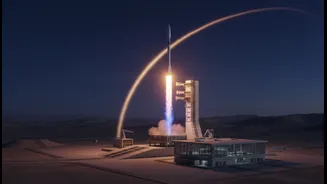
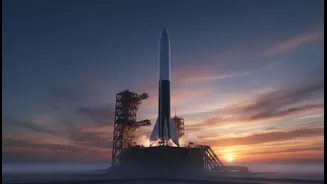
On July 18, 2026, the Vikram-1 rocket, built by Hyderabad-based startup Skyroot Aerospace, successfully lifted off from Sriharikota and placed several payloads into orbit. This mission, dubbed 'Aagaman' (Sanskrit for 'arrival'), marked the first time
a privately developed Indian rocket has achieved this milestone. Founded in 2018 by former ISRO scientists, Skyroot has validated its technology on the world stage, proving that a young Indian company can build and fly a complex orbital-class vehicle. The rocket itself is an innovation, using a lightweight all-carbon-composite body and 3D-printed engines. This success is a powerful validation of the government's decision in 2020 to open the space sector to private enterprise, a move facilitated by the regulatory body IN-SPACe. It signals a shift from a government-led space program to a dynamic public-private ecosystem.
The New Space Economy Takes Off
Vikram-1’s success isn't just about one company. It's a catalyst for the entire Indian space economy, which is projected to grow from around $8.4 billion today to $44 billion by 2033. With over 400 space startups now registered in the country, this launch provides a crucial piece of the puzzle: reliable, homegrown launch capability. Before this, Indian startups building satellites had to rely on ISRO's schedule or expensive foreign rockets. Now, with companies like Skyroot and others like Agnikul Cosmos developing their own rockets, the entire supply chain is becoming indigenous. This creates a multiplier effect, attracting investment and giving other startups—those building satellites, managing ground stations, or providing in-orbit services—the confidence that they can get their technology to space from Indian soil.
The Jobs You Haven't Heard Of
When you think of space careers, 'astronaut' or 'rocket scientist' might come to mind. But the reality of India's new space economy is much broader. The boom is creating thousands of jobs across a wide spectrum of roles. Yes, there is high demand for aerospace, propulsion, and avionics engineers. But the ecosystem also needs software engineers to develop mission control systems and analyse vast amounts of data. It needs materials scientists to create next-generation components. Beyond pure tech, the industry requires geospatial analysts to interpret satellite imagery for agriculture and urban planning. As startups grow, they are also aggressively hiring for business development, marketing, finance, and even space law specialists to navigate complex regulations. There are also roles for technicians in advanced manufacturing and robotics.
Skillsets for a Stellar Career
To enter this field, a strong foundation in STEM—physics, mathematics, and computer science—is crucial. For technical roles, a B.Tech in disciplines like aerospace, mechanical, or electronics engineering is a common starting point. However, the skills in demand are evolving. Proficiency in coding languages like Python, experience with CAD and simulation software, and an understanding of AI/ML for data analysis are increasingly important across all engineering roles. For data analytics jobs, skills in Geographic Information Systems (GIS) and remote sensing are key. Aspiring professionals should look for internships at startups like Skyroot, Agnikul, Pixxel, or Dhruva Space to gain practical experience. The government and academic institutions are also ramping up efforts, with IN-SPACe helping to develop specialized university curricula to build a skilled workforce.