


The History of the 'i' Badge
For years, a lowercase 'i' has meant two different things at BMW. Originally, it was a suffix on petrol models, like the 330i, to denote 'injection' in a world that was leaving carburetors behind. More recently, the 'i' became a prefix for BMW's dedicated
electric sub-brand, starting with the innovative i3 and i8 and expanding to the mainstream i4, iX, and i5. This created a clear distinction: a regular BMW had a number, while an electric one was an 'i' model. To simplify things, BMW recently decided to drop the 'i' from its petrol cars, reserving the letter exclusively as a prefix to signal an electric vehicle. This seemed to set a clear path for the future—until the M3 came along.
An Icon Reimagined, A Name Preserved
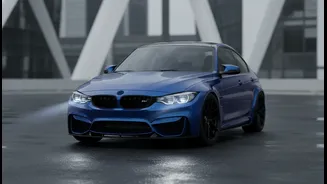
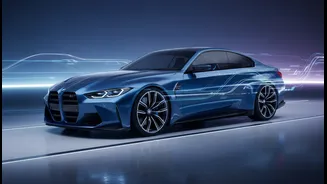
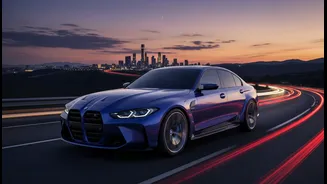
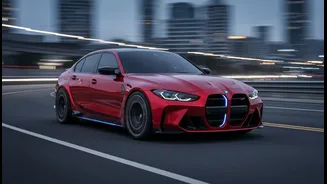
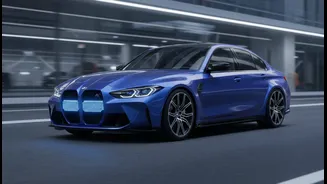
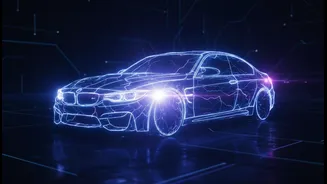
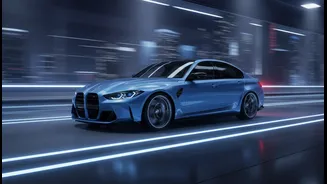
The M3 is not just another car; it's the heart of BMW's performance identity. As the brand developed its next-generation electric platform, dubbed 'Neue Klasse', everyone wondered what the inevitable electric M3 would be called. Many assumed 'iM3', following the established pattern. However, BMW M CEO Frank van Meel recently confirmed that the first-ever fully electric M3, due around 2027, will be called... M3. No 'i', no qualifiers. Just M3. Van Meel explained that the nameplate transcends the powertrain. An M3 has had four, six, and eight-cylinder engines, and soon it will have electric motors, but it remains an M3. This seemingly minor decision is, in fact, a monumental statement of intent.
The Message: Electric is No Longer 'Other'
By refusing to label the electric M3 as an 'iM3', BMW is signaling the end of the electric car as an alternative. The message is that the electric powertrain is now so core to the brand's future that it no longer needs a special designation. An M3 is the ultimate expression of BMW's driving dynamics, and if the next one is electric, then that is what an M3 will be. This move shows immense confidence in the technology being developed for the Neue Klasse platform. The company believes the electric version will be so compelling and so true to the M brand's character that it doesn't need to be cordoned off in a sub-brand. Electric is simply becoming the default.
Technology to Back Up the Bravado
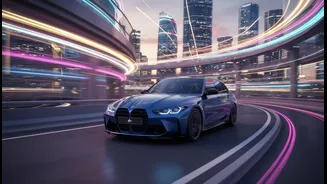
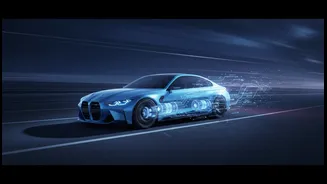
This confidence isn't just marketing. The electric M3 is being engineered to be a true performance revolution for the brand. It is expected to feature a quad-motor setup, with one motor for each wheel, allowing for unprecedented control over torque delivery. This is all managed by a new central computer system BMW calls the 'Heart of Joy'. The system can react faster than traditional stability control, precisely managing power, traction, and torque vectoring to redefine M's famed handling characteristics. Coupled with an advanced 800-volt architecture for rapid charging and a battery capacity expected to exceed 100 kWh, the technical foundation is being laid to ensure the electric M3 outperforms its predecessors in every measurable way.
Two Paths for One Legend
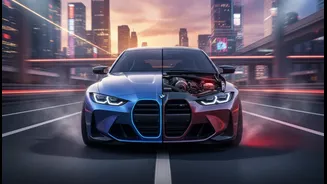
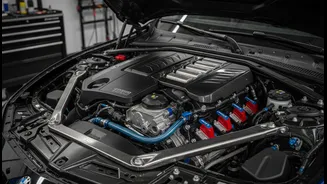
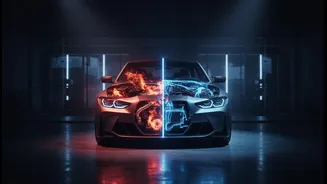
Interestingly, BMW is not forcing its loyal customers into an electric-only future just yet. Alongside the new electric M3, the company has confirmed it will also develop a new petrol-powered M3 using an updated version of its celebrated inline-six engine. This dual-path strategy is telling. It allows the brand to cater to its traditional fanbase while simultaneously pushing the boundaries with a new electric flagship. By having both a petrol and an electric car share the legendary M3 name, BMW is making its clearest statement yet: the future of performance is not a single choice, but a spectrum where the M philosophy—not the fuel source—is what truly matters.