





Rethinking the Strawberry Patch
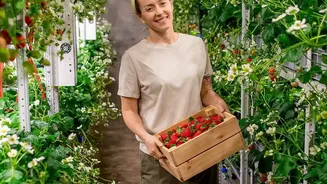
Imagine a farm where instead of sprawling fields, plants are stacked neatly towards the sky. This is the core concept of vertical farming, and it's being applied to everything from leafy greens to, increasingly, strawberries. A vertical strawberry tower
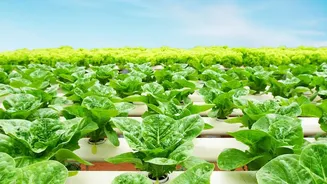
is a system—often a series of stacked pots or specially designed structures—that allows plants to grow in layers. Instead of occupying a large ground area, each plant grows in its own pocket on a shared column. These systems are frequently used with hydroponics or aeroponics, meaning they grow without soil. Plant roots are instead fed with a nutrient-rich water solution, giving growers precise control over their development. This approach moves the strawberry patch from a horizontal field into a three-dimensional, space-saving structure that can be housed in a greenhouse or a fully indoor, climate-controlled facility.
The Fivefold Density Advantage
The headline claim of a fivefold increase in plant density is not just a theoretical possibility; it's the central advantage of going vertical. Traditional strawberry farming is limited by the space each plant needs on the ground, typically with wide rows for access and to prevent crowding. Vertical towers shatter this limitation. By stacking growing pockets or layers, a single square foot of floor space can host numerous plants. Some commercial systems can accommodate dozens of plants in a structure that takes up minimal room. While a fivefold increase is a strong benchmark, some analyses suggest the potential for even greater density—up to 10 or 20 times more output per square foot compared to conventional farming, depending on the system's height and design. This dramatic increase in plant density is the key to unlocking significantly higher yields from a much smaller land footprint.
More Than Just Saving Space
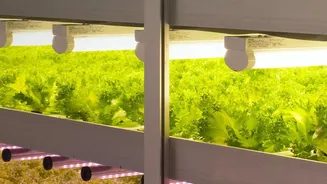
The benefits extend far beyond simple density. Because these systems are often enclosed and soil-free, many of the challenges of traditional farming are mitigated. Water use can be slashed by up to 90-99% because the nutrient solution is recirculated, not lost to ground runoff. The need for pesticides is drastically reduced, as pests that live in soil are eliminated and the controlled environment keeps other insects at bay. Furthermore, growing indoors with LED lights allows for year-round production, independent of seasons or weather. This creates a predictable, consistent supply of fresh strawberries. The towers also make harvesting easier, as the fruit is elevated and more accessible, reducing the physical strain on farm workers.
The Price of Progress
Despite the advantages, vertical strawberry farming is not without its challenges, the most significant of which is cost. The initial investment for setting up a commercial vertical farm can be substantial, running many times higher than preparing a traditional field. These costs include the towers themselves, sophisticated climate control systems, and specialized LED lighting designed to mimic the sun's ideal spectrum for fruit growth. Energy consumption is another major operational expense, as the lights and climate systems must run consistently. The process also requires a higher degree of technical expertise to manage the nutrient solutions and automated systems. Finally, for fruiting crops like strawberries, pollination becomes a challenge indoors. Without bees, farms must rely on managed bumblebee colonies or manual pollination techniques, adding another layer of complexity and cost.
A Potential Solution for India
In a country like India, where arable land is under constant pressure and urban centers are booming, vertical farming presents a compelling opportunity. Strawberry towers could be deployed in urban and peri-urban areas, bringing production closer to consumers. This would reduce transportation costs, lower spoilage rates, and deliver fresher produce to city markets. The ability to control the growing environment is a major asset in a nation with diverse and sometimes extreme climates, ensuring a stable supply regardless of monsoon patterns or heatwaves. While the high setup cost remains a barrier, the potential to grow high-value crops like strawberries year-round in a small, controlled space could make it a strategic investment for entrepreneurs and agribusinesses looking to tap into the premium food market in India's metros.