





From Sci-Fi to Assembly Line
For decades, manufacturing in space was the stuff of science fiction. The idea of factories floating above Earth, churning out products, seemed a distant dream. Now, that dream is becoming a tangible reality. A series of missions, broadly grouped under
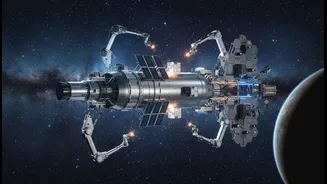
the umbrella of On-Orbit Servicing, Assembly, and Manufacturing (OSAM), are designed to prove the viability of building, and even producing, complex items in space. While the headline's "Mission-02" could point to several efforts, it perfectly captures the spirit of projects like NASA's OSAM-2, also known as Archinaut One, and the commercial flights of companies like Varda Space Industries. These missions are not about planting flags; they are about setting up the infrastructure for a bustling low-Earth orbit economy. The goal is to move from launching everything we need from Earth to making what we need, where we need it, in space. This transition from a research-driven concept to a commercially viable industry is happening now, with some experts believing 2026 is the tipping point.
The Zero-Gravity Advantage
Why go to all the trouble of manufacturing in space? The answer lies in the unique properties of the microgravity environment. On Earth, gravity affects everything we make. It causes materials to settle unevenly, introduces defects into crystals, and limits the size and shape of delicate structures. In the near-weightlessness of orbit, these constraints disappear. This allows for the creation of materials with superior performance that are difficult or impossible to achieve on the ground. For example, it’s possible to grow purer, more perfect crystals for use in pharmaceuticals or create unique metal alloys that won't separate. It also enables the production of ZBLAN fiber optic cables, an ultra-pure optical fiber that could revolutionize telecommunications and data transfer, which is one of the earliest commercially attractive applications. Furthermore, building large structures like solar arrays or satellite antennas directly in orbit means they are no longer limited by the size of a rocket's fairing, potentially saving costs and enabling entirely new designs.
The Test Cases: Pharmaceuticals and 3D Printing
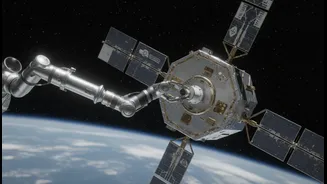
Current missions are testing two key areas: advanced materials and large-scale construction. Varda Space Industries, for example, has already flown missions to manufacture pharmaceuticals in orbit. Their W-2 mission, which launched in early 2025 and returned to Earth, focused on crystallizing small-molecule drugs in microgravity to improve their structure and purity. The company has successfully demonstrated that it can create these unique crystallizations and return them safely, building the backbone of a future orbital industry one flight at a time. On the construction side, NASA's OSAM-2 project, led by Redwire, was designed to demonstrate how a refrigerator-sized spacecraft could 3D-print and assemble a large solar array in orbit. The mission plan involved the craft printing a 10-meter beam on one side and a 6-meter beam on the other, using a robotic arm to assemble the structure. Though the project concluded before a flight demonstration, it provided invaluable data for future efforts and helped spur NASA's creation of a consortium to make these capabilities routine.
Building the Future Orbital Economy
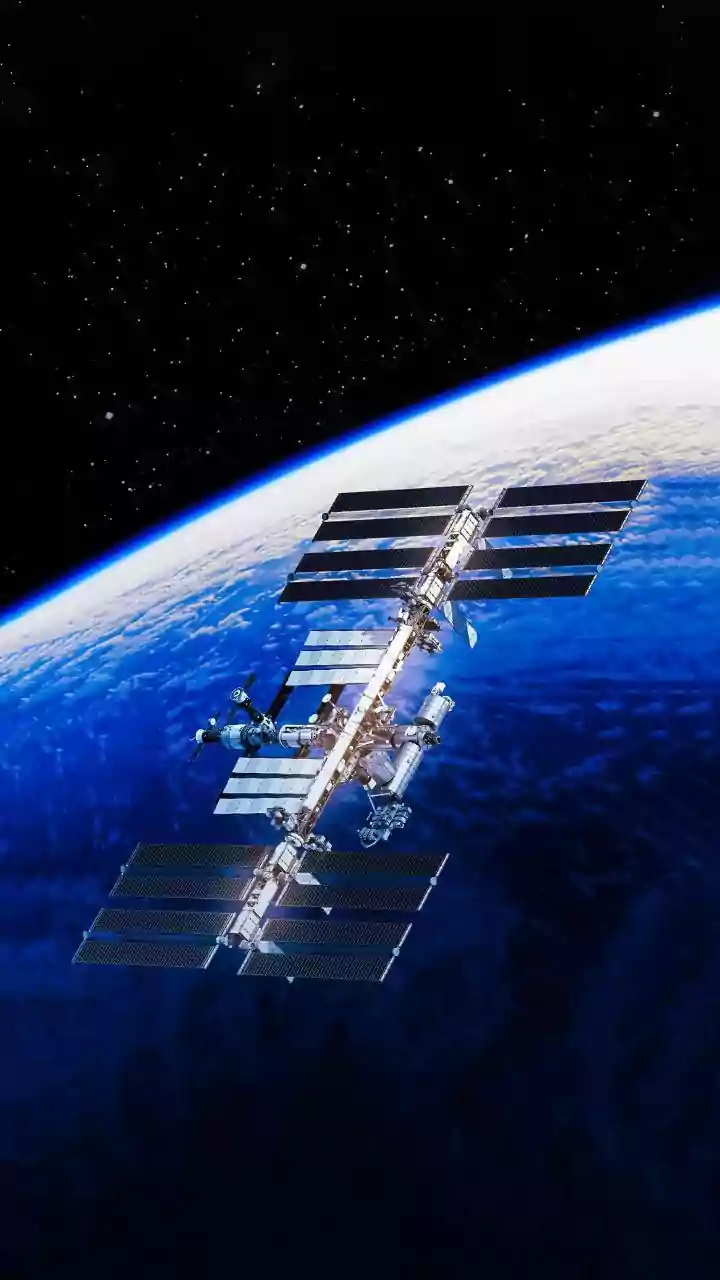
These initial tests are just the beginning. The global market for in-space manufacturing is projected to grow from around USD 7.6 billion in 2026 to over USD 46 billion by 2036. This growth is driven by falling launch costs and the rise of commercial space stations from companies like Axiom Space and Blue Origin, which will serve as the factories and research labs of the future. The ability to service, assemble, and manufacture in orbit could revolutionize numerous sectors. Satellites could be repaired and refueled, extending their lifespans. New, more powerful antennas could be built in space to improve global communications. And a steady supply of space-made pharmaceuticals could lead to medical breakthroughs. For India, which has a rapidly growing space sector, this represents a significant opportunity, with market analysis projecting it to be the fastest-growing market with a 25% compound annual growth rate. As launch becomes more frequent and orbital platforms more common, the economic case for making things in space will only get stronger, transforming low-Earth orbit into a critical piece of industrial infrastructure.