





A Sanctuary in the Wilderness
To truly understand Nainital's colonial past, one must start with its churches. The most evocative is St. John in the Wilderness, one of the town's earliest buildings. Established in 1844, its foundation stone was laid by Bishop Daniel Wilson of Calcutta.
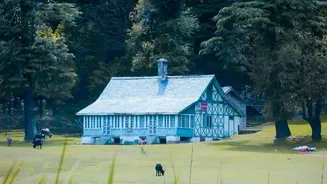
Legend says the church got its name after the Bishop, falling ill, had to stay in an unfinished hut in the forest, a true wilderness experience. Built in a striking Neo-Gothic style, the church is a peaceful sanctuary nestled among deodar trees. Inside, a brass plaque serves as a somber memorial, listing the names of those who perished in the devastating landslide of 1880, forever linking the church to one of the town's most significant historical events.
The Social Hubs of the Raj
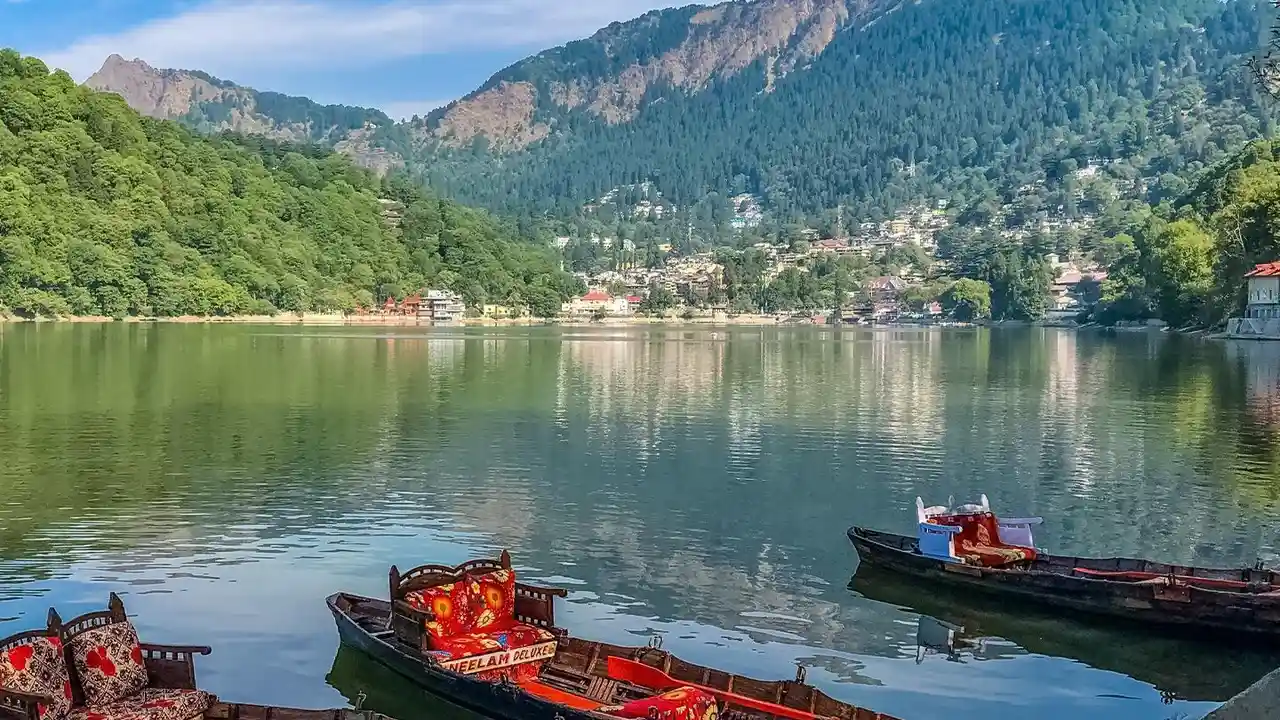
The British didn't just bring their architecture; they brought their lifestyle. Exclusive social and sporting clubs were the heart of colonial life, and Nainital had some of the most prestigious. The Nainital Club, considered one of the top clubs in pre-independence India, was an exclusive domain for British members. Perhaps more famous is the Boat House Club, which today sits prominently on the lakefront. This club, the second oldest in India, was renowned for providing the unique facility of inland sailing, or yachting. The Naini Tal Yacht Club, founded in 1910, even used a special class of boats designed specifically for the lake's wind conditions. While once exclusively for the British, these clubs opened their doors to Indian members after 1947 and remain symbols of a bygone era's leisure and social hierarchy.
Homes That Tell a Story
The hills of Nainital are dotted with historic homes, each with its own narrative. The most famous is Gurney House, the former residence of the legendary hunter-naturalist and author, Jim Corbett. This charming cottage was built in 1881 with materials from a dismantled house destroyed in the 1880 landslide. Corbett lived here until he left for Kenya in 1947. Now a private residence, it preserves much of his furniture and belongings, offering visitors who make an appointment a tangible connection to his life and adventures. It stands as a living museum, a testament to a man deeply connected to the Kumaon hills.
The Governor's Castle
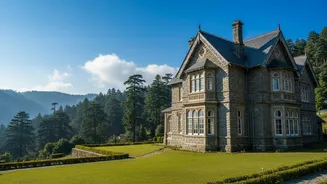
Perhaps the most imposing structure is the Raj Bhawan, or Government House. Built between 1897 and 1899, this magnificent building was designed in a Victorian Gothic style to resemble a Scottish castle, serving as the summer residence of the Governor of the United Provinces. Sprawled over 200 acres with 113 rooms, a golf course, and lush gardens, it was a statement of power and prestige. The architecture features pointed arches and stone turrets, using local dark-grey stone for its walls and fine woods like teak for its grand interiors. Today, it serves as the official residence for the Governor of Uttarakhand, and parts of the grand estate are open to the public, offering a glimpse into the opulent lifestyle of the British Raj.