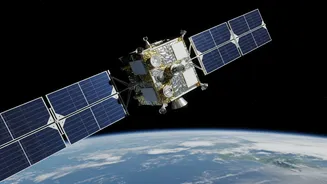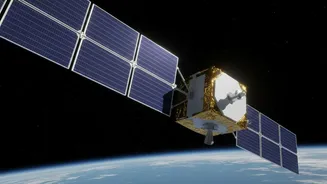





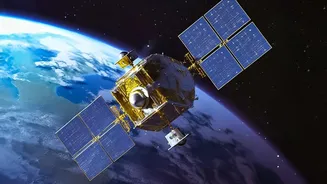
Beyond a Simple Relay in the Sky
Traditionally, satellites operated like puppets on a string. They collected raw data—be it a picture, a signal, or a measurement—and beamed it back to massive ground stations where humans would analyze it and send up new commands. This process is reliable
but slow, creating significant delays and a communications bottleneck. Imagine a satellite capturing images of a fast-moving wildfire; by the time the data is downloaded and processed, the fire front has already shifted. 'Smart' satellites flip this model on its head. Equipped with powerful onboard computers and artificial intelligence, they can process information directly in orbit, a concept known as edge computing. This allows them to analyze data, identify what's important, and send back only the crucial insights, dramatically reducing the time from capture to action.
What 'Autonomous' Really Means in Orbit
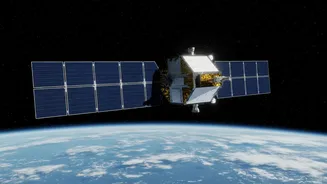
Autonomy in space isn't about rogue AIs taking over, but about efficiency and resilience. An autonomous satellite can make critical decisions without waiting for instructions from Earth. This includes tasks like independently adjusting its orbit to avoid colliding with space debris, a growing problem in a crowded orbital environment. It can also mean self-healing by detecting and correcting software glitches, optimizing its own power consumption, or even coordinating with other satellites in a constellation to perform complex, synchronized tasks. For example, a group of Earth-observation satellites could autonomously decide to reposition themselves to get a clearer, multi-angle view of a developing hurricane for better forecasting. For deep-space missions where communication delays can be hours long, this level of independence isn't just a benefit—it's a necessity.
Why the Sudden Push for Intelligence?
Several factors are driving this shift. The primary driver is the explosion of mega-constellations launched by companies like SpaceX and Amazon. Managing thousands of satellites manually is not just impractical, it's impossible. AI-driven autonomy is the only viable way to operate these vast networks, from coordinating orbits to allocating bandwidth. Secondly, the demand for real-time data has never been higher, for everything from national security and disaster response to financial market analysis and precision agriculture. Autonomous satellites can deliver actionable intelligence in minutes, not hours. This capability is transforming emergency management, where satellites can instantly reposition to capture critical imagery after an earthquake or flood. Finally, reducing operational cost is a major incentive. Automating routine tasks and reducing the reliance on large ground crews makes space missions more financially sustainable.
The Key Players and Technologies
This isn't science fiction; it's already happening. NASA and the European Space Agency have been pioneering autonomous systems for years. Private industry, however, is accelerating the trend. SpaceX heavily uses AI to manage the autonomous navigation and collision avoidance for its Starlink constellation. Companies like Planet Labs and Satellogic are building constellations that use onboard AI to filter images and prioritize data delivery. This is all made possible by rapid advancements in radiation-tolerant processors and specialized AI accelerators that can withstand the harsh environment of space. These powerful, compact computer systems enable complex machine learning models to run directly on the satellite, turning them into true data centers in the sky.
Hurdles and Headaches on the Final Frontier
Despite the momentum, significant challenges remain. Cybersecurity is a primary concern; a satellite that can make its own decisions is a tempting target for hackers. Protecting these autonomous systems from being commandeered or disabled is a critical priority. There are also technical hurdles. Space-qualified processors are typically several generations behind their terrestrial counterparts, limiting the complexity of onboard AI. Furthermore, verifying that an autonomous system will always make the right decision is incredibly difficult, especially when mission failure is not an option. Finally, there are legal and ethical questions. As autonomous satellites become more common, issues of accountability and what constitutes 'harmful interference' in crowded orbits need to be resolved.