







The Foundation of Flavour
In the world of cooking, certain ingredient combinations form the backbone of entire culinary traditions. In much of Indian cooking, that foundation is often built with tomato, ginger, and garlic. This trio doesn't just add flavour; it creates an entirely
new base layer of taste. When cooked down, these ingredients meld into a harmonious paste that carries a depth far greater than the sum of its parts. This process, often part of a technique known as 'bhuna', involves slow-sautéing the aromatics until their raw notes disappear and they break down into a rich, cohesive foundation. It’s this base that gives many curries and rice dishes their signature richness and complexity, moving beyond simple seasoning to build flavour from the ground up.
The Science of Savoury
The magic of this combination can be explained by culinary science. Tomatoes are a powerhouse of glutamic acid, the compound responsible for the fifth taste, umami. When cooked, the glutamates in tomatoes become more concentrated, lending a meaty, savoury depth that makes a dish feel nourishing and complete. Ginger brings a warm, zesty pungency from its active compound, gingerol, which cuts through richness and adds a fresh, aromatic kick. Garlic, part of the allium family, provides a pungent, sulfurous note from a compound called allicin. When cooked, garlic’s sharp bite mellows into a sweet, nutty, and profoundly savoury flavour. Together, the umami from the tomato, the warmth of the ginger, and the rounded depth of the garlic create a perfectly balanced and layered taste experience.
Basmati: The Perfect Canvas
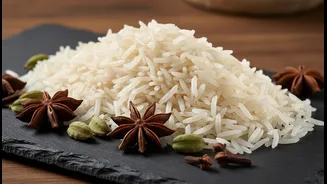
While this flavour base works with many grains, it has a special synergy with basmati rice. Basmati is defined by its long, slender grains that cook up fluffy and separate, rather than sticky. This texture makes it an ideal vehicle for absorbing a flavourful sauce or base without becoming mushy. More importantly, basmati possesses a unique, subtle aroma of its own, often described as floral or nutty. This is thanks to a natural compound called 2-acetyl-1-pyrroline, which is also found in popcorn and pandan leaves. Basmati's delicate fragrance doesn't compete with the robust tomato-ginger-garlic base; instead, it provides a beautiful aromatic counterpoint, creating a dish that is flavourful on the palate and fragrant to the nose.
Mastering the Method
Creating this savoury base is more about technique than rigid recipes. The key is to cook the ingredients slowly and patiently. Start by heating a neutral oil or ghee in a pan. Add finely chopped or grated ginger and garlic, and sauté for a minute until fragrant, being careful not to let them brown too much, which can create bitterness. Next, add finely chopped or pureed tomatoes. The goal is to cook this mixture over medium-low heat, stirring occasionally, until it darkens in colour, thickens into a jammy consistency, and you see the oil begin to separate from the paste. This visual cue is a sign that the water has evaporated, the flavours have concentrated, and the base is ready. At this point, you can stir in your rinsed basmati rice, coating it in the paste before adding water and cooking as you normally would.
Elevating the Everyday
Once you've mastered the basic trio, it becomes a template for endless variation. The process of blooming whole or ground spices in hot oil at the beginning—known as a 'tadka' or temper—can add another dimension. Try adding cumin seeds to the oil before the ginger and garlic for an earthy aroma. A pinch of turmeric can add a warm, golden hue and subtle bitterness that balances the sweetness of the cooked tomatoes. For those who enjoy a bit of heat, a slit green chilli added with the tomatoes will infuse the base with a fresh, sharp spice. These small additions allow you to customize the flavour profile while still relying on the core strength of the tomato, ginger, and garlic foundation.